• Fri frakt över 249 kr
  • •
  • Snabba leveranser
  • •
  • Billiga böcker
Kundservice

Du är på sajten för privatpersoner.

Företag, bibliotek eller offentlig verksamhet?

Du handlar på classic.bokus.com, där alla dina funktioner finns intakta.
Till classic.bokus.com
Bokus logotyp. Gå till startsidan.
  • Erbjudanden
  • Student
  • Topplistor
  • Barn & ungdom
  • Bokus Play
  • E-böcker
  • Ljudböcker
  • Pocketböcker
  • Spel och pussel

Pocketfynda! Hundratals böcker för 49 kr/st →

Sidfot

Mina sidor

    Hjälp

    • Kundservice
    • Vanliga frågor och svar
    • Frakt och leverans
    • Retur vid ångerrätt
    • Reklamera vara
    • Betalning
    • Köpvillkor
    • Allmänna villkor
    • Information om webbplatsens tillgänglighet

    Om Bokus

    • Om oss
    • Pressrum
    • För studenter
    • För företag
    • För bibliotek och offentlig verksamhet
    • För leverantörer
    • Hållbarhet

    Populärt

    • Aktuella erbjudanden
    • Presentkort
    • Studentlitteratur
    • Nya böcker
    • Topplistor
    • Signerade böcker
    • Engelska böcker

    Inspiration

    • Boktips
    • BookTok
    • Barnbokskaraktärer
    • Populära författare
    Logotyp för Bokus
    Följ oss på Facebook (extern länk)Följ oss på Instagram (extern länk)Följ oss på YouTube (extern länk)Följ oss på TikTok (extern länk)
    bokus @ CookiesAnpassa cookiesIntegritetspolicyKöpvillkor
    Till Citymail hemsida (extern länk)Till Budbee hemsida (extern länk)Till Postnord hemsida (extern länk)Till Schenker hemsida (extern länk)Till Early Bird hemsida (extern länk)Till Walleys hemsida (extern länk)
    1. Filosofi och religion
    2. Filosofi
    3. Filosofiska discipliner

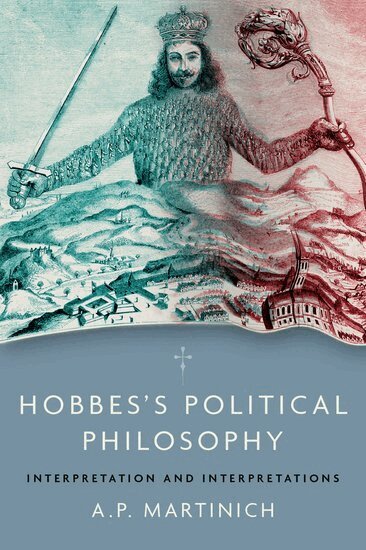
    Hobbes's Political Philosophy

    Interpretation and Interpretations

    AvA.P. Martinich

    Inbunden, Engelska, 2021

    1 333 kr

    Beställningsvara. Skickas inom 5-8 vardagar. Fri frakt över 249 kr.

    Fler format och utgåvor

    E-bok

    1 136 kr

    E-bok

    1 139 kr

    Beskrivning

    Thomas Hobbes, the greatest English political philosopher, argued that human beings needed government in order to save their lives from being "solitary, poor, nasty, brutish, and short." They form governments by making a contract with each other to support a sovereign, to whom they give their right of governing themselves. In other words, government is artificial and not natural to human beings. Hobbes's arguments are formidable, but often unacceptable. For example, few people believe Hobbes's claim that the authority of their government is unlimited. Government needs to be limited in some way, such as a system of check and balances, to prevent tyranny. Identifying exactly where Hobbes went wrong is difficult, but also illuminates the truth about government.Hobbes's Political Philosophy: Interpretation and Interpretations aims to clarify Hobbes's positions by examining what Hobbes considered a science of politics, a set of timeless truths grounded in definitions. A.P. Martinich explains this science of politics, examining Hobbes's views on the laws of nature, authorization and representation, sovereignty by acquisition, and others. He argues that in addition to the timeless science, Hobbes had two timebound projects. The first was to eliminate the apparent conflict between the new science of Copernicus and Galileo and traditional Christian doctrine by distinguishing science from religion and understanding Christianity as essentially belief in the literal meaning of the Bible. The second was to show that Christianity is not politically destabilizing by appealing to biblical teachings such as "Servants, obey your masters," and "All authority comes from God."In examining Hobbes's views on political philosophy, Martinich gives a comprehensive overview of Hobbes's historical context and puts his arguments in dialogue with other interpretations of Hobbes's philosophy, drawing on the work of scholars such as Jeffrey Collins, Edwin Curley, John Deigh, and Quentin Skinner. This new interpretation of Hobbes's work will be of interest to philosophers interested in the history of philosophy as well as those interested in political philosophy, theology, and moral philosophy.

    Produktinformation

    • Utgivningsdatum:2021-10-25
    • Mått:245 x 166 x 25 mm
    • Vikt:594 g
    • Format:Inbunden
    • Språk:Engelska
    • Antal sidor:306
    • Förlag:OUP USA
    • ISBN:9780197531716

    Utforska kategorier

    • Filosofiska discipliner inom Filosofi och religion

    Mer om författaren

    A. P. Martinich received his Ph. D. from the University of California at San Diego in 1973. He specialized in the philosophy of language and the history of political philosophy, especially 17th century English philosophy. He was Vaughan Centennial Professor in Philosophy from 1999 until his retirement in 2020. He was also Professor of History and of Government. He was a member of the Board of Directors of the Journal of the History of Philosophy from 1983 until 2018 and vice-president of the Board from 1996 until 2018. For many years, he has been a member of the advisory board of several journals or professional organizations such as, Comparative Philosophy (2009- ), Hobbes Studies (2013- ) and the European Hobbes Society (2015- ). He is currently emeritus professor of philosophy. His books and articles have been translated into Chinese, Korean, Persian, Portuguese, Slovak, and Turkish. He has lectured internationally for decades, especially in the People's Republic of China.

    Recensioner i media

    Ruth Boeker's book presents a very solid and very original discussion of Locke's theses, as well as a reassessment of the debate they have generated...The analytical orientation of the work, hardly surprising for such a subject, allows a clarification of the theses and the debates, according to a rigorous perspective, without being neither too dry nor too arduous.

    Innehållsförteckning

    • Introduction 1. Hobbes's Political-Philosophical Project: Science and Subversion2. Interpretation and Hobbes's Political Philosophy3. On the Proper Interpretation of Hobbes's Philosophy4. The Interpretation of Covenants in Leviathan 5. Four Senses of Meaning in the History of Ideas6. Law and Self-Preservation: On Misinterpreting Hobbes's Philosophy, 1650-17007. The Laws of Nature are the Laws of God in Leviathan8. Leo Strauss's Olympian Interpretation: Right, Self-Preservation and Law in The Political Philosophy of Thomas Hobbes 9. Sovereignty by Acquisition10. Natural Sovereignty and Omnipotence in Hobbes's Leviathan11. The Author of Sin and the Demoniacs: Two Calvinist Problems Concerning Hobbes and Some of His Contemporaries12. Hobbes's Erastianism and Interpretation13. Sovereign-Making and Biblical Covenants in On the Citizen BibliographyPermissions