• Fri frakt över 249 kr
  • •
  • Snabba leveranser
  • •
  • Billiga böcker
Kundservice

Du är på sajten för privatpersoner.

Företag, bibliotek eller offentlig verksamhet?

Du handlar på classic.bokus.com, där alla dina funktioner finns intakta.
Till classic.bokus.com
Bokus logotyp. Gå till startsidan.
  • Erbjudanden
  • Nyheter
  • Student
  • Topplistor
  • Barn & ungdom
  • Bokus Play
  • E-böcker
  • Pocketböcker
  • Spel & pussel

10% rabatt på allt med kod NYSTART10 →

Sidfot

Mina sidor

    Hjälp

    • Kundservice
    • Vanliga frågor och svar
    • Frakt och leverans
    • Retur vid ångerrätt
    • Reklamera vara
    • Betalning
    • Köpvillkor
    • Allmänna villkor
    • Information om webbplatsens tillgänglighet

    Om Bokus

    • Om oss
    • Pressrum
    • För studenter
    • För företag
    • För bibliotek och offentlig verksamhet
    • För leverantörer
    • Hållbarhet

    Populärt

    • Aktuella erbjudanden
    • Presentkort
    • Studentlitteratur
    • Nya böcker
    • Topplistor
    • Signerade böcker
    • Engelska böcker

    Inspiration

    • Boktips
    • BookTok
    • Populära bokserier
    • Barnbokskaraktärer
    • Populära författare
    Logotyp för Bokus
    Följ oss på Facebook (extern länk)Följ oss på Instagram (extern länk)Följ oss på YouTube (extern länk)Följ oss på TikTok (extern länk)
    bokus @ CookiesAnpassa cookiesIntegritetspolicyKöpvillkor
    Till Citymail hemsida (extern länk)Till Budbee hemsida (extern länk)Till Postnord hemsida (extern länk)Till Schenker hemsida (extern länk)Till Early Bird hemsida (extern länk)Till Walleys hemsida (extern länk)
    1. Språk och ordböcker
    2. Språkvetenskap och lingvistik

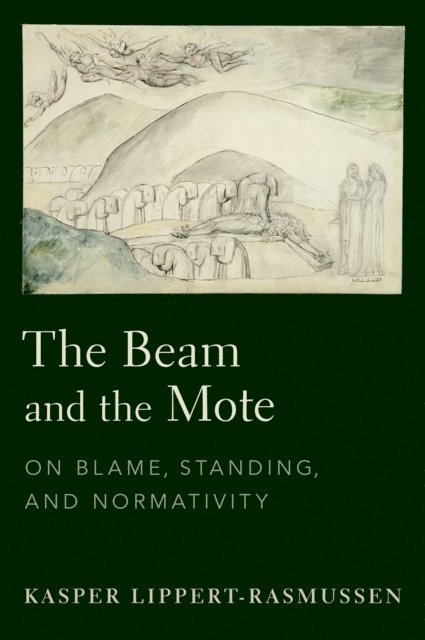
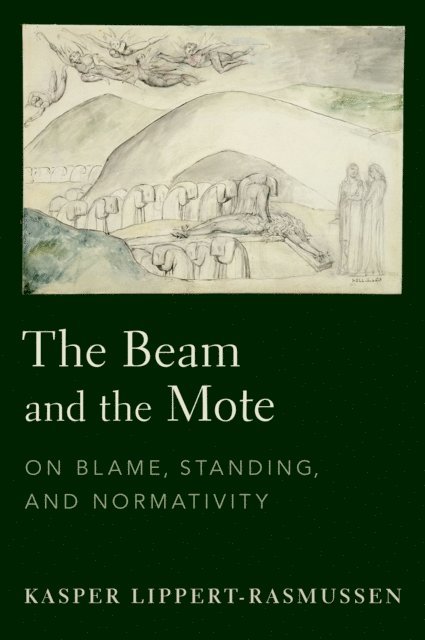
    The Beam and the Mote

    On Blame, Standing, and Normativity

    AvKasper Lippert-Rasmussen

    Inbunden, Engelska, 2023

    836 kr

    Beställningsvara. Skickas inom 5-8 vardagar. Fri frakt över 249 kr.

    Beskrivning

    “Thou hypocrite, first cast out the beam out of thine own eye; and then shalt thou see clearly to cast out the mote out of thy brother's eye” says the Bible. In other words: there is something problematic about one person blaming another, when the blamer's faults are even greater.Many believe that even if one has done something blameworthy, one can dismiss blame when coming from a hypocritical blamer. Kasper Lippert-Rasmussen examines the nature and ethics of standingless, hypocritical blame. It argues that hypocrites lack standing to blame in virtue of their lack of commitment to the norms to which they appeal in their blame; that hypocritical blame is pro tanto morally wrong because it involves treating the blamee as an inferior; and that there are many other sources of lacking standing to blame than hypocrisy, e.g., complicity. Lippert-Rasmussen extrapolates these analyses to other moral responses, notably praising and forgiving. So far, philosophers interested in standing have focused narrowly on blaming, but many other moral responses require standing as well. Indeed, Lippert-Rasmussen argues that considerations about standing apply to illocutionary acts not involving appeals to moral norms, e.g., non-moral encouragements and epistemic blame. In closing, Lippert-Rasmussen uses insights related to the idea of standing as a basis for making a grand claim about how part of morality is interpersonal in a sense often ignored in discussions of mainstream first-order moral theories, and to elucidate the nature of the moral wrong involved in relying on negative statistical generalizations about certain groups of people.

    Produktinformation

    • Utgivningsdatum:2023-12-19
    • Mått:229 x 160 x 40 mm
    • Vikt:567 g
    • Format:Inbunden
    • Språk:Engelska
    • Antal sidor:272
    • Förlag:OUP USA
    • ISBN:9780197544594

    Utforska kategorier

    • Språkvetenskap och lingvistik inom Språk och ordböcker
    • Filosofiska discipliner inom Filosofi och religion

    Mer om författaren

    Kasper Lippert-Rasmussen is professor of political theory at University of Aarhus, Denmark and professor II in philosophy at the Arctic University of Norway-UiT. He has published widely on issues in ethics and political philosophy. Previous books include: Born Free and Equal (Oxford University Press, 2013), Relational Egalitarianism (Cambridge University Press, 2018), Making Sense of Affirmative Action (Oxford University Press, 2020). He was associate editor at Ethics (2008-2020) and Chair for the Society for Applied Philosophy 2011-2014. Presently, he is director of the Center for the Experimental-Philosophical Study of Discrimination, University of Aarhus.

    Recensioner i media

    Recommended. Upper-division undergraduates through faculty; general readers.

    Innehållsförteckning

    • Acknowledgements Introduction1. Topic and main aims2. Structure3. Significance Chapter 1: Hypocritical blame1. Introduction2. When is blame hypocritical? 2.1 The blaming condition2.2 The incoherence condition2.3 The no-self-blame condition2.4 The no-justification condition 2.5 Summary3. Standing to blame and its denial4. Other accounts of what it is to dismiss blame on grounds of the hypocrite's lack of standing5. Conclusion Chapter 2: Complications and defeaters of standing1. Introduction2. Private blame3. Self-blame4. Third-person blame5. Degrees of blame and degrees of standing6. Skepticism about standing to blame7. Why does hypocrisy undermine standing to blame?8. Conclusion Chapter 3: What, if anything, makes hypocritical blame morally wrong?1. Introduction2. Lack of desert 3. Lack of commitment 4. Wrong attention 5. Transgression of moral authority 6. Failure of reciprocity7. Moral community 8. Implying falsehoods 9. A clash with moral equality 10. Conclusion Chapter 4: Other ways of not having standing to blame1. Introduction2. Tu quoque3. Complicity4. None of your business5. <"You don't know what it's like> "6. <"You don't accept that principle yourself> "7. Conclusion Chapter 5: Praising1. Introduction2. What is praising?3. Standing to praise4. Hypocritical praise5. The wrongfulness of hypocritical praise6. Other forms of standingless praise7. Standing to prame8. Conclusion Chapter 6: Forgiving1. Introduction2. What is it to forgive?3. Dismissing forgiveness as standingless4. Hypocritical forgiving5. What undermines standing to forgive?6. The wrongfulness of hypocritical forgiveness7. Other ways in which forgiving can be standingless8. Fromtaking9. Conclusion10. Appendix: Forgiving and standing to apologize Chapter 7: Morality, normativity, and standing1. Introduction2. Encouraging3. Epistemic blame4. Consequentialism, deontology, and the interpersonal nature of holding accountable5. Standing and moral encroachment6. Conclusion Bibliography Index