• Fri frakt över 249 kr
  • •
  • Snabba leveranser
  • •
  • Billiga böcker
Kundservice

Du är på sajten för privatpersoner.

Företag, bibliotek eller offentlig verksamhet?

Du handlar på classic.bokus.com, där alla dina funktioner finns intakta.
Till classic.bokus.com
Bokus logotyp. Gå till startsidan.
  • Erbjudanden
  • Nyheter
  • Student
  • Topplistor
  • Barn & ungdom
  • Bokus Play
  • E-böcker
  • Pocketböcker
  • Spel & pussel

10% rabatt på allt med kod: NYSTART10 →

Sidfot

Mina sidor

    Hjälp

    • Kundservice
    • Vanliga frågor och svar
    • Frakt och leverans
    • Retur vid ångerrätt
    • Reklamera vara
    • Betalning
    • Köpvillkor
    • Allmänna villkor
    • Information om webbplatsens tillgänglighet

    Om Bokus

    • Om oss
    • Pressrum
    • För studenter
    • För företag
    • För bibliotek och offentlig verksamhet
    • För leverantörer
    • Hållbarhet

    Populärt

    • Aktuella erbjudanden
    • Presentkort
    • Studentlitteratur
    • Nya böcker
    • Topplistor
    • Signerade böcker
    • Engelska böcker

    Inspiration

    • Boktips
    • BookTok
    • Populära bokserier
    • Barnbokskaraktärer
    • Populära författare
    Logotyp för Bokus
    Följ oss på Facebook (extern länk)Följ oss på Instagram (extern länk)Följ oss på YouTube (extern länk)Följ oss på TikTok (extern länk)
    bokus @ CookiesAnpassa cookiesIntegritetspolicyKöpvillkor
    Till Citymail hemsida (extern länk)Till Budbee hemsida (extern länk)Till Postnord hemsida (extern länk)Till Schenker hemsida (extern länk)Till Early Bird hemsida (extern länk)Till Walleys hemsida (extern länk)
    1. Samhälle och politik
    2. Politik och statsskick
    3. Statsvetenskap och politisk teori

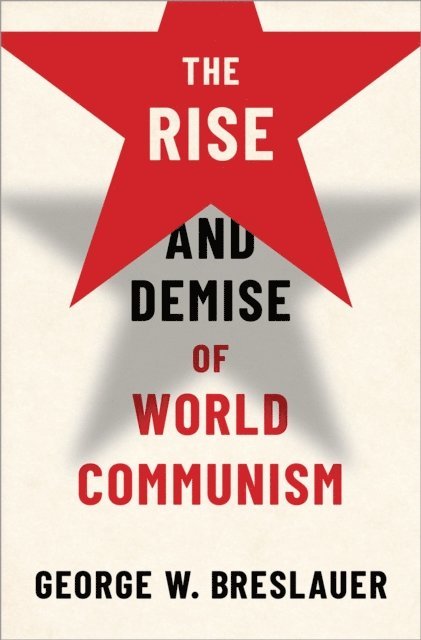
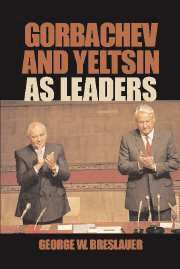
    The Rise and Demise of World Communism

    AvGeorge W. Breslauer

    Inbunden, Engelska, 2022

    408 kr

    Beställningsvara. Skickas inom 5-8 vardagar. Fri frakt över 249 kr.

    Beskrivning

    A concise, readable, and novel interpretation of the history of communist states.Sixteen states came to be ruled by communist parties during the 20th century. One, the Soviet Union, was geographically the largest nation in the world and a superpower. Another, China, had the world's largest population. At communism's high point, its adherents envisioned global triumph. Today, however, only five communist regimes remain in power. Why?In The Rise and Demise of World Communism, George Breslauer, a specialist who has spent decades observing the evolution of communist states, provides a sweeping history of the world communist movement, focusing in particular on what communist states shared in common and why they began to differ from each other over time. Throughout, Breslauer explores the relations among communist states as well as the relations between those states and the world of increasingly affluent, and militarily formidable, democratic-capitalist powers. He finds that these regimes all came to power in the context of warfare or its aftermath, followed by the consolidation of power by a revolutionary elite that valued "revolutionary violence" as the preferred means to an end, based upon Marx's vision of apocalyptic revolution and Lenin's conception of party organization. As Breslauer shows, all these regimes went on to "build socialism" according to a Stalinist template and were initially dedicated to "anti-imperialist struggle" as members of a world communist movement. But their common features gave way to diversity, difference, and defiance after the death of Joseph Stalin in 1953. For many reasons, and in many ways, those differences soon blew apart the world communist movement and eventually led to the collapse of European communism. Even though a few communist regimes still remain in power, the dream of world communism is dead. But the future of the remaining communist regimes is uncertain.An accessible history of one of the most important political phenomena of the past 150 years, The Rise and Demise of World Communism provides readers with a crisp account of the entire movement--from the theories of Marx and Lenin to the on-the-ground policies of Stalin, Mao, Gorbachev, Deng, and other communist leaders-that culminates in our own era.
    Produktinformation

    • Utgivningsdatum:2022-01-13
    • Mått:157 x 236 x 33 mm
    • Vikt:635 g
    • Format:Inbunden
    • Språk:Engelska
    • Antal sidor:368
    • Förlag:OUP USA
    • ISBN:9780197579671

    Utforska kategorier

    • Statsvetenskap och politisk teori inom Samhälle och politik

    Mer om författaren

    George W. Breslauer is a specialist on Soviet and post-Soviet politics and foreign relations in the Department of Political Science at the University of California at Berkeley. He advanced through the ranks to full professor of political science, was awarded the Distinguished Teaching Award of the Division of Social Sciences in 1997, and was appointed Chancellor's Professor in 1998 for exceptional distinction in research, teaching, and service to the university. He served UC Berkeley as dean of social sciences (1999-2006) and as executive vice chancellor and provost (2006-2014). In 2014 he was elected a Fellow of the American Academy of Arts and Sciences. Professor Breslauer is the author or editor of 12 books on Soviet and Russian politics and foreign relations.

    Innehållsförteckning

    • AcknowledgementsIntroductionPart I. General Patterns in World CommunismChapter 1. What did Communist Regimes Have in Common?Chapter 2. How did Communist Regimes Differ from Each Other?Chapter 3. The World Communist Movement: From Moscow-Centric to PluralisticPart II. Ideology and Organization: The HeritageChapter 4. Marxism: The VisionChapter 5. Leninism: The InstrumentPart III. Coming to Power and "Building Socialism" in RussiaChapter 6. The Bolshevik Seizure of PowerChapter 7. Consolidating Bolshevik PowerChapter 8. RespiteChapter 9. Building Socialism: Stalin's Revolution from Above, 1928-1934Chapter 10. The Great Terror and Stalinist DespotismChapter 11. Was Stalinism a Logical Continuation of Marxism-Leninism?Chapter 12. Was Stalin's Revolution from Above a Rational Strategy of Modernization?Chapter 13. Stalinism and World Communism in the 1930sChapter 14. The Impact of World War II on the Soviet Union and World CommunismPart IV. The Stalinist Model Spreads Westward and EastwardChapter 15. The Creation of East European Communist StatesChapter 16. Origins and Entrenchment of the Cold WarChapter 17. World War II and the Creation of Asian Communist States: The People's Republic of ChinaChapter 18. Consolidating Power and Building Socialism in ChinaChapter 19. Communist Parties Come to Power in Korea and VietnamPart V. After Stalin: From Similarity to DifferenceChapter 20. What Follows Stalinism in the USSR?Chapter 21. Diversity and Defiance Within the World Communist MovementChapter 22. "Building Communism": Competition for Ideological "Correctness" Within the World Communist MovementChapter 23. The Sino-Soviet Schism, 1957-1963Chapter 24. Cuba's Indigenous Revolution, 1959-70Chapter 25. The Soviet Union After Khrushchev: Bureaucratic LeninismChapter 26. Alternatives to Utopia in China, 1960-1965Chapter 27. The Great Proletarian Cultural Revolution, 1966-1969Chapter 28. Maoism: An AccountingPart VI. The Realignment of International Relations: From Proletarian Internationalism to Balance-of-Power PoliticsChapter 29. The Collapse of the World Communist Movement and the Rise of DetenteChapter 30. Why US-Soviet Détente FailedChapter 31. Post-Detente Realignment: the Soviet Invasion of Afghanistan, December 1979Part VII. The Collapse of European CommunismChapter 32. Varieties of Opposition to the Soviet Model in Eastern Europe, 1968-1985Chapter 33. Gorbachev's Peaceful Revolution from AboveChapter 34. Gorbachev and the Abandonment of Anti-Imperialist StrugglePart VIII. The Remains of Communism in a Post-Communist WorldChapter 35. From Maoism to Market Leninism: The Chinese Economic Miracle After MaoChapter 36. China in a Post-Communist World: Can Leninism Survive Market Leninism?Chapter 37. Market Leninism in VietnamChapter 38. Market Leninism in LaosChapter 39. Bureaucratic Leninism in CubaChapter 40. Stalinism in North KoreaPart IX. ConclusionsChapter 41. Why the Drive to Difference?Chapter 42. Assessing the Communist Experience: Achievement or Tragedy?Chapter 43: Is There a Future for New Communist States?