• Fri frakt över 249 kr
  • •
  • Snabba leveranser
  • •
  • Billiga böcker
Kundservice

Du är på sajten för privatpersoner.

Företag, bibliotek eller offentlig verksamhet?

Du handlar på classic.bokus.com, där alla dina funktioner finns intakta.
Till classic.bokus.com
Bokus logotyp. Gå till startsidan.
  • Erbjudanden
  • Nyheter
  • Student
  • Topplistor
  • Barn & ungdom
  • Bokus Play
  • E-böcker
  • Pocketböcker
  • Spel & pussel

10% rabatt på allt med kod NYSTART10 →

Sidfot

Mina sidor

    Hjälp

    • Kundservice
    • Vanliga frågor och svar
    • Frakt och leverans
    • Retur vid ångerrätt
    • Reklamera vara
    • Betalning
    • Köpvillkor
    • Allmänna villkor
    • Information om webbplatsens tillgänglighet

    Om Bokus

    • Om oss
    • Pressrum
    • För studenter
    • För företag
    • För bibliotek och offentlig verksamhet
    • För leverantörer
    • Hållbarhet

    Populärt

    • Aktuella erbjudanden
    • Presentkort
    • Studentlitteratur
    • Nya böcker
    • Topplistor
    • Signerade böcker
    • Engelska böcker

    Inspiration

    • Boktips
    • BookTok
    • Populära bokserier
    • Barnbokskaraktärer
    • Populära författare
    Logotyp för Bokus
    Följ oss på Facebook (extern länk)Följ oss på Instagram (extern länk)Följ oss på YouTube (extern länk)Följ oss på TikTok (extern länk)
    bokus @ CookiesAnpassa cookiesIntegritetspolicyKöpvillkor
    Till Citymail hemsida (extern länk)Till Budbee hemsida (extern länk)Till Postnord hemsida (extern länk)Till Schenker hemsida (extern länk)Till Early Bird hemsida (extern länk)Till Walleys hemsida (extern länk)
    1. Samhälle och politik
    2. Social välfärd och brottslighet
    3. Socialt arbete och välfärd

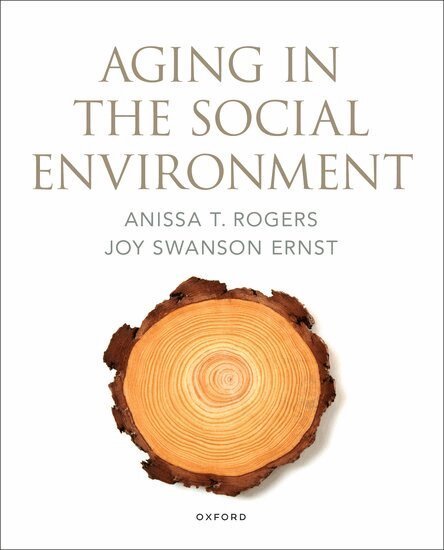
    Aging in the Social Environment

    AvAnissa T. Rogers,Joy Swanson Ernst

    Häftad, Engelska, 2023

    1 520 kr

    Beställningsvara. Skickas inom 3-6 vardagar. Fri frakt över 249 kr.

    Beskrivning

    Aging in the Social Environment examines the aging process from micro, mezzo, and macro lenses. The micro lens looks at individual processes of aging such as biological, emotional, spiritual, and psychological factors along with topics such as health, resilience, sexuality, and creativity as we age. The mezzo lens looks at processes beyond the individual including work, roles, family, caregiving, living arrangements, religious involvement, and health care. The macro lens looks at factors such as culture, media, laws, policies, language, and stereotypes about aging. Chapters integrate information from an intersectional perspective: topics are discussed examining factors such as age, class, race, ethnicity, geography, culture, gender identification, and sexual orientation. Also, topics are approached using queer, feminist, and strengths-based approaches instead of a problem-based approach, as used in most texts. These approaches help students to critically think about current, entrenched attitudes about aging and to look at aging processes from different perspectives. It gives attention throughout on the use of language and stereotypes for the aging process, and incorporates new, strengths-based language (e.g., third age) to provide readers with alternative ways of thinking and talking about aging. Finally, the book is organized using a human development approach to integrate aging more thoroughly with the entire developmental process rather than treating it as a separate, distinct process in human development that occurs at the end of life.

    Produktinformation

    • Utgivningsdatum:2023-08-07
    • Mått:191 x 235 x 15 mm
    • Vikt:503 g
    • Format:Häftad
    • Språk:Engelska
    • Antal sidor:304
    • Förlag:OUP USA
    • ISBN:9780197585092

    Utforska kategorier

    • Socialt arbete och välfärd inom Samhälle och politik

    Mer om författaren

    Anissa T. Rogers is a Professor at California State University, San Bernardino's School of Social Work. Joy Swanson Ernst is an Associate Professor at the Wayne State University School of Social Work.

    Recensioner i media

    The authors' stance is what I see lacking in many existing texts, namely a more passionate and engaging tone that courteously challenges more textbook-like writing that is devoid of a strong view.

    Innehållsförteckning

    • Chapter 1. Gerontology: The Study of Aging1.1 What is Gerontology? I.Population Aging II.Consequences of Population Aging1.2 Careers in Gerontology1.3 Common Theories of Aging I. Biopsychosocial Theories II. Additional Perspectives on Aging 1.4 What is Ageism?1.5 Types of Ageism I. Middle-ageism II. Neuroageism III. Benevolent Ageism IV. Individual and Institutional Ageism1.6 How Culture Influences the Perception of Aging I. Media and Literature II. Interplay of Complex Factors 1.7 Consequences of Ageism I.Effect on Physical and Mental Health II.Effect on Health Care III. Othering IV. Microaggressions V. Effect on Social Policy1.8 A More Positive View of Aging I. Successful Aging II. Optimal Aging III. Avoiding Ageist Language Chapter 2. Biology of Aging2.1 Defining "Age" I. Subjective Age II. Intersectional Factors that Affect Aging2.2 Age and Human Development2.3 Cross-Cultural Perspectives on Biological Aging2.4 Theories of Biological Aging I. Genetic (Programmed) Theory II. Wear-and-Tear and Mitochondrial Theories2.5 Age-Related Changes by Body System I. Skin and Hair II. Senses: Hearing and Vision III. Musculoskeletal System IV. Immune System V. Endocrine System VI. Central Nervous System: The Brain Dementia Treatment for Dementia2.6 Promoting Health and Longevity I. Health Disparities and Older Adults II. Promoting Health and Well-Being Nutrition Physical Activity Behavioral and Environmental Accommodations Chapter 3. Psychology of Aging3.1 Theories of Psychological Age I. Erikson's Psychosocial Stages of Development II. Peck's Theory of Ego Integrity III. Intersectional and Cultural Factors IV. Intersection of Age and Gender V. Intersections of Other Characteristics3.2 Personality and Emotion I. Personality and Aging II. Emotion and Aging 3.3 Learning I. Cognitive Plasticity II. Preserving Healthy Brain Function III. Overcoming Barriers to Learning3.4 Mental Health I. Depression II. Anxiety III. Substance Use Disorders IV. Suicide V. Screening and Diagnosis VI. Treatment Cognitive Behavioral Therapy Narrative and Reminiscence Therapies Medications3.5 Resiliency, Creativity, Productivity, and Wisdom I. Resiliency II. Creativity III. Productivity IV. Wisdom3.6 Spirituality Chapter 4. Sociology of Aging4.1 Social Theories of Aging I. Disengagement Theory II. Activity Theory III. Continuity Theory IV. Life Course Model of Social Functioning V. Social Convoy Model4.2 Social Connectedness I. Physical and Mental Health Benefits II. Social Connectedness Across Cultures4.3 Social Connection via Friendships I. Evolving Social NetworksII. Benefits of Friendship III. Friendships Among LGBT Older Adults IV. Female vs. Male Friend Groups V. Intergenerational Friendships4.4 Social Connection via Sexuality and Intimacy I. Beliefs About Sexuality II. Decreased Sexual Activity III. Differences Between Population Groups IV. Risk of Sexually Transmitted Disease V. Influence of Technology Chapter 5. Death and End-of-Life Issues5.1 What is Death? I. Defining Physical Death II. Physical Process of DyingIII. Perceptions of Death5.2 End-of-Life Rights and Choices I. Right to Die II. Death with Dignity Legislation III. Hospice Care IV. Disparities at End of Life5.3 Preparing for End of Life 5.4 Experiencing Grief and Loss I. Types of Grief II. Theories and Models of Grief Kübler-Ross Theory Other Models of Grief III. Awareness of Death5.5 Memorializing and Taking Care of the Dead I. Disposition of Bodies Green Burials Organ, Tissue, and Body Donation II. Memorialization After Death III. Impact of COVID Pandemic on Funeral Practices Chapter 6. Family and Caregiving6.1 Defining "Family"6.2 Theories of Family and Aging I. Family Development Theory II. Theory of Intergenerational Solidarity and Conflict III. Theory of Intergenerational Ambivalence6.3 Familial Roles and Relationships I. Marriage and Long-Term Partnerships II. Defining a "Good" MarriageIII. Divorce III. Parents and Adult Children Adult Children with Challenges Effects of Increased Longevity IV. Sibling Relationships V. Blended Families Negotiation of Boundary Ambiguity Intergenerational Resource Exchange Filial Norms and Expectations VI. Multigenerational Families and Households Demographics Benefits and Drawbacks of Multigenerational Living VII. Grandparents and Grandchildren Role of Grandparents Caring for Grandchildren VIII. Companion Animals6.4 Caring for Older Adults I. Adults with Dementia II. Informal Care Rewards and Challenges Support for Caregivers III. Formal Care IV. Impact on Caregivers V. Person- and Family-Centered Care6.5 Elder Abuse I. Factors That Contribute to Elder Abuse Caregiving Situations Intergenerational Ambivalence II. Families with a History of Violence III. Prevention and Intervention Strategies Chapter 7. Work and Retirement7.1 Work and Older Adults I. The Nature of Work II. U.S. Labor Trends III. Generational Perspective IV. Ageism in the Workplace Intergenerational Work Teams Abolishing Mandatory Retirement Antidiscrimination Laws V. Caregiving and Work7.2 Retirement I. Sense of Purpose and Longevity II. Effects of Retirement III. Phases of Retirement7.3 Financial Support in Retirement7.4 Volunteerism and Community Involvement7.5 Lifelong Learning Chapter 8. Living Arrangements8.1 Housing and Care Options for Older Adults I. Types of Residential Facilities and Communities II. Older Adults with Special Needs8.2 Aging in Place I. The Importance of Place II. Research on Aging in Place III. Changing Needs Over Time8.3 Theories and Approaches to Place and Aging I. Environmental Gerontology II. Geographical Gerontology8.4 Older Adults in Urban and Rural Environments8.5 The Importance of NeighborhoodsI. Gentrification II. Urban Neighborhoods: Challenges, Resources, and Resilience Detroit Minneapolis8.6 Housing Options for Older Adults I. Historical Background II. The Housing Continuum III. Innovative Solutions Age-Friendly Communities Villages LGBT 65+ Housing Initiatives Home Sharing Communal Living Intergenerational Programming and Communities IV. Housing for Low-Income Seniors V. Continuing Care Retirement Communities VI. Assisted Living Facilities VII. Supportive Housing VIII. Nursing Homes IX COVID-19 and Long-Term Care Facilities8.7 Living Arrangements of Vulnerable Populations I. Older Adults in Prison II. Older Victims of Domestic Abuse III. Older Adults Without Housing Chapter 9. Community Resources and Connectedness9.1 The Importance of Connection I. Defining Community II. Community ResourcesIII. Self-Determination and Social Usefulness IV. Social Connection and Social Isolation9.2 Religious and Spiritual Communities I. Spiritual Practices II. Benefits of Religious and Spiritual Involvement9.3 Recreation and Community Involvement I. Sports and Fitness II. Travel III. The Arts IV. Volunteer Work V. Socializing in "Third Places"9.4 Health Care Services I. Access to Health Care II. Primary Care III. Geriatricians IV. Age-Friendly Health Care V. Treatment Programs9.5 Social Services for Older Adults and Their Families I. Prevention Services II. Adult Day Care III. In-Home Personal Care IV. Protective Services V. Support Services VI. Resource Brokerage and Linkage Chapter 10. Media and Technology10.1 Media and Older Adults I. News Media II. Educational and Entertainment Media III. Ageism in the Media IV. Social Media10.2 Technology Use by Older Adults I. Access to Technology II. Combating Stereotypes III. Technology Use for Lifelong Learning IV. Technology Use for Social Connection and Entertainment V. Technology Use to Improve Health VI. Digital Literacy VII. Online Safety10.3 Technology and End of Life Chapter 11. Global Trends in Aging11.1 Global Aging I. United Nations Initiatives Related to Aging II. Population Aging III. Living Arrangements IV. Life Expectancy and Health V. Work and Retirement VI. Ageism Worldwide11.2 Culture and Aging I. Cross-National Comparisons II. Cross-Cultural ComparisonsIII. Cultural Influences on Aging11.3 Aging in the United States in Global Context I. U.S. Life Expectancy II. Foreign-Born Population11.4 Immigration, Migration, and Aging I. Who Migrates and Why? II. Older Adults in Home Countries III. Older Immigrants in Destination Countries Early vs. Late-Life Immigrants Older Refugees Fleeing War and Terror Legal Status and Threat of Deportation11.5 Aging and Climate Change I. Climate Change and Migration II. Health Impacts of Climate Change III. Climate Change and Natural Disasters Chapter 12. Legal, Policy, and Economic Issues That Affect Older U.S. Adults12.1 Social Policies and Legislation I. Social Policy and Aging Policy II. History of U.S. Aging Policies III. Social Security Beneficiaries Retirement Age Sustainability IV. MedicareV. MedicaidVI. Affordable Care Act VII. Older Americans Act VIII. Long-Term Care Services and Supports Cost of Long-Term Care Quality of Long-Term Care IX. Elder Justice Act X. Americans with Disabilities Act XI. Assistance for Low-Income Older Adults12.2 Poverty, Inequality, and Cumulative Disadvantage I. Poverty MeasurementII. Who is Poor? Variance Between Population Groups Cumulative Advantage/DisadvantageIII. Poverty and Cumulative Disadvantage12.3 Political Participation and Advocacy I. Voting Patterns of Older Adults II. Intersection of Politics and Policy III. Advocacy Organizations AARP Gray Panthers Leadership Council of Aging Organizations Other Organizations