• Fri frakt över 249 kr
  • •
  • Snabba leveranser
  • •
  • Billiga böcker
Kundservice

Du är på sajten för privatpersoner.

Företag, bibliotek eller offentlig verksamhet?

Du handlar på classic.bokus.com, där alla dina funktioner finns intakta.
Till classic.bokus.com
Bokus logotyp. Gå till startsidan.
  • Erbjudanden
  • Student
  • Topplistor
  • Barn & ungdom
  • Bokus Play
  • E-böcker
  • Ljudböcker
  • Pocketböcker
  • Spel & pussel

10% rabatt på allt med kod NYSTART10 →

Sidfot

Mina sidor

    Hjälp

    • Kundservice
    • Vanliga frågor och svar
    • Frakt och leverans
    • Retur vid ångerrätt
    • Reklamera vara
    • Betalning
    • Köpvillkor
    • Allmänna villkor
    • Information om webbplatsens tillgänglighet

    Om Bokus

    • Om oss
    • Pressrum
    • För studenter
    • För företag
    • För bibliotek och offentlig verksamhet
    • För leverantörer
    • Hållbarhet

    Populärt

    • Aktuella erbjudanden
    • Presentkort
    • Studentlitteratur
    • Nya böcker
    • Topplistor
    • Signerade böcker
    • Engelska böcker

    Inspiration

    • Boktips
    • BookTok
    • Populära bokserier
    • Barnbokskaraktärer
    • Populära författare
    Logotyp för Bokus
    Följ oss på Facebook (extern länk)Följ oss på Instagram (extern länk)Följ oss på YouTube (extern länk)Följ oss på TikTok (extern länk)
    bokus @ CookiesAnpassa cookiesIntegritetspolicyKöpvillkor
    Till Citymail hemsida (extern länk)Till Budbee hemsida (extern länk)Till Postnord hemsida (extern länk)Till Schenker hemsida (extern länk)Till Early Bird hemsida (extern länk)Till Walleys hemsida (extern länk)
    1. Kultur
    2. Scenkonst och film
    3. Film

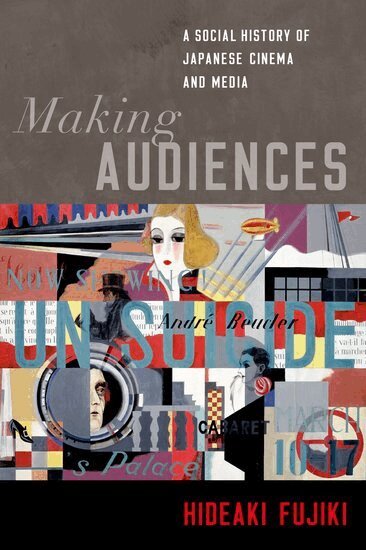
    Making Audiences

    A Social History of Japanese Cinema and Media

    AvHideaki Fujiki

    Inbunden, Engelska, 2022

    2 889 kr

    Beställningsvara. Skickas inom 5-8 vardagar. Fri frakt över 249 kr.

    Fler format och utgåvor

    E-bok

    1 956 kr

    E-bok

    1 956 kr

    Beskrivning

    Film has always been a key technology for producing and disseminating attachments to 'the social.' Making Audiences explores the century-old relationships between Japanese media and social subjects, analyzing the connections between cinema audiences and five significant discursive terms: minshu (the people), kokumin (the national populace), toa minzoku (the East Asian race), taishu (the masses), and shimin (citizens). Fujiki narrates the history of Japan's transmedia ecology, illuminating cinema's enmeshment with other forms of media, from vaudeville to the internet, so that cinema audiences emerge as simultaneously shaped by and shaping social history. His extensive empirical research and commitment to interdisciplinarity bring new perspective to the history of Japanese society and culture in its global context from the early twentieth century up to the beginning of the twenty-first century, setting his insights within the context of total wars, imperialism, gender, ethnicity, mass society and communication, the ethics of care, citizenship, globalization, neoliberalism, social movements, digital media, and public and intimate spheres. By reorganizing the study of film and its audiences as central players of the history and politics of the 20th century, Fujiki writes the history of Japan and East Asia anew.

    Produktinformation

    • Utgivningsdatum:2022-10-14
    • Mått:155 x 224 x 50 mm
    • Vikt:998 g
    • Format:Inbunden
    • Språk:Engelska
    • Antal sidor:644
    • Förlag:OUP USA
    • ISBN:9780197615003

    Utforska kategorier

    • Film inom Kultur

    Mer om författaren

    Hideaki Fujiki is Professor of Screen Studies at the Graduate School of Humanities, Nagoya University, Japan. His other publications include Making Personas: Transnational Film Stardom in Modern Japan (2013) and The Japanese Cinema Book, co-edited with Alastair Phillips (2020).

    Recensioner i media

    Making Audiences offers a profound reconsideration of the relation between cinema and subject formation. Stressing the historical contingency of competing sociopolitical discourses through which the "subjects" of Japanese cinema have emerged, Fujiki enriches our understanding of audiences and spectators, and delineates a counter-hegemonic method for understanding their discursive capture.