• Fri frakt över 249 kr
  • •
  • Snabba leveranser
  • •
  • Billiga böcker
Kundservice

Du är på sajten för privatpersoner.

Företag, bibliotek eller offentlig verksamhet?

Du handlar på classic.bokus.com, där alla dina funktioner finns intakta.
Till classic.bokus.com
Bokus logotyp. Gå till startsidan.
  • Erbjudanden
  • Student
  • Topplistor
  • Barn & ungdom
  • Bokus Play
  • E-böcker
  • Ljudböcker
  • Pocketböcker
  • Spel och pussel

Skapa nya rutiner – hälsoböcker upp till 50% →

Sidfot

Mina sidor

    Hjälp

    • Kundservice
    • Vanliga frågor och svar
    • Frakt och leverans
    • Retur vid ångerrätt
    • Reklamera vara
    • Betalning
    • Köpvillkor
    • Allmänna villkor
    • Information om webbplatsens tillgänglighet

    Om Bokus

    • Om oss
    • Pressrum
    • För studenter
    • För företag
    • För bibliotek och offentlig verksamhet
    • För leverantörer
    • Hållbarhet

    Populärt

    • Aktuella erbjudanden
    • Presentkort
    • Studentlitteratur
    • Nya böcker
    • Topplistor
    • Signerade böcker
    • Engelska böcker

    Inspiration

    • Boktips
    • BookTok
    • Barnbokskaraktärer
    • Populära författare
    Logotyp för Bokus
    Följ oss på Facebook (extern länk)Följ oss på Instagram (extern länk)Följ oss på YouTube (extern länk)Följ oss på TikTok (extern länk)
    bokus @ CookiesAnpassa cookiesIntegritetspolicyKöpvillkor
    Till Citymail hemsida (extern länk)Till Budbee hemsida (extern länk)Till Postnord hemsida (extern länk)Till Schenker hemsida (extern länk)Till Early Bird hemsida (extern länk)Till Walleys hemsida (extern länk)
    1. Samhälle och politik
    2. Samhälle och kultur
    3. Kultur och medier
    4. Referensverk och tvärvetenskap

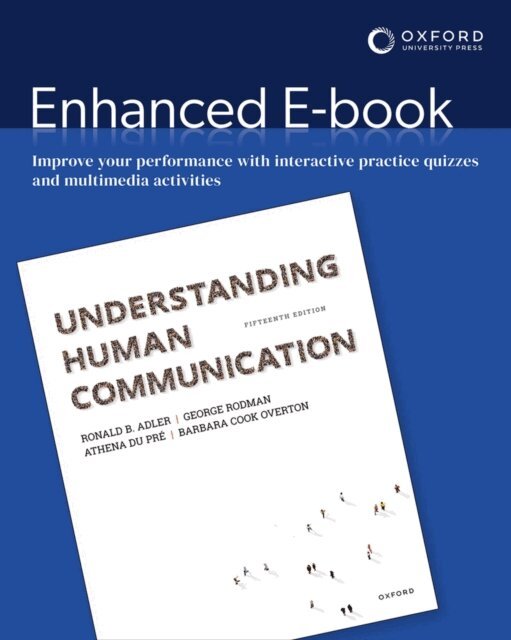
    Understanding Human Communication

    AvRonald B. Adler,George Rodman

    Häftad, Engelska, 2023

    1 555 kr

    Beställningsvara. Skickas inom 5-8 vardagar. Fri frakt över 249 kr.

    Beskrivning

    Understanding Human Communication addresses students' perception that they already know how to communicate--an issue faced by every faculty member. By artfully weaving cutting-edge academic research and theory into the clear, down-to-earth, and student-friendly narrative, the authors help students understand the complexity and depth of human communication and public speaking. The series of concepts builds logically through the chapter sequence, enabling students to further deepen their communication skills as they progress through the book. By accessing the text's integrated digital resources--contemporary and brief video clips; tutorials; and self-assessments---students will be able to see concepts applied in real scenarios, making their learning more meaningful.

    Produktinformation

    • Utgivningsdatum:2023-07-10
    • Mått:213 x 246 x 30 mm
    • Vikt:907 g
    • Format:Häftad
    • Språk:Engelska
    • Antal sidor:544
    • Upplaga:15
    • Förlag:OUP USA
    • ISBN:9780197615638

    Utforska kategorier

    • Referensverk och tvärvetenskap inom Samhälle och politik

    Mer om författaren

    Ronald B. Adler is Professor of Communication, Emeritus, at Santa Barbara City College. George Rodman is Professor in the Department of Television, Radio and Emerging Media at Brooklyn College, City University of New York.Athena du Pré is Distinguished University Professor of Communication at the University of West Florida. Barbara Cook Overton has a doctorate in health communication from Louisiana State University and a Master of Fine Arts in media production from the University of New Orleans.

    Recensioner i media

    Understanding Human Communication has a hands-on approach that students will find very relatable and enjoyable compared to the other texts they are using.

    Innehållsförteckning

    • CONTENTS PrefaceAcknowledgementsAbout the Authors Part 1: Fundamentals of Human Communication Chapter 1: Communication: What and Why1.1 Characteristics of CommunicationDefining CommunicationTransactional Model of Communication1.2 Types of CommunicationIntrapersonal CommunicationDyadic CommunicationInterpersonal CommunicationSmall-Group CommunicationOrganizational CommunicationPublic CommunicationMass CommunicationSocial Media Communication1.3 Communication CompetenceThere's No <"Ideal> " Way to CommunicateCompetence Is SituationalCompetence Is RelationalCompetent Communicators Are EmpathicCompetence Can Be LearnedCompetence Requires EffortCompetent Communicators Self-MonitorCompetent Communicators Are Committed1.4 Misconceptions About CommunicationMyth: Communication Requires Complete UnderstandingMyth: Communication Can Solve All ProblemsMyth: Communication Is GoodMyth: Meanings Are in WordsMyth: Communication Is SimpleMyth: More Communication Is Always BetterMAKING THE GRADEKEY TERMSPUBLIC SPEAKING PRACTICEACTIVITIESFeaturesCommunication Strategies: Maintaining a Healthy Relationship with Social MediaUnderstanding Your Communication: What Type of Communicator Are You?FiguresFigure 1.1 Transactional Model of Communication Chapter 2: Communicating with Social Media2.1 The Roles of Social and Mass MediaCharacteristics of Social MediaSocial Media Uses and GratificationsMasspersonal Communication2.2 Mediated Versus Face-to-Face CommunicationMessage RichnessSynchronicityPermanence2.3 Benefits and Drawbacks of Social MediaBenefits of Social MediaDrawbacks of Social Media2.4 Influences on Mediated CommunicationGenderAge2.5 Communicating Competently with Social MediaMaintaining Positive RelationshipsProtecting YourselfMAKING THE GRADEKEY TERMSPUBLIC SPEAKING PRACTICEACTIVITIESFeaturesUnderstanding Your Communication: What Type of Social Media Communicator Are You?Communication Strategies: Using LinkedIn for Career SuccessCommunication Strategies: Evaluating (Mis)informationTable and FigureTable 2.1 Common Types of Social Media ContentFigure 2.1 Overlapping Boundaries Between Different Types of Media Chapter 3: The Self, Perception, and Communication3.1 Communication and the SelfSelf-ConceptSelf-EsteemPersonalityReflected AppraisalSocial ComparisonSelf-Fulfilling Prophecies3.2 Perceiving OthersSelectionOrganizationInterpretation3.3 Problematic Perceptual TendenciesCategorizing PeopleClinging to First ImpressionsPaying More Attention to Negative Impressions than to Positive OnesJudging Yourself More Charitably than You Judge OthersOvergeneralizingGravitating to the Familiar3.4 Perceptual Skill BuildersEmotional IntelligencePerception Checking3.5 Communication and Identity ManagementPublic and Private SelvesFaceworkWhy Manage Identities?Identity Management and HonestyCharacteristics of Identity ManagementMAKING THE GRADEKEY TERMSPUBLIC SPEAKING PRACTICEACTIVITIESFeaturesCommunication Strategies: Keeping It Real on Social MediaCommunication Strategies: Ways to Reverse Self-Defeating ThinkingCommunication Strategies: Focus on Individuality Rather than StereotypesUnderstanding Your Communication: How Emotionally Intelligent Are You?Communication Strategies: Should You Humblebrag in Job Interviews?Communication Strategies: Work Lessons from Undercover BossFigureFigure 3.1 The Figure-Ground Principle Chapter 4: Communication and Culture4.1 Understanding Cultures and CoculturesSalienceIn-Group and Out-Group4.2 How Cultural Values and Norms Shape CommunicationIndividualism and CollectivismHigh and Low Cultural ContextUncertainty AvoidancePower DistanceTalk and Silence4.3 Cocultures' Influence on CommunicationIntersectionality TheoryRace and EthnicitySex and GenderReligionDisabilityPolitical ViewpointsAge/Generation4.4 Becoming an Effective Intercultural CommunicatorContact with a Diverse Array of PeopleTolerance for AmbiguityOpen-MindednessKnowledge and SkillPatience and PerseveranceMAKING THE GRADEKEY TERMSPUBLIC SPEAKING PRACTICEACTIVITIESFeaturesUnderstanding Your Communication: How Much Do You Know About Other Cultures?Communication Strategies: Talking About RaceCommunication Strategies: Communicating Respectfully About GenderCommunication Strategies: Discussing Politics Responsibly on Social MediaCommunication Strategies: Coping with Culture ShockTablesTable 4.1 Individualistic Versus Collectivistic CulturesTable 4.2 High- and Low-Context CommunicationTable 4.3 Differences Between Low and High Uncertainty AvoidanceTable 4.4 Differences Between Low and High Power DistancePart 2: Communication Elements Chapter 5: Language5.1 The Nature of LanguageLanguage Is SymbolicWords Have Varying InterpretationsMeaning Is NegotiatedLanguage Is Governed by Rules5.2 The Power of LanguageGender ReferencesNamesAccentsAssertive and Collaborative Language5.3 Language and MisunderstandingsAbstract LanguageEquivocal LanguageRelative WordsSlangJargonEuphemisms5.4 Troublesome LanguageConfusion About Facts, Inferences, and OpinionsLies and EvasionsEmotive LanguageMicroaggressionsMAKING THE GRADEKEY TERMSPUBLIC SPEAKING PRACTICEACTIVITIESFeaturesUnderstanding Your Communication: How Do You Use Language?Communication Strategies: Balancing Assertive and Collaborative LanguageCommunication Strategies: Expressing Yourself ClearlyCommunication Strategies: Distinguishing Between Facts and OpinionsCommunication Strategies: Engaging in MicroresistanceFigureFigure 5.1 Triangle of Meaning Chapter 6: Listening6.1 The Value of Listening6.2 Misconceptions About ListeningMyth: Listening and Hearing Are the Same ThingMyth: Listening Is a Natural ProcessMyth: All Listeners Receive the Same MessageMyth: People Have One Listening <"Style> "Myth: Women are More Supportive Listeners Than MenMyth: The Majority of Listening Happens Offline6.3 Overcoming Challenges to Effective ListeningMessage OverloadNoiseCultural Differences6.4 Faulty Listening HabitsPretending to ListenTuning In and OutMissing the Underlying PointDividing AttentionBeing Self-CenteredTalking More than ListeningAvoiding the IssueBeing Defensive6.5 Listening to Connect and SupportAllow Enough TimeBe Sensitive to Personal and Situational FactorsAsk QuestionsListen for Unexpressed Thoughts and FeelingsEncourage Further CommentsReflect Back the Speaker's ThoughtsConsider the Pros and Cons When AnalyzingReserve Judgment, Except in Rare CasesThink Twice Before Offering Advice or SolutionsOffer Comfort, If Appropriate6.6 Listening to Learn, Analyze, and CritiqueTask-Oriented ListeningAnalytical ListeningCritical ListeningMAKING THE GRADEKEY TERMSPUBLIC SPEAKING PRACTICEACTIVITIESFeaturesUnderstanding Your Communication: What Are Your Listening Strengths?Communication Strategies: Listening in a Virtual SpaceCommunication Strategies: Active ListeningCommunication Strategies: When Is a Question Not a Question? Chapter 7: Nonverbal Communication7.1 Characteristics of Nonverbal CommunicationNonverbal Communication Is UnavoidableNonverbal Communication Is AmbiguousNonverbal Cues Convey EmotionNonverbal Cues Help Manage IdentitiesNonverbal Cues Affect Relationships7.2 Functions of Nonverbal CommunicationSubstitutingComplementingAccentingRegulatingContradictingDeceiving7.3 Types of Nonverbal CommunicationBody MovementsVoiceAppearanceTouchSpaceTime7.4 Influences on Nonverbal CommunicationCultureGenderMAKING THE GRADEKEY TERMSPUBLIC SPEAKING PRACTICEACTIVITIESFeaturesCommunication Strategies: Making the Most of Nonverbal Communication at WorkUnderstanding Your Communication: How Worldly Are Your Nonverbal Communication Skills?Communication Strategies: Deception Detection Hacks Part 3: Interpersonal Communication Chapter 8: Understanding Interpersonal Communication8.1 Characteristics of Interpersonal CommunicationWhat Makes Communication Interpersonal?Content and Relational Messages8.2 Interpersonal Relationship BuildingHow People Choose Relational PartnersMetacommunicationSelf-DisclosureInterpersonal Communication Online8.3 Communicating with Friends and FamilyFriendships Have Unique QualitiesFriendships Develop with CommunicationFriendships Can Build BridgesFamily Relationships8.4 Communicating with Romantic PartnersStages of Romantic RelationshipsLove Languages8.5 Relational DialecticsConnection Versus AutonomyOpenness Versus PrivacyPredictability Versus NoveltyMAKING THE GRADEKEY TERMSPUBLIC SPEAKING PRACTICEACTIVITIESFeaturesCommunication Strategies: Questions to Ask Yourself Before Self-DisclosingCommunication Strategies: How to Be a Good FriendUnderstanding Your Communication: What Kind of Friendship Do You Have?Communication Strategies: How to Make Friends with a Wide Range of PeopleCommunication Strategies: Strengthening Family TiesCommunication Strategies: Meeting an Online Date for the First TimeUnderstanding Your Communication: What Is Your Love Language?Communication Strategies: Managing Dialectical TensionsFiguresFigure 8.1 Social Penetration ModelFigure 8.2 The Johari WindowFigure 8.3 Knapp's Stages of Relational Development Chapter 9: Managing Conflict9.1 Understanding Interpersonal ConflictExpressed StruggleInterdependencePerceived Incompatible GoalsPerceived Scarce Resources9.2 Communication ClimatesConfirming and Disconfirming MessagesHow Communication Climates Develop9.3 Conflict Communication StylesNonassertivenessIndirect CommunicationPassive AggressionDirect AggressionAssertiveness9.4 Negotiation StrategiesWin-LoseLose-LoseCompromiseWin-Win9.5 Cultural Approaches to Conflict CommunicationIndividualism and CollectivismHigh and Low ContextEmotional ExpressivenessMAKING THE GRADEKEY TERMSPUBLIC SPEAKING PRACTICEACTIVITIESFeaturesCommunication Strategies: Managing Conflict in Online Classes and TeamsCommunication Strategies: Rules for Fighting FairUnderstanding Your Communication: What's the Forecast for Your Communication Climate?Communication Strategies: Dealing with Sexual HarassmentCommunication Strategies: Protecting Yourself from an Abusive Partner Understanding Your Communication: How Assertive Are You?Communication Strategies: Negotiating with a BullyTablesTable 9.1 Distancing BehaviorTable 9.2 Choosing the Most Appropriate Method of Conflict ResolutionPart 4: Communicating in Groups, Teams, and Organizations Chapter 10: Communicating for Career Success10.1 Communication Skills Are Essential10.2 Setting the Stage for Career SuccessDeveloping a Good ReputationManaging Your Online IdentityCultivating a Professional Network10.3 Preparing Job Search MaterialsCreate a Portfolio of Your WorkWrite a Confidence-Inspiring Cover LetterConstruct a High-Quality ResumeFollow Application InstructionsKeep Organized Records of Your Interactions10.4 Taking Part in a Job InterviewPreparing for an InterviewParticipating in a Job Interview10.5 Adapting to a New Work EnvironmentCulture in the WorkplacePatterns of InteractionCommunication and Workplace EtiquetteWorking RemotelyMAKING THE GRADEKEY TERMSPUBLIC SPEAKING PRACTICEACTIVITIESFeaturesCommunication Strategies: Building a Career-Enhancing NetworkCommunication Strategies: Answering <"What Is Your Greatest Weakness?> "Communication Strategies: Creating a Job Interview PresentationCommunication Strategies: Responding to Common Interview QuestionsCommunication Strategies: Interviewing by Phone or VideoFiguresFigure 10.1 Sample Cover LetterFigure 10.2 Sample ResumeFigure 10.3 Organizational Communication Networks Chapter 11: Teamwork and Leadership11.1 Communicating Well as a FollowerBe ProactiveSeek FeedbackSupport OthersIf Something Isn't Right, Speak UpHandle Challenges Calmly11.2 Communicating in Groups and TeamsWhat Makes a Group a Team?Motivational FactorsRules and Norms in Small GroupsIndividual Roles11.3 Making the Most of Group InteractionRecognize Stages of Team DevelopmentEnhance CohesivenessManage Meetings WellUse Meeting Technology EffectivelyUse Discussion Formats Strategically11.4 Group Problem SolvingAdvantages of Group Problem SolvingA Structured Problem-Solving Approach11.5 Communicating Effectively as a LeaderLeadership Can Be LearnedPower Comes in Many FormsLeadership Approaches VaryGood Leadership Is SituationalTransformational Leadership11.6 Leaving a Job GraciouslyMAKING THE GRADEKEY TERMSPUBLIC SPEAKING PRACTICEACTIVITIESFeaturesUnderstanding Your Communication: How Good a Follower Are You?Communication Strategies: Working with a Difficult BossCommunication Strategies: Getting Slackers to Do Their ShareCommunication Strategies: Dealing with Difficult Team MembersCommunication Strategies: Making the Most of a Brainstorming SessionCommunication Strategies: Maximizing the Effectiveness of Multicultural TeamsCommunication Strategies: Ways to Reach a Group DecisionCommunication Strategies: Demonstrating Your Leadership PotentialUnderstanding Your Communication: What's Your Leadership Style?FiguresFigure 11.1 Roles That Team Members PlayFigure 11.2 The Managerial Grid Part 5: Public Communication Chapter 12: Preparing and Presenting Your Speech12.1 Getting StartedChoosing Your TopicDefining Your PurposeWriting a Purpose StatementStating Your Thesis12.2 Analyzing the Speaking SituationThe ListenersThe Occasion12.3 Gathering InformationOnline ResearchLibrary ResearchInterviewingSurvey Research12.4 Managing Communication ApprehensionFacilitative and Debilitative Communication ApprehensionSources of Debilitative Communication ApprehensionOvercoming Debilitative Communication Apprehension12.5 Presenting Your SpeechChoosing an Effective Type of DeliveryPracticing Your Speech12.6 Guidelines for DeliveryVisual Aspects of DeliveryAuditory Aspects of Delivery12.7 Sample SpeechMAKING THE GRADEKEY TERMSPUBLIC SPEAKING PRACTICEACTIVITIESFeaturesCommunication Strategies: Adapting With IntegrityCommunication Strategies: Evaluating WebsitesUnderstanding Your Communication: Speech Anxiety SymptomsCommunication Strategies: Practicing Your PresentationFigureFigure 12.1 Attitudes, Beliefs, and Values Chapter 13: Speech Organization and Support13.1 Building Your SpeechYour Preliminary NotesYour Working OutlineYour Formal OutlineYour Speaking Notes13.2 Principles of OutliningStandard SymbolsStandard FormatThe Rule of DivisionThe Rule of Parallel Wording13.3 Organizing Your Outline into a Logical PatternTime PatternsSpace PatternsTopic PatternsProblem-Solution PatternsCause-Effect PatternsMonroe's Motivated Sequence13.4 Beginnings, Endings, and TransitionsThe IntroductionThe ConclusionTransitions13.5 Supporting MaterialFunctions of Supporting MaterialTypes of Supporting MaterialStyles of Support: Narration Versus CitationPlagiarism Versus Originality13.6 Sample SpeechSpeech OutlineAnnotated BibliographyMAKING THE GRADEKEY TERMSPUBLIC SPEAKING PRACTICEACTIVITIESFeaturesCommunication Strategies: Building a Full-Sentence Speech OutlineCommunication Strategies: Nontraditional Patterns of OrganizationUnderstanding Your Communication: Main Points and SubpointsCommunication Strategies: Effective ConclusionsCommunication Strategies: Organizing Business PresentationsFiguresFigure 13.1 Preliminary NotesFigure 13.2 Formal OutlineFigure 13.3 Speaking Notes Chapter 14: Informative Speaking14.1 Types of Informative SpeakingBy ContentBy Purpose14.2 Informative Versus Persuasive TopicsType of TopicSpeech Purpose14.3 Techniques of Informative SpeakingDefine a Specific Informative PurposeCreate Information HungerMake It Easy to ListenUse Clear, Simple LanguageUse a Clear Organization and Structure14.4 Using Supporting Material EffectivelyEmphasizing Important PointsGenerating Audience InvolvementUsing Visual AidsUsing Presentation SoftwareAlternative Media for Presenting GraphicsRules for Using Visual Aids14.5 Sample SpeechMAKING THE GRADEKEY TERMSPUBLIC SPEAKING PRACTICEACTIVITIESFeaturesUnderstanding Your Communication: Are You Overloaded?Communication Strategies: Techniques of Informative SpeakingCommunication Strategies: The Pros and Cons of Presentation SoftwareFiguresFigure 14.1 DiagramFigure 14.2 Word and Number ChartFigure 14.3 Pie ChartFigure 14.4 Adaptation of Pie ChartFigure 14.5 Misleading Bar ChartFigure 14.6 Bar Chart with Data ClarifiedFigure 14.7 Line ChartFigure 14.8 Flow Chart: Am I Mansplaining?Figure 14.9 Bar Chart with Only Positive OptionsFigure 14.10 Frog ThoughtsFigure 14.11 Climbing a MountainFigure 14.12 Stages of GriefFigure 14.13 Venn DiagramFigure 14.14 Cover PagesFigure 14.15 Word CloudFigure 14.16 Actual Frog Thoughts Chapter 15: Persuasive Speaking15.1 Characteristics of PersuasionPersuasion Is Not CoercivePersuasion Is Usually IncrementalPersuasion Is InteractivePersuasion Can Be Ethical15.2 Categorizing Persuasive AttemptsBy Type of PropositionBy Desired OutcomeBy Directness of ApproachBy Type of Appeal: Aristotle's Ethos, Pathos, and Logos15.3 Creating a Persuasive MessageSet a Clear, Persuasive PurposeStructure the Message CarefullyUse Solid EvidenceAvoid Fallacies15.4 Adapting to the AudienceEstablish Common GroundOrganize According to the Expected ResponseNeutralize Potential Hostility15.5 Building Credibility as a SpeakerCompetenceCharacterCharisma15.6 Sample SpeechMAKING THE GRADEKEY TERMSPUBLIC SPEAKING PRACTICEACTIVITIESFeaturesCommunication Strategies: You Versus the ExpertsCommunication Strategies: Recognizing Cultural Differences in PersuasionUnderstanding Your Communication: Persuasive SpeechCommunication Strategies: Persuasion in the World of SalesFigures and TablesTable 15.1 Unethical Communication BehaviorsFigure 15.1 Latitudes of Acceptance, Rejection, and NoncommitmentFigure 15.2 Aristotle's Rhetorical TriadFigure 15.3 Sample Structure for a Persuasive SpeechTable 15.2 Other Common Fallacies NotesGlossaryCreditsIndex
    Hoppa över listan

    Mer från samma författare

    Barbara Cook Overton, Athena du Pre, George Rodman, Ronald B. Adler - Understanding Human Communication, E-bok

    Understanding Human Communication

    Barbara Cook Overton, Athena du Pre, George Rodman, Ronald B. Adler

    E-bok
    2023

    670 kr

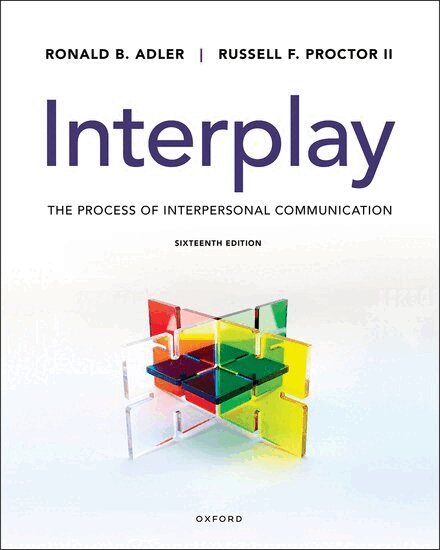
    Ronald B. Adler, Russell F. Proctor - Interplay, Häftad

    Interplay

    Ronald B. Adler, Russell F. Proctor

    Häftad, 2024

    1 456 kr

    Russell F. Proctor, Ronald B. Adler - Interplay, E-bok

    Interplay

    Russell F. Proctor, Ronald B. Adler

    E-bok
    2023

    670 kr

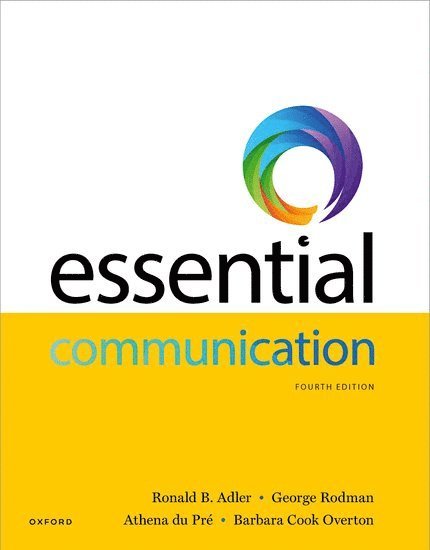
    Ronald B. Adler, George Rodman, Athena du Pré, Barbara Cook Overton - Essential Communication, Häftad

    Essential Communication

    Ronald B. Adler, George Rodman, Athena du Pré, Barbara Cook Overton

    Häftad, 2025

    828 kr

    Barbara Cook Overton, Athena du Pre, George Rodman, Ronald B. Adler - Essential Communication, E-bok

    Essential Communication

    Barbara Cook Overton, Athena du Pre, George Rodman, Ronald B. Adler

    E-bok
    2025

    856 kr

    Ronald B. Adler, Jeanne Marquardt Elmhorst - Communicating at Work, with Connect Plus Communication Access Card, Häftad

    Communicating at Work, with Connect Plus Communication Access Card

    Ronald B. Adler, Jeanne Marquardt Elmhorst

    Häftad

    3 226 kr

    Ronald B. Adler - Gen Combo Looseleaf Communicating at Work; Connect Access Card, Inbunden

    Gen Combo Looseleaf Communicating at Work; Connect Access Card

    Ronald B. Adler

    Inbunden

    2 184 kr

    Hoppa över listan

    Du kanske också är intresserad av

    Ronald B. Adler, George Rodman, Athena du Pré, Barbara Cook Overton - Essential Communication, Häftad

    Essential Communication

    Ronald B. Adler, George Rodman, Athena du Pré, Barbara Cook Overton

    Häftad, 2025

    828 kr

    Barbara Cook Overton, Athena du Pre, George Rodman, Ronald B. Adler - Understanding Human Communication, E-bok

    Understanding Human Communication

    Barbara Cook Overton, Athena du Pre, George Rodman, Ronald B. Adler

    E-bok
    2023

    670 kr

    Barbara Cook Overton, Athena du Pre, George Rodman, Ronald B. Adler - Essential Communication, E-bok

    Essential Communication

    Barbara Cook Overton, Athena du Pre, George Rodman, Ronald B. Adler

    E-bok
    2025

    856 kr

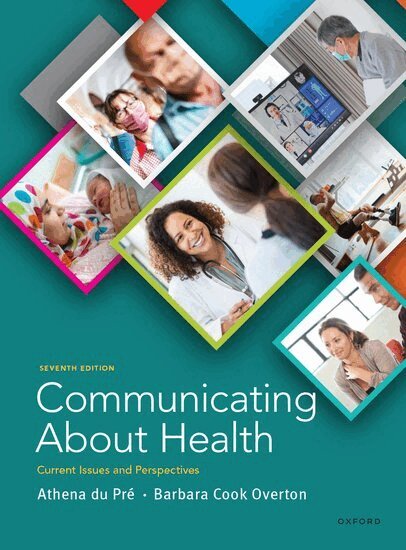
    Barbara Cook Overton, Athena du Pre - Communicating About Health, E-bok

    Communicating About Health

    Barbara Cook Overton, Athena du Pre

    E-bok
    2023

    625 kr

    Athena du Pre, Barbara Cook Overton - Communicating About Health, Häftad

    Communicating About Health

    Athena du Pre, Barbara Cook Overton

    Häftad, 2023

    1 351 kr

    Veronica Henry - Puben vid floden, Pocket
    • -51%

    Puben vid floden

    Veronica Henry

    Pocket, 2023

    4,2 utav 5 stjärnor. Totalt antal röster:(18)

    49 kr99 kr

    Frida Gråsjö - Vatten över huvudet, Pocket
    • -45%
    Del 1

    Vatten över huvudet

    Frida Gråsjö

    Pocket, 2024

    3,4 utav 5 stjärnor. Totalt antal röster:(26)

    49 kr89 kr

    Frida Gråsjö - Beska droppar, Pocket
    • -45%
    Del 2

    Beska droppar

    Frida Gråsjö

    Pocket, 2025

    3,9 utav 5 stjärnor. Totalt antal röster:(7)

    49 kr89 kr

    Frida Gråsjö - En fråga om mord, Pocket
    • -51%
    Del 1

    En fråga om mord

    Frida Gråsjö

    Pocket, 2025

    3,8 utav 5 stjärnor. Totalt antal röster:(6)

    49 kr99 kr

    Jo Nesbø - Natthuset, Pocket
    • -51%

    Natthuset

    Jo Nesbø

    Pocket, 2025

    2,5 utav 5 stjärnor. Totalt antal röster:(11)

    49 kr99 kr