• Fri frakt över 249 kr
  • •
  • Snabba leveranser
  • •
  • Billiga böcker
Kundservice

Du är på sajten för privatpersoner.

Företag, bibliotek eller offentlig verksamhet?

Du handlar på classic.bokus.com, där alla dina funktioner finns intakta.
Till classic.bokus.com
Bokus logotyp. Gå till startsidan.
  • Erbjudanden
  • Nyheter
  • Student
  • Topplistor
  • Barn & ungdom
  • Bokus Play
  • E-böcker
  • Pocketböcker
  • Spel & pussel

10% rabatt på allt med kod: NYSTART10 →

Sidfot

Mina sidor

    Hjälp

    • Kundservice
    • Vanliga frågor och svar
    • Frakt och leverans
    • Retur vid ångerrätt
    • Reklamera vara
    • Betalning
    • Köpvillkor
    • Allmänna villkor
    • Information om webbplatsens tillgänglighet

    Om Bokus

    • Om oss
    • Pressrum
    • För studenter
    • För företag
    • För bibliotek och offentlig verksamhet
    • För leverantörer
    • Hållbarhet

    Populärt

    • Aktuella erbjudanden
    • Presentkort
    • Studentlitteratur
    • Nya böcker
    • Topplistor
    • Signerade böcker
    • Engelska böcker

    Inspiration

    • Boktips
    • BookTok
    • Populära bokserier
    • Barnbokskaraktärer
    • Populära författare
    Logotyp för Bokus
    Följ oss på Facebook (extern länk)Följ oss på Instagram (extern länk)Följ oss på YouTube (extern länk)Följ oss på TikTok (extern länk)
    bokus @ CookiesAnpassa cookiesIntegritetspolicyKöpvillkor
    Till Citymail hemsida (extern länk)Till Budbee hemsida (extern länk)Till Postnord hemsida (extern länk)Till Schenker hemsida (extern länk)Till Early Bird hemsida (extern länk)Till Walleys hemsida (extern länk)
    1. Juridik
    2. Internationell rätt
    3. Folkrätt

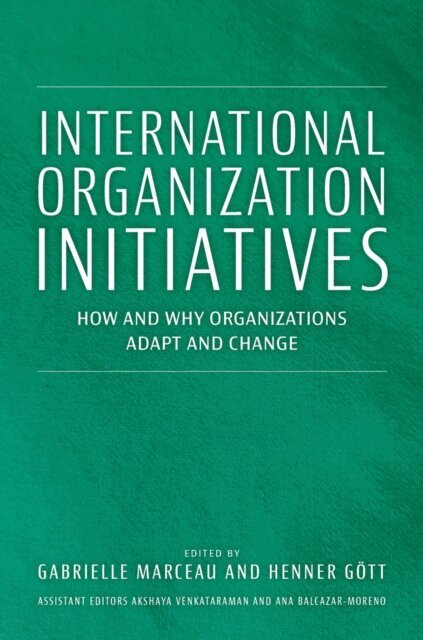
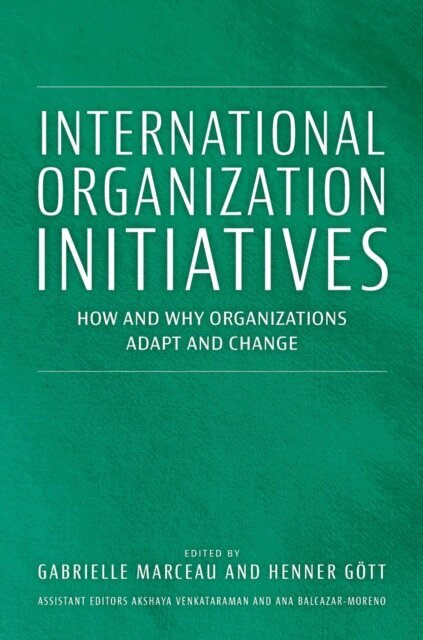
    International Organization Initiatives

    How and Why Organizations Adapt and Change

    AvGabrielle Marceau,Gabrielle Marceau

    Inbunden, Engelska, 2025

    1 595 kr

    Skickas . Fri frakt över 249 kr.

    Beskrivning

    How do changes in international organizations (IOs) come about? How do IOs adapt to respond to crises and unforeseen needs of their members, and what roles do the secretariats, and their heads play in this process? International Organization Initiatives deals with these questions and shows how IOs, their secretariats and executive heads launch and implement innovative activities. It sheds light on both proactive and reactive approaches to institutional evolution. Bringing together distinguished scholars of international organizations and experienced practitioners, this volume showcases and investigates IOs' adaptive capacity, their achievements, and limitations. "Through case studies and conceptual frameworks, the book explores a largely uncharted world of IO evolution to which international secretariats contribute significantly. The collection of chapters brings to light the mechanisms used in the past by IOs to adapt to what were, on each occasion, new challenges to their efforts to assist and respond to unprecedented needs of their members faced with new realities. International Organization Initiatives is a valuable resource for both scholars and practitioners interested in IOs and their capacity for change in response to global crises, members' demands, internal impulses or interactions with the outside world. Providing an in-depth look at governance model transformations and institutional innovations, it offers a collective wealth of knowledge and insights, along with lessons for future global governance.

    Produktinformation

    • Utgivningsdatum:2025-10-28
    • Mått:167 x 239 x 33 mm
    • Vikt:744 g
    • Format:Inbunden
    • Språk:Engelska
    • Antal sidor:408
    • Förlag:OUP USA
    • ISBN:9780197803295

    Utforska kategorier

    • Folkrätt inom Juridik

    Mer om författaren

    Gabrielle Marceau is professor in the Department of Public International Law and International organisation at the Law Faculty, University of Geneva, and the Hyman Soloway Visiting Professor at the Faculty of Law, University of Ottawa. She was also a visiting professor in several other universities and institutes. Professor Marceau has been involved with associations and groups promoting international (economic) law, and she has published extensively on the relationship between trade and non-trade concerns, dispute settlement, and international organizations. Professor Marceau worked for 30 years in the Secretariat of the WTO, in dispute settlement, in research and in the Director General's office.Henner Gött is a legal and policy advisor at the German Federal Chancellery in Berlin and a professor of law honoris causa at Leuphana University Lüneburg. His research focuses on international economic law, international organizations, international labour law, and on EU and German constitutional law. He previously held positions as a legal advisor at the German Federal Ministry of Economic Affairs and Climate Action, senior research fellow at Georg-August-University Göttingen, guest lecturer at several other universities, and Co-Founder and Co-Chair of the European Society of International Law's Interest Group on the European and International Rule of Law.

    Recensioner i media

    For practitioners, the volume opens fruitful avenues for reconsidering how legal frameworks shape - and are shaped by - the ongoing transformation of global governance. Its central contribution lies in showing that processes of institutional change are not merely political or administrative phenomena but deeply embedded in the legal frameworks that constitute international organisations.

    Innehållsförteckning

    • José E. Alvarez: Introduction: Why Should We Care About IO Initiatives in Response to Needs? PART I. THEORETICAL AND LEGAL FOUNDATIONS OF IO INITIATIVES 1: Hannah Birkenkötter: Change in International Organizations 2: Guy Fiti Sinclair: IO Initiatives, Ideology, and the Imaginaries of Liberal Reform 3: Christiane Ahlborn: From Functionalism to Constitutionalism: Translating Theories on IO Powers into Practice 4: Niels Blokker: The Evolution of IO Powers and Activities: A Legal Framework 5: Fernando Lusa Bordin: Interpreting Constituent Instruments to Justify the Evolving Powers of International Organizations PART II. THE ROLE OF SECRETARIATS IN INITIATING IO CHANGE 6: Margherita Melillo: IO Secretariats as Knowledge Actors 7: Huw Llewellyn: The Establishment of the UN Criminal Tribunals: The Role of the UN Secretariat 8: Charles di Leva: The World Bank's Evolution Towards Environmental and Social Responsibilities 9: Gian Luca Burci and Ana Balcazar-Moreno: WHO's Reactions to COVID- 19: Between Politics and Managerialism 10: Ronald Steenblik and Helen Mountford: Fossil Fuel Subsidies at the Organisation for Economic Co- operation and Development 11: Namira Negm: The African Union Commission's Endeavour with the International Court of Justice for Achieving the Complete Decolonization of Mauritius: The Case of the Chagos Archipelago 12: Jacob Cogan Katz: Concluding Commentary: Secretariats as Innovators PART III. THE ROLE OF HEADS OF SECRETARIATS IN INITIATING IO CHANGE: FUNCTIONAL FORMALISM AND PLURALISM 13: Naphtali Ukamwa: The Role of Heads of Secretariats in Initiating Change: Functional Formalism and Pluralism 14: Mona Ali Khalil: The Evolution of UN Secretary- General Initiatives to Respond to Violent and Non- Violent Threats to International Peace and Security 15: David Lewis: The Financial Action Task Force: Coming of Age: Becoming an International Organization 16: Gabriela Ramos: UNESCO's Recommendation on the Ethics of Artificial Intelligence (2021): A Case Study in Intergovernmental Leadership and Consensus Building 17: Francies Maupain: Is Too Much Vision a Handicap for an Executive Head? Some Thoughts on W Jenks' Curtailed Mandate as ILO Director- General 18: Akshaya Venkataraman: Taking Initiatives in the WTO: The Role of an Executive Head in Steering Change 19: André-Philippe Ouellet: The International Energy Agency at 50: The Astounding Environmental Shift from an Organization Focused on Fossil Energy Supply to a Clean Energy Authority 20: Nicola Bonucci: The Driving Role of the Heads of International Organizations: A Case Study Around the Organisation for Economic Co- operation and Development 21: Jane Aeberhard-Hodges: Concluding Commentary: Reflections on IO Leaders' Approaches PART IV. INTERACTION WITH THE OUTSIDE WORLD AND IO CHANGE 22: Henner Gött: Interactions with the Outside World as a Factor for IO Initiatives 23: Janelle M Diller: International Organization Interactions with Multi- stakeholder Initiatives: The International Labour Organization Experience 24: Hassane Cissé: How Do External Factors Shape Institutional, Legal, Strategic, or Policy Change in International Organizations: Review of Selected Examples in World Bank Practice 25: Yan Liu and Kyung Kwak: IMF's Responses to New Challenges in the Global Economy: Recent Reforms of Its Financing Toolkit 26: Steven A Solomon and Kenneth Piercy: Interactions with the 'Outside World' and the Work of the World Health Organization in Revising the Global Health Architecture for Pandemic Prevention, Preparedness, and Response 27: Fady Zeidan and Jean Abboud: The Global Fund to Fight AIDS, Tuberculosis, and Malaria: Partnerships, Collaborations, and Initiatives with International Organizations 28: Jelena Madir: IOs' Initiatives: Gavi, the Vaccine Alliance 29: Vivian Daniele Rocha Gabriel: The Role of Outside Experts in Anchoring Sustainable Development and Climate Protection in ECLAC's Work 30: Michael Barnett: Concluding Remarks: Silence Laurence Boisson de Chazournes, Gabrielle Marceau,: Conclusion: Adaptation, Change, and International Organizations: An Inside- Outside Perspective Henner Gött, Akshaya Venkataraman, and Ana Balcazar-Moreno