• Fri frakt över 249 kr
  • •
  • Snabba leveranser
  • •
  • Billiga böcker
Kundservice

Du är på sajten för privatpersoner.

Företag, bibliotek eller offentlig verksamhet?

Du handlar på classic.bokus.com, där alla dina funktioner finns intakta.
Till classic.bokus.com
Bokus logotyp. Gå till startsidan.
  • Erbjudanden
  • Nyheter
  • Student
  • Topplistor
  • Barn & ungdom
  • Bokus Play
  • E-böcker
  • Pocketböcker
  • Spel & pussel

10% rabatt på allt med kod: NYSTART10 →

Sidfot

Mina sidor

    Hjälp

    • Kundservice
    • Vanliga frågor och svar
    • Frakt och leverans
    • Retur vid ångerrätt
    • Reklamera vara
    • Betalning
    • Köpvillkor
    • Allmänna villkor
    • Information om webbplatsens tillgänglighet

    Om Bokus

    • Om oss
    • Pressrum
    • För studenter
    • För företag
    • För bibliotek och offentlig verksamhet
    • För leverantörer
    • Hållbarhet

    Populärt

    • Aktuella erbjudanden
    • Presentkort
    • Studentlitteratur
    • Nya böcker
    • Topplistor
    • Signerade böcker
    • Engelska böcker

    Inspiration

    • Boktips
    • BookTok
    • Populära bokserier
    • Barnbokskaraktärer
    • Populära författare
    Logotyp för Bokus
    Följ oss på Facebook (extern länk)Följ oss på Instagram (extern länk)Följ oss på YouTube (extern länk)Följ oss på TikTok (extern länk)
    bokus @ CookiesAnpassa cookiesIntegritetspolicyKöpvillkor
    Till Citymail hemsida (extern länk)Till Budbee hemsida (extern länk)Till Postnord hemsida (extern länk)Till Schenker hemsida (extern länk)Till Early Bird hemsida (extern länk)Till Walleys hemsida (extern länk)
    1. Historia och arkeologi
    2. Historia
    3. Historia: särskilda händelser och ämnen
    4. Slaveri

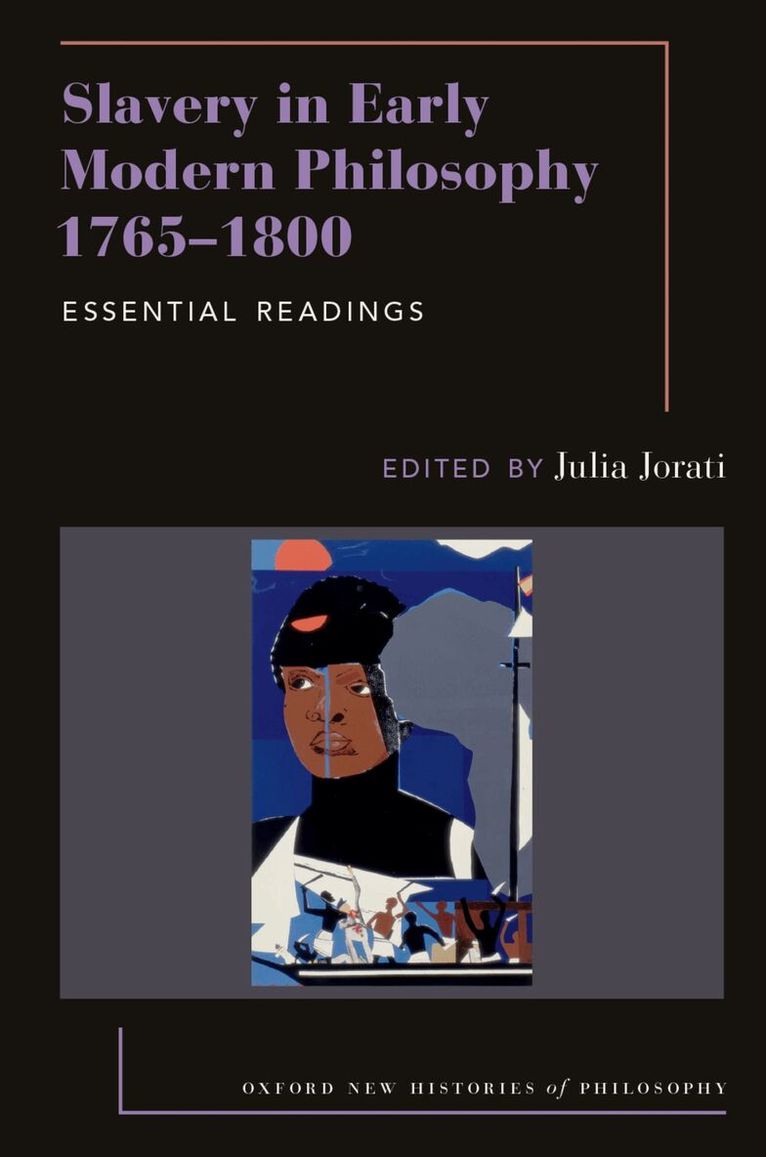
    Slavery in Early Modern Philosophy 1765-1800

    Essential Readings

    AvJulia Jorati

    Häftad, Engelska, 2026

    Del i serien Oxford New Histories of Philosophy

    325 kr

    Beställningsvara. Skickas inom 5-8 vardagar. Fri frakt över 249 kr.

    Beskrivning

    This volume comprises forty-five philosophical texts about slavery that were composed in Europe and America between 1765 and 1800. The texts, selected and in some cases newly translated by Julia Jorati, discuss various aspects of slavery, and from many different perspectives. Written by enslaved and formerly enslaved antislavery authors, their allies, and a few of their opponents, they demonstrate that the debate about slavery in the late eighteenth century, during the first major transnational abolitionist movement, was remarkably multifaceted and philosophically sophisticated. Some authors base their arguments on the moral principles embraced by revolutionaries in France and America, such as the principle that all men have an inalienable right to liberty; others draw on different moral frameworks such as utilitarianism, natural law theory, social contract theory, and Biblical ethics. In addition to arguments for and against the moral permissibility of transatlantic slavery, the texts in Slavery in Early Modern Philosophy 1765-1800 also examine other related philosophical issues, such as complicity, reparations, racial bias, the right to rebel, the effects of enslavement on the human mind, and the epistemic dimensions of oppression. This volume serves as a companion to Jorati's Slavery in Early Modern Philosophy 1500-1765: Essential Readings and will interest scholars and students seeking a deeper understanding of these underexamined debates.

    Produktinformation

    • Utgivningsdatum:2026-03-31
    • Mått:157 x 235 x 20 mm
    • Vikt:467 g
    • Format:Häftad
    • Språk:Engelska
    • Serie:Oxford New Histories of Philosophy
    • Antal sidor:324
    • Förlag:OUP USA
    • ISBN:9780197833568

    Utforska kategorier

    • Slaveri inom Historia och arkeologi
    • Filosofiska discipliner inom Filosofi och religion

    Mer om författaren

    Julia Jorati is Professor of Philosophy at the University of Massachusetts Amherst. She specializes in early modern philosophy with a particular focus on metaphysics, political philosophy, and ethics. In addition to numerous articles about Gottfried Wilhelm Leibniz and other early modern philosophers, she has authored the books Slavery and Race: Philosophical Debates in the Sixteenth and Seventeenth Centuries (Oxford 2024), Slavery and Race: Philosophical Debates in the Eighteenth Century (Oxford 2024), and Leibniz on Causation and Agency (Cambridge 2017). She has also edited the companion volume to this anthology, Slavery in Early Modern Philosophy 1500-1765: Essential Readings.

    Innehållsförteckning

    • Introduction 1: Louis de Jaucourt, "The Slave Trade" (1765) 2: Jacques-Philibert Rousselot de Surgy, "The West Coast of Africa" (1766) 3: Granville Sharp, A Representation of the Injustice and Dangerous Tendency of Tolerating Slavery (1769) 4: Felix [Holbrook], "Humble Petition of Many Slaves" (1773) 5: Felix Holbrook and others, "Petition in Behalf of all Those Who Are Held in a State of Slavery" (1773) 6: Theodore Parsons and Eliphalet Pearson, A Forensic Dispute on the Legality of Enslaving the Africans (1773) 7: Benjamin Rush, An Address to the Inhabitants of the British Settlements (1773) 8: Richard Nisbet, Slavery Not Forbidden by Scripture (1773) 9: Benjamin Rush, A Vindication of the Address to the Inhabitants of the British Settlements (1773) 10: Phillis Wheatley, Poems on Various Subjects (1773) 11: Phillis Wheatley, "Letter to Samson Occom" (1774) 12: Caesar Sarter, "Address to Those Who Are Advocates for Holding the Africans in Slavery" (1774) 13: Voltaire, "Dialogue Between a Frenchman and an Englishman" (1774) 14: Samuel Hopkins, A Dialogue Concerning the Slavery of the Africans (1776) 15: Lemuel Haynes, "Liberty Further Extended" (1776) 16: Denis Diderot and Jean-Joseph de Pechméja, "The Origins and Development of Slavery" (1780) 17: Belinda Sutton, "Petition of Belinda, an African" (1783) 18: James Ramsay, Essay on the Treatment and Conversion of African Slaves (1784) 19: Thomas Jefferson, Notes on the State of Virginia (1785) 20: Thomas Clarkson, An Essay on the Slavery and Commerce of the Human Species (1786) 21: Ottobah Cugoano, Thoughts and Sentiments on the Evil and Wicked Traffic of the Slavery and Commerce of the Human Species (1787) 22: Jupiter Hammon, An Address to the Negroes in the State of New-York (1787) 23: Anonymous, "Letters of a Negro" (1788) 24: Anna Seward, "Letter to Josiah Wedgewood" (1788) 25: Hannah More, Slavery, A Poem (1788) 26: William Cowper, "The Negro's Complaint" (1788) 27: Olympe de Gouges, "Reflections on Negroes" (1788) 28: Olaudah Equiano, "Letter to James Tobin" (1788) 29: Olaudah Equiano, The Interesting Narrative of the Life of OlaudahEquiano (1789) 30: Condorcet, "On Admitting Deputies of the Planters of Saint-Domingue into the National Assembly" (1789) 31: Benjamin Banneker, "Letter to Thomas Jefferson" (1791) 32: Thomas Jefferson, "Letter to Benjamin Banneker" (1791) 33: Elisabeth Maria Post, Reinhart, or Nature and Religion (1791) 34: Jonathan Edwards, Jr., The Injustice and Impolicy of the Slave Trade and of the Slavery of the Africans (1791) 35: William Fox, An Address to the People of Great Britain (1791) 36: Anonymous, An Answer to a Pamphlet (1791) 37: Jacques Pierre Brissot de Warville, "Speech to the Legislative Assembly" (1791) 38: Olympe de Gouges, "Preface to Black Slavery, or the Happy Shipwreck" (1792) 39: Archibald Dalzel, "Adahoonzou's Speech" (1793) 40: Jean-Baptiste Belley, The Tip of the Colonists' Ear (1794) 41: Absalom Jones and Richard Allen, A Narrative of the Proceedings of the Black People (1794) 42: Theodore Dwight, An Oration (1794) 43: Anonymous, Tyrannical Libertymen (1795) 44: John Aikin and Anna Laetitia Barbauld, "Master and Slave" (1796) 45: Anonymous, "The Africans' Prayer for Freedom" (1796)