• Fri frakt över 249 kr
  • •
  • Snabba leveranser
  • •
  • Billiga böcker
Kundservice

Du är på sajten för privatpersoner.

Företag, bibliotek eller offentlig verksamhet?

Du handlar på classic.bokus.com, där alla dina funktioner finns intakta.
Till classic.bokus.com
Bokus logotyp. Gå till startsidan.
  • Erbjudanden
  • Nyheter
  • Student
  • Topplistor
  • Barn & ungdom
  • Bokus Play
  • E-böcker
  • Pocketböcker
  • Spel & pussel

10% rabatt på allt med kod NYSTART10 →

Sidfot

Mina sidor

    Hjälp

    • Kundservice
    • Vanliga frågor och svar
    • Frakt och leverans
    • Retur vid ångerrätt
    • Reklamera vara
    • Betalning
    • Köpvillkor
    • Allmänna villkor
    • Information om webbplatsens tillgänglighet

    Om Bokus

    • Om oss
    • Pressrum
    • För studenter
    • För företag
    • För bibliotek och offentlig verksamhet
    • För leverantörer
    • Hållbarhet

    Populärt

    • Aktuella erbjudanden
    • Presentkort
    • Studentlitteratur
    • Nya böcker
    • Topplistor
    • Signerade böcker
    • Engelska böcker

    Inspiration

    • Boktips
    • BookTok
    • Populära bokserier
    • Barnbokskaraktärer
    • Populära författare
    Logotyp för Bokus
    Följ oss på Facebook (extern länk)Följ oss på Instagram (extern länk)Följ oss på YouTube (extern länk)Följ oss på TikTok (extern länk)
    bokus @ CookiesAnpassa cookiesIntegritetspolicyKöpvillkor
    Till Citymail hemsida (extern länk)Till Budbee hemsida (extern länk)Till Postnord hemsida (extern länk)Till Schenker hemsida (extern länk)Till Early Bird hemsida (extern länk)Till Walleys hemsida (extern länk)
    1. Ekonomi och Ledarskap
    2. Nationalekonomi
    3. Mikroekonomi

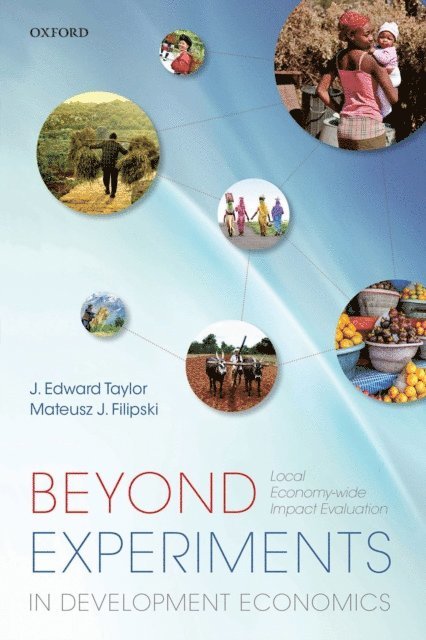
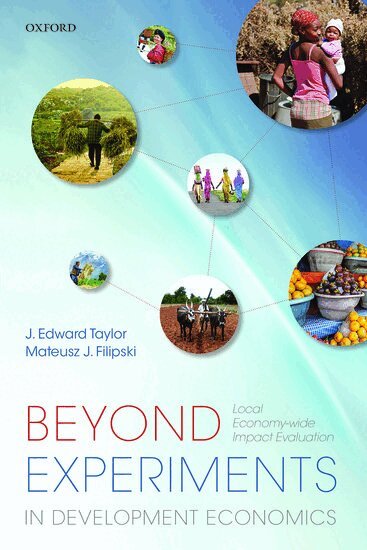
    Beyond Experiments in Development Economics

    Local Economy-wide Impact Evaluation

    AvJ. Edward Taylor,Mateusz J. Filipski

    Inbunden, Engelska, 2014

    2 437 kr

    Beställningsvara. Skickas inom 5-8 vardagar. Fri frakt över 249 kr.

    Fler format och utgåvor

    Häftad

    576 kr

    Beskrivning

    This book provides researchers, students, and practitioners with a methodology to evaluate the impacts of a wide diversity of development projects and policies on local economies. Projects and policies often create spillovers within project areas. LEWIE uses simulation methods to quantify these spillovers. It has become a complement to randomized control trials (RCTs), as governments and donors become interested in documenting impacts beyond the treated, comparing the likely impacts of alternative interventions, and designing complementary interventions to influence program and policy impacts. It is also a tool for impact evaluation where RCTs are not feasible.Chapters 1-4 motivate and present the basics of impact simulation, including how to design a LEWIE model, how to estimate the model, and how to obtain the necessary data. The remaining chapters provide a diversity of interesting real-world applications and extensions of the basic models. The applications include evaluations of the impacts of cash transfers for the poor, ecotourism, global food-price shocks, irrigation projects, migration, and corruption. Each chapter provide readers with the tools they need to conduct their own local economy-wide impact evaluations. All models and data used in this book are available on-line.

    Produktinformation

    • Utgivningsdatum:2014-07-10
    • Mått:162 x 236 x 25 mm
    • Vikt:650 g
    • Format:Inbunden
    • Språk:Engelska
    • Antal sidor:336
    • Förlag:OUP OXFORD
    • ISBN:9780198707875
    • Utmärkelser:Agricultural & Applied Economics Association's Quality of Communication Award 2015

    Utforska kategorier

    • Mikroekonomi inom Ekonomi och Ledarskap
    • Internationell ekonomi inom Ekonomi och Ledarskap
    • Makroekonomi inom Ekonomi och Ledarskap

    Mer om författaren

    J. Edward Taylor is Professor of Agricultural and Resource Economics and Director of the Center on Rural Economies of the Americas and Pacific Rim (REAP) at the University of California, Davis, where he teaches courses on international development economics and econometric methods. He is also co-editor of the American Journal of Agricultural Economics and founder of the alternative textbook initiative, RebelText.org. Taylor has written extensively on the economy-wide impacts of agricultural and development policies and on immigration. He co-authored Village Economies: The Design, Estimation and Use of Villagewide Economic Models (Cambridge University Press) and Worlds in Motion: Understanding International Migration at the End of the Millenium (Oxford University Press). He is listed in Who's Who in Economics and has advised a number of foreign governments and international development agencies on matters related to economic development. Mateusz J. Filipski is a Research Fellow at the International Food Policy Research Institute (IFPRI) in Washington, DC, where he is part of the Development Strategy and Governance Division. He is a graduate of the department of Agricultural and Resource Economics at the University of California, Davis. Before joining IFPRI, he was a consultant for the Organization for Economic Cooperation and Development (OECD). He has authored or co-authored a number of publications on impact evaluation of rural development programs and policies, and routinely works as a reviewer for the leading journals in the field.

    Innehållsförteckning

    • 1. Introduction ; 2. Foundations for Local Economy-wide Impact Evaluation ; 3. A Continuum of Models for Any Situation ; 4. Data for LEWIE ; 5. What's the Roatan Reef Worth? ; 6. Economy-wide Cost-benefit Analysis ; 7. Galapagos: The Myth of Eco-tourism ; 8. Evaluating the Impacts of Global Food Price Shocks in Rural Guatemala ; 9. Spillover Effects of Social Cash Transfers: Lesotho's Child Grants Program ; 10. Did Malawi Prove the Experts Wrong? ; 11. Modeling Regional Impacts of an Irrigation Project in Tanzania ; 12. Gender and Saffron Price Shocks in Morocco's Atlas Mountains ; 13. International Migration and the Impacts of the Great Recession in Rural Mexico ; 14. The True Cost of Corruption ; 15. Conclusions