• Fri frakt över 249 kr
  • •
  • Snabba leveranser
  • •
  • Billiga böcker
Kundservice

Du är på sajten för privatpersoner.

Företag, bibliotek eller offentlig verksamhet?

Du handlar på classic.bokus.com, där alla dina funktioner finns intakta.
Till classic.bokus.com
Bokus logotyp. Gå till startsidan.
  • Erbjudanden
  • Student
  • Topplistor
  • Barn & ungdom
  • Bokus Play
  • E-böcker
  • Ljudböcker
  • Pocketböcker
  • Spel och pussel

Skapa nya rutiner – hälsoböcker upp till 50% →

Sidfot

Mina sidor

    Hjälp

    • Kundservice
    • Vanliga frågor och svar
    • Frakt och leverans
    • Retur vid ångerrätt
    • Reklamera vara
    • Betalning
    • Köpvillkor
    • Allmänna villkor
    • Information om webbplatsens tillgänglighet

    Om Bokus

    • Om oss
    • Pressrum
    • För studenter
    • För företag
    • För bibliotek och offentlig verksamhet
    • För leverantörer
    • Hållbarhet

    Populärt

    • Aktuella erbjudanden
    • Presentkort
    • Studentlitteratur
    • Nya böcker
    • Topplistor
    • Signerade böcker
    • Engelska böcker

    Inspiration

    • Boktips
    • BookTok
    • Barnbokskaraktärer
    • Populära författare
    Logotyp för Bokus
    Följ oss på Facebook (extern länk)Följ oss på Instagram (extern länk)Följ oss på YouTube (extern länk)Följ oss på TikTok (extern länk)
    bokus @ CookiesAnpassa cookiesIntegritetspolicyKöpvillkor
    Till Citymail hemsida (extern länk)Till Budbee hemsida (extern länk)Till Postnord hemsida (extern länk)Till Schenker hemsida (extern länk)Till Early Bird hemsida (extern länk)Till Walleys hemsida (extern länk)
    1. Språk och ordböcker
    2. Språkvetenskap och lingvistik

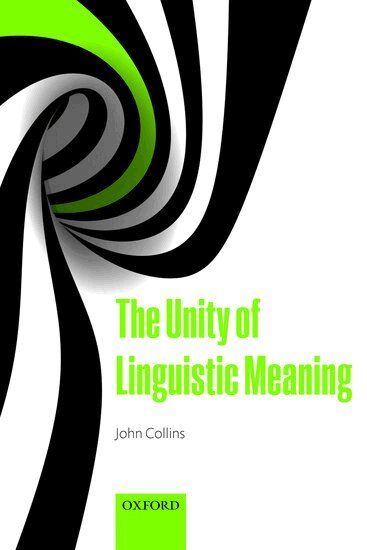
    The Unity of Linguistic Meaning

    AvJohn Collins

    Häftad, Engelska, 2015

    583 kr

    Beställningsvara. Skickas inom 5-8 vardagar. Fri frakt över 249 kr.

    Fler format och utgåvor

    Inbunden

    1 563 kr

    Beskrivning

    The problem of the unity of the proposition is almost as old as philosophy itself, and was one of the central themes of early analytical philosophy, greatly exercising the minds of Frege, Russell, Wittgenstein, and Ramsey. The problem is how propositions or meanings can be simultaneously unities (single things) and complexes, made up of parts that are autonomous of the positions they happen to fill in any given proposition. The problem has been associated with numerous paradoxes and has motivated general theories of thought and meaning, but has eluded any consensual resolution; indeed, the problem is sometimes thought to be wholly erroneous, a result of atomistic assumptions we should reject. In short, the problem has been thought to be of merely historical interest. Collins argues that the problem is very real and poses a challenge to any theory of linguistic meaning. He seeks to resolve the problem by laying down some minimal desiderata on a solution and presenting a uniquely satisfying account. The first part of the book surveys and rejects extant 'solutions' and dismissals of the problem from (especially) Frege and Russell, and a host of more contemporary thinkers, including Davidson and Dummett. The book's second part offers a novel solution based upon the properties of a basic syntactic principle called 'Merge', which may be said to create objects inside objects, thus showing how unities can be both single things but also made up of proper parts. The solution is defended from both philosophical and linguistic perspectives. The overarching ambition of the book, therefore, is to strengthen the ties between current linguistics and contemporary philosophy of language in a way that is genuinely sensitive to the history of both fields.

    Produktinformation

    • Utgivningsdatum:2015-05-07
    • Mått:150 x 231 x 12 mm
    • Vikt:344 g
    • Format:Häftad
    • Språk:Engelska
    • Antal sidor:218
    • Förlag:OUP OXFORD
    • ISBN:9780198709329

    Utforska kategorier

    • Språkvetenskap och lingvistik inom Språk och ordböcker
    • Filosofiska discipliner inom Filosofi och religion

    Mer om författaren

    John Collins is Senior Lecturer in Philosophy at the University of East Anglia. He has published widely in the philosophies of language and mind, and has a special interest in generative linguistics, the concepts of truth and meaning, and early analytical philosophy. He is the author of numerous articles in leading journals and Chomsky: A Guide for the Perplexed (2008).

    Recensioner i media

    Regardless of one's perspective, this book is well worth reading, and I would recommend it to anyone interested in philosophy of language, linguistics or the intersection between the two disciplines. If you share Collins' basic assumptions, he provides a cogent defence of how one of the workhorses of syntax, Merge, offers a way into the problem of unity. If you do not share his assumptions, the book challenges alternative approaches in ways that will surely spark lively and fruitful exchanges ... Regardless of your position on these issues, the last chapter is not to be missed: it contains what may well be the best philosophical discussion of Merge and its place in linguistics.

    Innehållsförteckning

    • Preface ; 1. Thoughts, sentences, and unities ; 2. The unity problem(s) ; 3. The priority thesis: judgement over naming ; 4. The reign of disunity ; 5. Syntax and the creation of objects: towards an explanation of unity ; 6. Clarification and defence ; 7. The linguistic status of Merge ; Bibliography ; Index