• Fri frakt över 249 kr
  • •
  • Snabba leveranser
  • •
  • Billiga böcker
Kundservice

Du är på sajten för privatpersoner.

Företag, bibliotek eller offentlig verksamhet?

Du handlar på classic.bokus.com, där alla dina funktioner finns intakta.
Till classic.bokus.com
Bokus logotyp. Gå till startsidan.
  • Erbjudanden
  • Nyheter
  • Student
  • Topplistor
  • Barn & ungdom
  • Bokus Play
  • E-böcker
  • Pocketböcker
  • Spel & pussel

10% rabatt på allt med kod NYSTART10 →

Sidfot

Mina sidor

    Hjälp

    • Kundservice
    • Vanliga frågor och svar
    • Frakt och leverans
    • Retur vid ångerrätt
    • Reklamera vara
    • Betalning
    • Köpvillkor
    • Allmänna villkor
    • Information om webbplatsens tillgänglighet

    Om Bokus

    • Om oss
    • Pressrum
    • För studenter
    • För företag
    • För bibliotek och offentlig verksamhet
    • För leverantörer
    • Hållbarhet

    Populärt

    • Aktuella erbjudanden
    • Presentkort
    • Studentlitteratur
    • Nya böcker
    • Topplistor
    • Signerade böcker
    • Engelska böcker

    Inspiration

    • Boktips
    • BookTok
    • Populära bokserier
    • Barnbokskaraktärer
    • Populära författare
    Logotyp för Bokus
    Följ oss på Facebook (extern länk)Följ oss på Instagram (extern länk)Följ oss på YouTube (extern länk)Följ oss på TikTok (extern länk)
    bokus @ CookiesAnpassa cookiesIntegritetspolicyKöpvillkor
    Till Citymail hemsida (extern länk)Till Budbee hemsida (extern länk)Till Postnord hemsida (extern länk)Till Schenker hemsida (extern länk)Till Early Bird hemsida (extern länk)Till Walleys hemsida (extern länk)
    1. Naturvetenskap och teknik
    2. Matematik och naturvetenskap
    3. Biologi

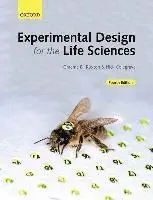
    Experimental Design for the Life Sciences

    AvGraeme D. Ruxton,Nick Colegrave

    Häftad, Engelska, 2016

    627 kr

    Skickas . Fri frakt över 249 kr.

    Beskrivning

    The careful design of experiments lies at the core of good research. Experimental Design for the Life Sciences equips you with the skills you need to effectively design experiments, making this essential aspect of the research process readily understandable. It demonstrates how good experimental design relies on clear thinking and biological understanding, not mathematical or statistical complexity. With a refreshingly approachable and articulate style, the book walks you through the considerations that go into designing an experiment in clear, practical terms. Using examples drawn from across the life sciences - from ecology, biochemistry, molecular biology, genetics, and health sciences - the authors illustrate how these concepts are applied within the broad context of real biological research.Online ResourcesThe online resources to accompany Experimental Design for the Life Sciences feature:For students: · Self-test questions and answers· Additional examples· Supplementary sections discuss complex concepts and statistical issues in more depth· Links to useful websites and free softwareFor lecturers:· Suggested course structures, complete with practical exercises· Figures from the book, available to download

    Produktinformation

    • Utgivningsdatum:2016-06-09
    • Mått:188 x 244 x 15 mm
    • Vikt:386 g
    • Format:Häftad
    • Språk:Engelska
    • Antal sidor:222
    • Upplaga:4
    • Förlag:OUP OXFORD
    • ISBN:9780198717355

    Utforska kategorier

    • Biologi inom Naturvetenskap och teknik
    • Naturvetenskap:allmänt inom Naturvetenskap och teknik

    Recensioner i media

    Review from previous edition This is an excellent book for learning how to approach the design of experimental and, indeed, observational work. It avoids the usual inclusion of statistical detail that turns many students off while retaining all the key issues that are necessary for planning studies that produce good science. I commend this book to all those who struggle to get students to think seriously about designing good scientific studies.

    Innehållsförteckning

    • 1: Why you should care about design 2: Starting with a well-defined hypothesis 3: Selecting the broad design of your study 4: Between-individual variation, replication, and sampling 5: Pseudoreplication 6: Sample size, power, and efficient design 7: The simplest type of experimental design: completely randomized single-factor 8: Experiments with several factors (factorial designs) 9: Beyond complete randomization: blocking and covariates 10: Within-subject designs 11: Taking measurements