• Fri frakt över 249 kr
  • •
  • Snabba leveranser
  • •
  • Billiga böcker
Kundservice

Du är på sajten för privatpersoner.

Företag, bibliotek eller offentlig verksamhet?

Du handlar på classic.bokus.com, där alla dina funktioner finns intakta.
Till classic.bokus.com
Bokus logotyp. Gå till startsidan.
  • Erbjudanden
  • Student
  • Topplistor
  • Barn & ungdom
  • Bokus Play
  • E-böcker
  • Ljudböcker
  • Pocketböcker
  • Spel och pussel

Pocketfynda! Hundratals böcker för 49 kr/st →

Sidfot

Mina sidor

    Hjälp

    • Kundservice
    • Vanliga frågor och svar
    • Frakt och leverans
    • Retur vid ångerrätt
    • Reklamera vara
    • Betalning
    • Köpvillkor
    • Allmänna villkor
    • Information om webbplatsens tillgänglighet

    Om Bokus

    • Om oss
    • Pressrum
    • För studenter
    • För företag
    • För bibliotek och offentlig verksamhet
    • För leverantörer
    • Hållbarhet

    Populärt

    • Aktuella erbjudanden
    • Presentkort
    • Studentlitteratur
    • Nya böcker
    • Topplistor
    • Signerade böcker
    • Engelska böcker

    Inspiration

    • Boktips
    • BookTok
    • Barnbokskaraktärer
    • Populära författare
    Logotyp för Bokus
    Följ oss på Facebook (extern länk)Följ oss på Instagram (extern länk)Följ oss på YouTube (extern länk)Följ oss på TikTok (extern länk)
    bokus @ CookiesAnpassa cookiesIntegritetspolicyKöpvillkor
    Till Citymail hemsida (extern länk)Till Budbee hemsida (extern länk)Till Postnord hemsida (extern länk)Till Schenker hemsida (extern länk)Till Early Bird hemsida (extern länk)Till Walleys hemsida (extern länk)
    1. Ekonomi och Ledarskap
    2. Nationalekonomi
    3. Mikroekonomi

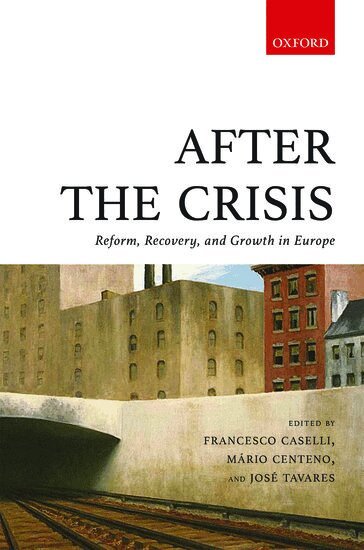
    After the Crisis

    Reform, Recovery, and Growth in Europe

    AvFrancesco Caselli,Mário Centeno

    Inbunden, Engelska, 2016

    1 533 kr

    Beställningsvara. Skickas inom 5-8 vardagar. Fri frakt över 249 kr.

    Beskrivning

    After the Crisis reassesses the twin projects of structural reform and European integration in the wake of the Great Recession and the European Sovereign Debt Crisis. The introduction compares the pre-crises debate to the current situation, and highlights a number of ways in which both reform and further integration may have become more difficult. Chapter 1 surveys the state of the structural-reform agenda, its successes, failures, and priorities for further action. The second chapter focuses on the fiscal-policy response to the crisis and advocates a greater balance between supply-side reforms and demand-side management. The third chapter focuses on the asymmetric shocks across economies in the monetary union, and discusses institutional mechanisms to reduce their frequency and impact. Chapter 4 examines the cyclical behavior of output and financial indicators, as well as the counter-cyclical role of macro-financial policies, both at the national and the European level. The fifth chapter studies changes in Europeans' attitudes, showing how the recent crises have eroded public confidence in European institutions. The sixth chapter tackles the demographic challenges facing Europe, and particularly the way that demographic change may impact the reform agenda. Chapter 7 highlights the under-appreciated extent to which 'Europe', taken as a whole, is characterized by a substantial amount of inequality and geographical income clustering, and the challenge this poses for further integration.

    Produktinformation

    • Utgivningsdatum:2016-06-30
    • Mått:160 x 241 x 17 mm
    • Vikt:472 g
    • Format:Inbunden
    • Språk:Engelska
    • Antal sidor:222
    • Förlag:OUP OXFORD
    • ISBN:9780198754688

    Utforska kategorier

    • Mikroekonomi inom Ekonomi och Ledarskap
    • Finanskriser inom Ekonomi och Ledarskap

    Mer om författaren

    Francesco Caselli is the Norman Sosnow Professor of Economics at the London School of Economics. Previous appointments include Assistant Professor of Economics at the University of Chicago Graduate School of Business, and Paul Sack Associate Professor of Economics at Harvard University. His research interests include macroeconomics, economic development and political economy, on which he has published extensively in the major professional journals. He is an elected fellow of the British Academy, the director of the Macroeconomics and Growth Programme at the Centre for Economic Policy Research and an editor of Economica. Previously, he has served as managing editor of the Review of Economic Studies, co-editor of the Journal of Economic Development, member of the governing council of the European Economic Association, member of the LSE growth commission, and director of the macroeconomics programmes at the Centre for Economic Performance and the International Growth Centre.Mário Centeno is Advisor of the Board at the Banco de Portugal and Professor of Economics at Lisbon University. He gained his undergraduate degree at Technical University in Lisbon in 1990 and his Ph.D. at Harvard University in 2000. His research interests include labor economics and econometrics, on which he has published in several professional journals. He was awarded the Young Economist Award of the European Economics Association and the Excellence Achievement Award of União Latina.José Tavares is Professor of Economics at Nova School of Business and Economics. Having completed his Ph.D. at Harvard University, where he specialized in political economy, he taught at the University of California Los Angeles and has conducted research on topics ranging from the relationship between democracy and economic growth to the macroeconomic costs of gender discrimination. His academic contributions have been discussed in Time Magazine, The New York Times, Handelsblatt, and La Repubblica, among others.

    Innehållsförteckning

    • Carlos da Silva Costa: Foreword Francesco Caselli, Mário Centeno, and José Tavares: Introduction 1: Antonio Fatás: The Agenda for Structural Reform in Europe 2: Paul De Grauwe and Yuemei Ji: Crisis Management and Economic Growth in the Eurozone 3: André Sapir: Dealing with EMU heterogeneity: National vs. European Institutional Reforms 4: Philip R. Lane: Macro-Financial Stability under EMU 5: Carlo A. Favero and Vincenzo Galasso: Demographics and the Secular Stagnation Hypothesis in Europe 6: Jeffry A. Frieden: Winners, Losers, and the Future of European integration 7: Francesco Caselli, Mário Centeno, Álvaro Novo, and José Tavares: The Challenge of European Inequality