• Fri frakt över 249 kr
  • •
  • Snabba leveranser
  • •
  • Billiga böcker
Kundservice

Du är på sajten för privatpersoner.

Företag, bibliotek eller offentlig verksamhet?

Du handlar på classic.bokus.com, där alla dina funktioner finns intakta.
Till classic.bokus.com
Bokus logotyp. Gå till startsidan.
  • Erbjudanden
  • Nyheter
  • Student
  • Topplistor
  • Barn & ungdom
  • Bokus Play
  • E-böcker
  • Pocketböcker
  • Spel & pussel

10% rabatt på allt med kod: NYSTART10 →

Sidfot

Mina sidor

    Hjälp

    • Kundservice
    • Vanliga frågor och svar
    • Frakt och leverans
    • Retur vid ångerrätt
    • Reklamera vara
    • Betalning
    • Köpvillkor
    • Allmänna villkor
    • Information om webbplatsens tillgänglighet

    Om Bokus

    • Om oss
    • Pressrum
    • För studenter
    • För företag
    • För bibliotek och offentlig verksamhet
    • För leverantörer
    • Hållbarhet

    Populärt

    • Aktuella erbjudanden
    • Presentkort
    • Studentlitteratur
    • Nya böcker
    • Topplistor
    • Signerade böcker
    • Engelska böcker

    Inspiration

    • Boktips
    • BookTok
    • Populära bokserier
    • Barnbokskaraktärer
    • Populära författare
    Logotyp för Bokus
    Följ oss på Facebook (extern länk)Följ oss på Instagram (extern länk)Följ oss på YouTube (extern länk)Följ oss på TikTok (extern länk)
    bokus @ CookiesAnpassa cookiesIntegritetspolicyKöpvillkor
    Till Citymail hemsida (extern länk)Till Budbee hemsida (extern länk)Till Postnord hemsida (extern länk)Till Schenker hemsida (extern länk)Till Early Bird hemsida (extern länk)Till Walleys hemsida (extern länk)
    1. Skönlitteratur
    2. Dramatik

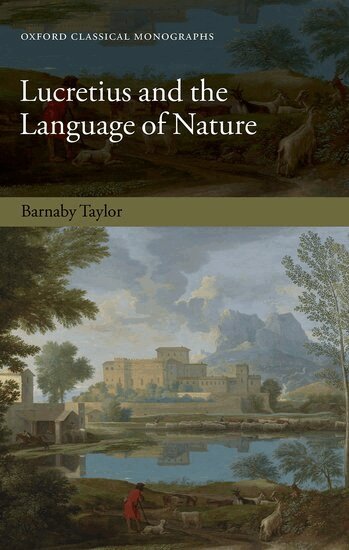
    Lucretius and the Language of Nature

    AvBarnaby Taylor

    Inbunden, Engelska, 2020

    Del i serien Oxford Classical Monographs

    1 858 kr

    Beställningsvara. Skickas inom 3-6 vardagar. Fri frakt över 249 kr.

    Fler format och utgåvor

    E-bok

    1 245 kr

    E-bok

    1 245 kr

    Beskrivning

    Lucretius' Epicurean poem De Rerum Natura ('On the Nature of Things'), written in the middle of the first century BC, made a fundamental and lasting contribution to the language of Latin philosophy. The style of De Rerum Natura is like nothing else in extant Latin: at once archaic and modern, Romanizing and Hellenizing, intimate and sublime, it draws on multiple literary genres and linguistic registers. This book offers a study of Lucretius' linguistic innovation and creativity. Lucretius is depicted as a linguistic trailblazer, extending and augmenting the technical language of Latin in order to describe the Epicurean universe of atoms and void in all its complexity and sublimity. A detailed understanding of the Epicurean linguistic theory brings with it a greater appreciation of Lucretius' own language. Accordingly, this book features an in-depth reconstruction of certain core features of Epicurean linguistic theory. Elements of Lucretius' style discussed include his attitudes to, and use of, figurative language (especially metaphor); his explorations, both explicit and implicit, of Latin etymology; his uses of Greek; and his creative deployment of compounds and prefixed words. His practice is related throughout not only to the underlying Epicurean theory but also to contemporary Roman attitudes to style and language. The result is a new reading of one of the greatest and most difficult works to survive from the Roman world.

    Produktinformation

    • Utgivningsdatum:2020-06-05
    • Mått:142 x 223 x 17 mm
    • Vikt:396 g
    • Format:Inbunden
    • Språk:Engelska
    • Serie:Oxford Classical Monographs
    • Antal sidor:236
    • Förlag:OUP OXFORD
    • ISBN:9780198754909

    Utforska kategorier

    • Dramatik inom Skönlitteratur
    • Forntidens historia inom Historia och arkeologi
    • Filosofiska discipliner inom Filosofi och religion

    Mer om författaren

    Barnaby Taylor is Fellow and Tutor in Classics at Exeter College, University of Oxford.

    Recensioner i media

    Recommended. Researchers and faculty.

    Innehållsförteckning

    • Introduction 1: Nature and Culture in the Epicurean Theory of Language 2: Lucretius and Epicurus on Metaphor 3: Reading Lucretian Metaphor 4: Lucretian Etymologies 5: The Uses of Greek 6: Calques and Compounds Conclusion