• Fri frakt över 249 kr
  • •
  • Snabba leveranser
  • •
  • Billiga böcker
Kundservice

Du är på sajten för privatpersoner.

Företag, bibliotek eller offentlig verksamhet?

Du handlar på classic.bokus.com, där alla dina funktioner finns intakta.
Till classic.bokus.com
Bokus logotyp. Gå till startsidan.
  • Erbjudanden
  • Nyheter
  • Student
  • Topplistor
  • Barn & ungdom
  • Bokus Play
  • E-böcker
  • Pocketböcker
  • Spel & pussel

10% studentrabatt med kod TERM26

Sidfot

Mina sidor

    Hjälp

    • Kundservice
    • Vanliga frågor och svar
    • Frakt och leverans
    • Retur vid ångerrätt
    • Reklamera vara
    • Betalning
    • Köpvillkor
    • Allmänna villkor
    • Information om webbplatsens tillgänglighet

    Om Bokus

    • Om oss
    • Pressrum
    • För studenter
    • För företag
    • För bibliotek och offentlig verksamhet
    • För leverantörer
    • Hållbarhet

    Populärt

    • Aktuella erbjudanden
    • Presentkort
    • Studentlitteratur
    • Nya böcker
    • Topplistor
    • Signerade böcker
    • Engelska böcker

    Inspiration

    • Boktips
    • BookTok
    • Populära bokserier
    • Barnbokskaraktärer
    • Populära författare
    Logotyp för Bokus
    Följ oss på Facebook (extern länk)Följ oss på Instagram (extern länk)Följ oss på YouTube (extern länk)Följ oss på TikTok (extern länk)
    bokus @ CookiesAnpassa cookiesIntegritetspolicyKöpvillkor
    Till Citymail hemsida (extern länk)Till Budbee hemsida (extern länk)Till Postnord hemsida (extern länk)Till Schenker hemsida (extern länk)Till Early Bird hemsida (extern länk)Till Walleys hemsida (extern länk)
    1. Historia och arkeologi
    2. Historia
    3. Historia: särskilda händelser och ämnen
    4. Slaveri

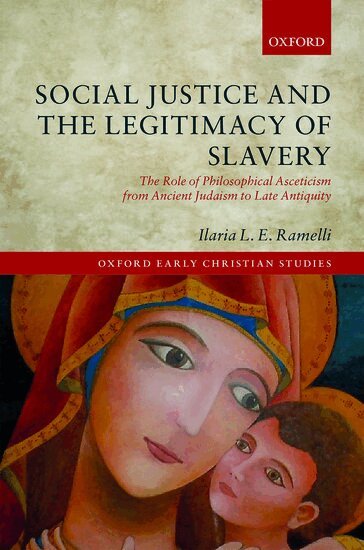
    Social Justice and the Legitimacy of Slavery

    The Role of Philosophical Asceticism from Ancient Judaism to Late Antiquity

    AvIlaria L.E. Ramelli

    Inbunden, Engelska, 2016

    Del i serien Oxford Early Christian Studies

    2 234 kr

    Beställningsvara. Skickas inom 5-8 vardagar. Fri frakt över 249 kr.

    Beskrivning

    Were slavery and social injustice leading to dire poverty in antiquity and late antiquity only regarded as normal, 'natural' (Aristotle), or at best something morally 'indifferent' (the Stoics), or, in the Christian milieu, a sad but inevitable consequence of the Fall, or even an expression of God's unquestionable will? Social Justice and the Legitimacy of Slavery shows that there were also definitive condemnations of slavery and social injustice as iniquitous and even impious, and that these came especially from ascetics, both in Judaism and in Christianity, and occasionally also in Greco-Roman ('pagan') philosophy. Ilaria L. E. Ramelli argues that this depends on a link not only between asceticism and renunciation, but also between asceticism and justice, at least in ancient and late antique philosophical asceticism. Ramelli provides a careful investigation through all of Ancient Philosophy (not only Aristotle and the Stoics, but also the Sophists, Socrates, Plato, the Neoplatonists, and much more), Ancient to Rabbinic Judaism, Hellenistic Jewish ascetic groups such as the Essenes and the Therapeutae, all of the New Testament, with special focus on Paul and Jesus, and Greek, Latin, and Syriac Patristic, from Clement and Origen to the Cappadocians, from John Chrysostom to Theodoret to Byzantine monastics, from Ambrose to Augustine, from Bardaisan to Aphrahat, without neglecting the Christianized Sentences of Sextus. In particular, Ramelli considers Gregory of Nyssa and the interrelation between theory and practice in all of these ancient and patristic philosophers, as well as to the parallels that emerge in their arguments against slavery and against social injustice.

    Produktinformation

    • Utgivningsdatum:2016-11-24
    • Mått:162 x 240 x 23 mm
    • Vikt:598 g
    • Format:Inbunden
    • Språk:Engelska
    • Serie:Oxford Early Christian Studies
    • Antal sidor:310
    • Förlag:OUP OXFORD
    • ISBN:9780198777274
    • Utmärkelser:^IForschungspreis^R / Research Award from the Humboldt Foundation, 2017

    Utforska kategorier

    • Slaveri inom Historia och arkeologi
    • Religion: allmänt inom Filosofi och religion
    • Kristendom inom Filosofi och religion

    Mer om författaren

    Ilaria L. E. Ramelli is Professor of Theology and K. Britt endowed Chair at the Graduate School of Theology, SHMS, Thomas Aquinas University (Angelicum), the Director of International Research Projects, Senior Visiting Professor of Church History at Columbia University, Senior Research Fellow in Religion at Erfurt University, Senior Fellow at Princeton University, and Visiting Research Fellow at the University of Oxford. Her publications include, Evagrius's Kephalaia Gnostika: A New Translation of the Unreformed Text from the Syriac (SBL, 2015), The Christian Doctrine of Apokatastasis (Brill, 2013), Hierocles the Stoic: Elements of Ethics, Fragments, and Excerpts (SBL, 2009), and Bardaisan of Edessa: A Reassessment of the Evidence and a New Interpretation (Gorgias Press, 2009).

    Recensioner i media

    Ramelli pursues fascinating historical work... This is an effective and illuminating lens through which to regard this broad range of material, as it enables Ramelli to compare the real social impact of diverse ancient philosophical, theological, and ethical positions. Surveying this vast tradition with remarkable agility and acumen... Ramelli's strategy is illuminating and refreshing.

    Innehållsförteckning

    • Introduction: Status quaestionis, methodological guidelines, and contribution to research 1: The Background: Greek Philosophy and Ancient Judaism 2: The New Testament and the Enigma of Paul 3: Patristic Thinkers: A Range of Positions toward Slavery 4: Patristic Contrasts: Augustine and Theodore vs. Basil and John Chrysostom 5: Gregory of Nyssa: The Theological Arguments 6: Gregory of Nyssa's Family and Origen: Parallels between Rejection of Slavery and Rejection of Social Injustice 7: Gregory of Narianzen and Other Ascetics: The Importance of Asceticism in the Rejection of Slavery Conclusions Bibliography Indices