• Fri frakt över 249 kr
  • •
  • Snabba leveranser
  • •
  • Billiga böcker
Kundservice

Du är på sajten för privatpersoner.

Företag, bibliotek eller offentlig verksamhet?

Du handlar på classic.bokus.com, där alla dina funktioner finns intakta.
Till classic.bokus.com
Bokus logotyp. Gå till startsidan.
  • Erbjudanden
  • Student
  • Topplistor
  • Barn & ungdom
  • Bokus Play
  • Bokus Play
  • E-böcker
  • Ljudböcker
  • Pocketböcker
  • Spel & pussel

10% rabatt på allt med kod NYSTART10 →

Sidfot

Mina sidor

    Hjälp

    • Kundservice
    • Vanliga frågor och svar
    • Frakt och leverans
    • Retur vid ångerrätt
    • Reklamera vara
    • Betalning
    • Köpvillkor
    • Allmänna villkor
    • Information om webbplatsens tillgänglighet

    Om Bokus

    • Om oss
    • Pressrum
    • För studenter
    • För företag
    • För bibliotek och offentlig verksamhet
    • För leverantörer
    • Hållbarhet

    Populärt

    • Aktuella erbjudanden
    • Presentkort
    • Studentlitteratur
    • Nya böcker
    • Topplistor
    • Signerade böcker
    • Engelska böcker

    Inspiration

    • Boktips
    • BookTok
    • Populära bokserier
    • Barnbokskaraktärer
    • Populära författare
    Logotyp för Bokus
    Följ oss på Facebook (extern länk)Följ oss på Instagram (extern länk)Följ oss på YouTube (extern länk)Följ oss på TikTok (extern länk)
    bokus @ CookiesAnpassa cookiesIntegritetspolicyKöpvillkor
    Till Citymail hemsida (extern länk)Till Budbee hemsida (extern länk)Till Postnord hemsida (extern länk)Till Schenker hemsida (extern länk)Till Early Bird hemsida (extern länk)Till Walleys hemsida (extern länk)
    1. Ekonomi och Ledarskap
    2. Nationalekonomi
    3. Internationell ekonomi

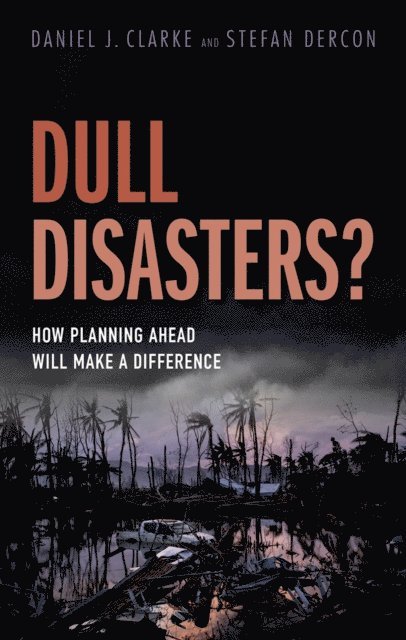
    Dull Disasters?

    How planning ahead will make a difference

    AvDaniel J. Clarke,Stefan Dercon

    Inbunden, Engelska, 2016

    389 kr

    Beställningsvara. Skickas inom 3-6 vardagar. Fri frakt över 249 kr.

    Beskrivning

    This is an open access title available under the terms of a CC BY 3.0 IGO licence. It is free to read at Oxford Scholarship Online and offered as a free PDF download from OUP and selected open access locations. In recent years, typhoons have struck the Philippines and Vanuatu; earthquakes have rocked Haiti, Pakistan, and Nepal; floods have swept through Pakistan and Mozambique; droughts have hit Ethiopia, Kenya, and Somalia; and more. All led to loss of life and loss of livelihoods, and recovery will take years. One of the likely effects of climate change is to increase the likelihood of the type of extreme weather events that seems to cause these disasters. But do extreme events have to turn into disasters with huge loss of life and suffering? Dull Disasters? harnesses lessons from finance, political science, economics, psychology, and the natural sciences to show how countries and their partners can be far better prepared to deal with disasters. The insights can lead to practical ways in which governments, civil society, private firms, and international organizations can work together to reduce the risks to people and economies when a disaster looms. Responses to disasters then become less emotional, less political, less headline-grabbing, and more business as usual and effective.The book takes the reader through a range of solutions that have been implemented around the world to respond to disasters. It gives an overview of the evidence on what works and what doesn't and it examines the crucial issue of disaster risk financing. Building on the latest evidence, it presents a set of lessons and principles to guide future thinking, research, and practice in this area.

    Produktinformation

    • Utgivningsdatum:2016-07-14
    • Mått:144 x 227 x 18 mm
    • Vikt:290 g
    • Format:Inbunden
    • Språk:Engelska
    • Antal sidor:160
    • Förlag:OUP OXFORD
    • ISBN:9780198785576

    Utforska kategorier

    • Internationell ekonomi inom Ekonomi och Ledarskap
    • Sociala och etiska frågor inom Samhälle och politik
    • Socialt arbete och välfärd inom Samhälle och politik

    Mer om författaren

    Daniel J. Clarke is an actuary and development economist who works as a Senior Insurance Specialist in the Disaster Risk Financing & Insurance Program, a joint program between the World Bank Group and the Global Facility for Disaster Reduction and Recovery. Over the last decade he has worked with more than twenty developing country governments to develop efficient, cost-effective solutions for enhanced financial protection against disasters. He has a first class degree from Cambridge University in Mathematics in Computer Science and a D.Phil. in Economics from the University of Oxford, and is a Fellow of the Institute of Actuaries.Stefan Dercon is Professor of Economic Policy at the University of Oxford, and a Professorial Fellow of Wolfson College. He is also Chief Economist of the UK Department for International Development. Previously he taught in Belgium and at the University of Addis Ababa. His interest is in applying microeconomics and statistics to problems of development. He has worked on risk and poverty, agriculture and rural institutions, political economy, childhood poverty, social and geographic mobility, micro-insurance, and measurement issues related to poverty and vulnerability.

    Recensioner i media

    Dull Disasters is a timely publication when the world needs to focus its resources, and communities facing natural disasters should be better prepared to face and bounce back from shocks. It is highly relevant to the IFRC with its network of 190 national societies whose volunteers form the last mile in community engagement. It rightfully shifts the discourse from counting how many we've reached to how few needs are left unmet thus making disasters dull. The message of better preparedness, networking and more robust decision making and financial tools will help us achieve the resilience we need in communities.

    Innehållsförteckning

    • 1: Dealing with Disasters: It Should and Can Get Better 2: Defining the Problem: Begging Bowls and Benefactors 3: Bring in the Professionals 4: Planning for Disaster Recovery: Changing the Default Setting 5: Finance as the Glue 6: Moving Forward . . . Glossary Notes References