• Fri frakt över 249 kr
  • •
  • Snabba leveranser
  • •
  • Billiga böcker
Kundservice

Du är på sajten för privatpersoner.

Företag, bibliotek eller offentlig verksamhet?

Du handlar på classic.bokus.com, där alla dina funktioner finns intakta.
Till classic.bokus.com
Bokus logotyp. Gå till startsidan.
  • Erbjudanden
  • Nyheter
  • Student
  • Topplistor
  • Barn & ungdom
  • Bokus Play
  • E-böcker
  • Pocketböcker
  • Spel & pussel

10% rabatt på allt med kod: NYSTART10 →

Sidfot

Mina sidor

    Hjälp

    • Kundservice
    • Vanliga frågor och svar
    • Frakt och leverans
    • Retur vid ångerrätt
    • Reklamera vara
    • Betalning
    • Köpvillkor
    • Allmänna villkor
    • Information om webbplatsens tillgänglighet

    Om Bokus

    • Om oss
    • Pressrum
    • För studenter
    • För företag
    • För bibliotek och offentlig verksamhet
    • För leverantörer
    • Hållbarhet

    Populärt

    • Aktuella erbjudanden
    • Presentkort
    • Studentlitteratur
    • Nya böcker
    • Topplistor
    • Signerade böcker
    • Engelska böcker

    Inspiration

    • Boktips
    • BookTok
    • Populära bokserier
    • Barnbokskaraktärer
    • Populära författare
    Logotyp för Bokus
    Följ oss på Facebook (extern länk)Följ oss på Instagram (extern länk)Följ oss på YouTube (extern länk)Följ oss på TikTok (extern länk)
    bokus @ CookiesAnpassa cookiesIntegritetspolicyKöpvillkor
    Till Citymail hemsida (extern länk)Till Budbee hemsida (extern länk)Till Postnord hemsida (extern länk)Till Schenker hemsida (extern länk)Till Early Bird hemsida (extern länk)Till Walleys hemsida (extern länk)
    1. Ekonomi och Ledarskap
    2. Nationalekonomi
    3. Ekonomisk historia

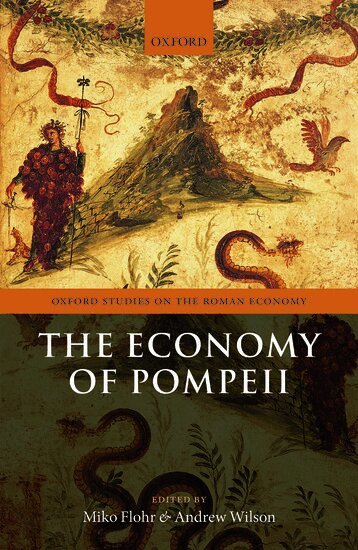
    The Economy of Pompeii

    AvWilson Flohr,Miko Flohr

    Inbunden, Engelska, 2016

    Del i serien Oxford Studies on the Roman Economy

    2 026 kr

    Beställningsvara. Skickas inom 5-8 vardagar. Fri frakt över 249 kr.

    Beskrivning

    This volume presents fourteen papers by Roman archaeologists and historians discussing approaches to the economic history of Pompeii, and the role of the Pompeian evidence in debates about the Roman economy. Four themes are discussed. The first of these is the position of Pompeii and its agricultural environment, discussing the productivity and specialization of agriculture in the Vesuvian region, and the degree to which we can explain Pompeii's size and wealth on the basis of the city's economic hinterland. A second issue discussed is what Pompeians got out of their economy: how well-off were people in Pompeii? This involves discussing the consumption of everyday consumer goods, analyzing archaeobotanical remains to highlight the quality of Pompeian diets, and discussing what bone remains reveal about the health of the inhabitants of Pompeii. A third theme is economic life in the city: how are we to understand the evidence for crafts and manufacturing? How are we to assess Pompeii's commercial topography? Who were the people who actually invested in constructing shops and workshops? In which economic contexts were Pompeian paintings produced? Finally, the volume discusses money and business: how integrated was Pompeii into the wider world of commerce and exchange, and what can the many coins found at Pompeii tell us about this? What do the wax tablets found near Pompeii tell us about trade in the Bay of Naples in the first century AD? Together, the chapters of this volume highlight how Pompeii became a very rich community, and how it profited from its position in the centre of the Roman world.

    Produktinformation

    • Utgivningsdatum:2016-12-22
    • Mått:161 x 241 x 27 mm
    • Vikt:904 g
    • Format:Inbunden
    • Språk:Engelska
    • Serie:Oxford Studies on the Roman Economy
    • Antal sidor:452
    • Förlag:OUP OXFORD
    • ISBN:9780198786573

    Utforska kategorier

    • Ekonomisk historia inom Ekonomi och Ledarskap
    • Forntidens historia inom Historia och arkeologi

    Mer om författaren

    Miko Flohr is postdoctoral researcher and lecturer at the Institute for History of Leiden University, and formerly assistant director of the Oxford Roman Economy Project. His main research focus lies with urban history in the Roman world, with a particular emphasis on economic issues in Roman Italy, and on textile economies. His first monograph, The World of the Fullo, was published with OUP in 2013; since, he has published on the textile economy of Pompeii, and on public investment in commercial space.Andrew Wilson is Professor of the Archaeology of the Roman Empire at All Souls College, University of Oxford. His research interests include the economy of the Roman empire, ancient technology, ancient water supply and usage, Roman North Africa, and archaeological field survey. Recent publications include: Quantifying the Roman Economy: Methods and Problems (ed. with Alan Bowman, Oxford, 2009), Settlement, Urbanization and Population (ed. with Alan Bowman, Oxford, 2011); The Roman Agricultural Economy: Organization, Investment, and Production (ed. with Alan Bowman, Oxford, 2013); Alexandria and the North-Western Delta (ed. with Damian Robinson, Oxford, 2010) and Maritime Archaeology and Ancient Trade in the Mediterranean (ed. with Damian Robinson, Oxford 2011).

    Recensioner i media

    In a short review of thirteen papers it is not possible to do justice to the many areas explored. Suffice to say a reader would go away with a good idea of current views of Pompeii's economy. They would also have a better understanding of the need to see different aspects of the economy, normally considered in isolation, as a network of practice in the same conceptual landscape. Certainly there are ideas here that could usefully be applied to other sites and the book should help bring Pompeii back into the mainstream of thought on the Roman economy.

    Innehållsförteckning

    • PART I: CITY AND HINTERLAND; PART II: QUALITY OF LIFE; PART III: ECONOMIC LIFE AND ITS CONTEXTS; PART IV: MONEY AND TRADE; PART V: DISCUSSION