• Fri frakt över 249 kr
  • •
  • Snabba leveranser
  • •
  • Billiga böcker
Kundservice

Du är på sajten för privatpersoner.

Företag, bibliotek eller offentlig verksamhet?

Du handlar på classic.bokus.com, där alla dina funktioner finns intakta.
Till classic.bokus.com
Bokus logotyp. Gå till startsidan.
  • Erbjudanden
  • Nyheter
  • Student
  • Topplistor
  • Barn & ungdom
  • Bokus Play
  • E-böcker
  • Pocketböcker
  • Spel & pussel

10% rabatt på allt med kod: NYSTART10 →

Sidfot

Mina sidor

    Hjälp

    • Kundservice
    • Vanliga frågor och svar
    • Frakt och leverans
    • Retur vid ångerrätt
    • Reklamera vara
    • Betalning
    • Köpvillkor
    • Allmänna villkor
    • Information om webbplatsens tillgänglighet

    Om Bokus

    • Om oss
    • Pressrum
    • För studenter
    • För företag
    • För bibliotek och offentlig verksamhet
    • För leverantörer
    • Hållbarhet

    Populärt

    • Aktuella erbjudanden
    • Presentkort
    • Studentlitteratur
    • Nya böcker
    • Topplistor
    • Signerade böcker
    • Engelska böcker

    Inspiration

    • Boktips
    • BookTok
    • Populära bokserier
    • Barnbokskaraktärer
    • Populära författare
    Logotyp för Bokus
    Följ oss på Facebook (extern länk)Följ oss på Instagram (extern länk)Följ oss på YouTube (extern länk)Följ oss på TikTok (extern länk)
    bokus @ CookiesAnpassa cookiesIntegritetspolicyKöpvillkor
    Till Citymail hemsida (extern länk)Till Budbee hemsida (extern länk)Till Postnord hemsida (extern länk)Till Schenker hemsida (extern länk)Till Early Bird hemsida (extern länk)Till Walleys hemsida (extern länk)
    1. Ekonomi och Ledarskap
    2. Nationalekonomi
    3. Ekonomisk historia

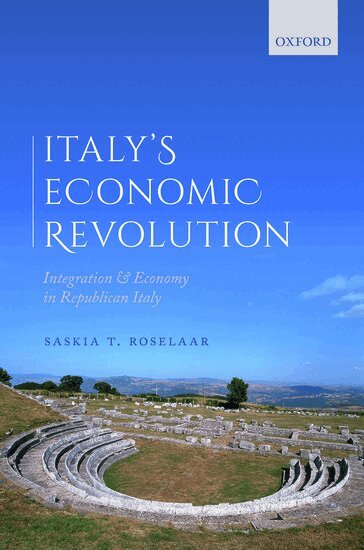
    Italy's Economic Revolution

    Integration and Economy in Republican Italy

    AvSaskia T. Roselaar

    Inbunden, Engelska, 2019

    2 024 kr

    Beställningsvara. Skickas inom 3-6 vardagar. Fri frakt över 249 kr.

    Fler format och utgåvor

    E-bok

    1 353 kr

    E-bok

    1 353 kr

    Beskrivning

    The Roman conquest of Italy in the Republican period (from c. 400 to 50 BC) led to widespread economic changes in which the conquered Italians played an important role. Italy's Economic Revolution analyses the integration of Italy during this period and explores the interplay between economic activities and unification in its civic, legal, social, and cultural senses. On one hand, it investigates whether Italy became more integrated economically following the Roman conquest and traces the widely varying local reactions to the globalization of the Italian economy; on the other, it examines whether and how economic activities carried out by Italians contributed to the integration of the Italian peoples into the Roman framework. Throughout the Republican period, Italians were able to profit from the expansion of the Roman dominion in the Mediterranean and the new economic opportunities it afforded, which led to gradual changes in institutions, culture, and language: through overseas trade and commercial agriculture they had gained significant wealth, which they invested in the Italian landscape, and they were often ahead of Romans when it came to engagement with Hellenistic culture. However, their economic prosperity and cultural sophistication did not lead to civic equality, nor to equal opportunities to exploit the territories the Italians had conquered under Rome's lead. Eventually the Italians rose in rebellion against Rome in the Social War of 91-88 BC, after which they were finally granted Roman citizenship. This volume investigates not only whether and how economic interaction played a role in this civic integration, but also highlights the importance of Roman citizenship as an instrument of further economic, political, social, and cultural integration between Romans and Italians.

    Produktinformation

    • Utgivningsdatum:2019-09-25
    • Mått:163 x 241 x 23 mm
    • Vikt:636 g
    • Format:Inbunden
    • Språk:Engelska
    • Antal sidor:314
    • Förlag:OUP OXFORD
    • ISBN:9780198829447

    Utforska kategorier

    • Ekonomisk historia inom Ekonomi och Ledarskap
    • Forntidens historia inom Historia och arkeologi

    Mer om författaren

    Saskia T. Roselaar obtained her PhD from Leiden University in 2009 and has worked as a Newton International Fellow at the University of Manchester and as a Nottingham Advanced Research Fellow. Her 2010 book Public Land in the Roman Republic: A Social and Economic History of Ager Publicus in Italy, 396-89 BC (Oxford University Press) was awarded the James Henry Breasted Prize and the Premio Speciale della Corte Costituzionale della Repubblica Italiana. Her research interests cover the social, economic, and legal history of the Roman Republic, as well as issues of citizenship and integration in the Roman world in general.

    Recensioner i media

    ...stimulating book.

    Innehållsförteckning

    • Frontmatter List of Figures List of Maps 1: Introduction: economy and integration in the Roman Republic 1.1: Introduction 1.2: The structure of this book 1.3: Economic activities and institutions 1.4: Integration and identity 1.5: Integration and Romanization 1.6: The administration of conquered areas 1.7: Sources and methodology 2: Points of contact: interaction between Roman and Italian 2.1: Introduction 2.2: Roman colonization and spatial integration between Romans and Italians 2.3: Migration and mobility 2.4: Sanctuaries and temples as meeting places 2.5: Fairs and markets 2.6: Other interactions between Romans and Italians 2.6.1: Military service 2.6.2: Social relations: intermarriage, friendships, elite networks 2.7: Conclusion 3: The economic integration of Italy 3.1: Introduction 3.2: Italian commercial activities in the Mediterranean 3.2.1: Italians in the Mediterranean 3.2.2: Commercial export 3.2.3: Developments in agriculture and manufacturing 3.3: Economic developments in Italy 3.3.1: Latium 3.3.2: Campania 3.3.3: Apulia 3.3.4: Lucania and Bruttium 3.3.5: Macroeconomic developments in Republican Italy 3.4: Conclusion 4: Consequences of interaction: institutional and cultural change 4.1: Introduction 4.2: Legal and institutional instruments for interaction 4.2.1: Legal developments 4.2.2: Italian administration and institutions 4.2.3: Italian and Roman coinage 4.2.4: Weights and measures 4.2.5: Conclusion 4.3: The investment of wealth in Italy 4.4: Cultural developments 4.5: Linguistic developments 4.6: The concept of Italian and Italian identity 4.7: Roman protection of its allies 4.8: Conclusion 5: From economic to political integration 5.1: Introduction 5.2: Cultural prejudice against Italians 5.3: The position of Italians in the late second century 5.3.1: Roman and Italian power relations 5.3.2: Lack of Roman citizenship and its negative effects for economic activities 5.3.3: Other causes of resentment 5.4: Demands for citizenship in the late second century 5.5: The outbreak of the Social War 5.6: The grant of citizenship to the Italians 5.7: Political and economic opportunities for Italians after the Social War 5.8: Italian identity after the Social War 5.9: Conclusion 6: General conclusions Endmatter Bibliography Index