• Fri frakt över 249 kr
  • •
  • Snabba leveranser
  • •
  • Billiga böcker
Kundservice

Du är på sajten för privatpersoner.

Företag, bibliotek eller offentlig verksamhet?

Du handlar på classic.bokus.com, där alla dina funktioner finns intakta.
Till classic.bokus.com
Bokus logotyp. Gå till startsidan.
  • Erbjudanden
  • Nyheter
  • Student
  • Topplistor
  • Barn & ungdom
  • Bokus Play
  • E-böcker
  • Pocketböcker
  • Spel & pussel

10% rabatt på allt med kod: NYSTART10 →

Sidfot

Mina sidor

    Hjälp

    • Kundservice
    • Vanliga frågor och svar
    • Frakt och leverans
    • Retur vid ångerrätt
    • Reklamera vara
    • Betalning
    • Köpvillkor
    • Allmänna villkor
    • Information om webbplatsens tillgänglighet

    Om Bokus

    • Om oss
    • Pressrum
    • För studenter
    • För företag
    • För bibliotek och offentlig verksamhet
    • För leverantörer
    • Hållbarhet

    Populärt

    • Aktuella erbjudanden
    • Presentkort
    • Studentlitteratur
    • Nya böcker
    • Topplistor
    • Signerade böcker
    • Engelska böcker

    Inspiration

    • Boktips
    • BookTok
    • Populära bokserier
    • Barnbokskaraktärer
    • Populära författare
    Logotyp för Bokus
    Följ oss på Facebook (extern länk)Följ oss på Instagram (extern länk)Följ oss på YouTube (extern länk)Följ oss på TikTok (extern länk)
    bokus @ CookiesAnpassa cookiesIntegritetspolicyKöpvillkor
    Till Citymail hemsida (extern länk)Till Budbee hemsida (extern länk)Till Postnord hemsida (extern länk)Till Schenker hemsida (extern länk)Till Early Bird hemsida (extern länk)Till Walleys hemsida (extern länk)
    1. Ekonomi och Ledarskap
    2. Nationalekonomi
    3. Mikroekonomi

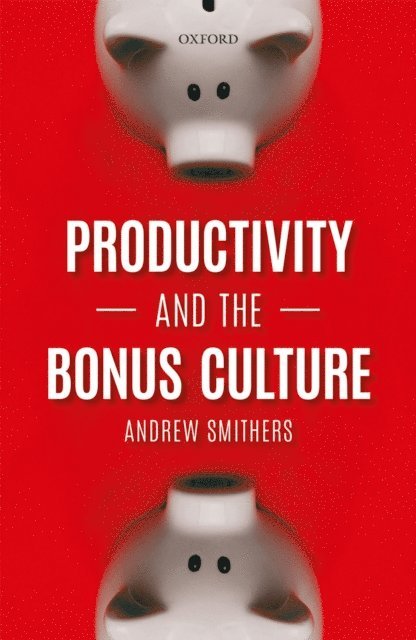
    Productivity and the Bonus Culture

    AvAndrew Smithers

    Inbunden, Engelska, 2019

    651 kr

    Beställningsvara. Skickas inom 5-8 vardagar. Fri frakt över 249 kr.

    Fler format och utgåvor

    E-bok

    374 kr

    E-bok

    374 kr

    Beskrivning

    Living standards in the UK and US are in danger of falling. A decline in growth due to poor productivity and an unfavourable change in demography has weakened the stand of liberal democracy, and voter dissatisfaction is encouraging populist policies that threaten even worse outcomes. Whilst living standards once grew faster than productivity they now grow more slowly, and the working population is no longer growing faster than the population as a whole. To avoid falling living standards the productivity problem must be addressed.Andrew Smithers argues that faster productivity does not depend, as many suggest, on technology; it also relies on investment. Current growth theory is based on a faulty model which has induced pessimism about our ability to encourage more growth. Productivity and the Bonus Culture sets out a revised model which demonstrates that weakness in productivity is the result of the bonus culture, and suggests ways to change this flawed system so that investment is encouraged and growth returns.


    Produktinformation

    • Utgivningsdatum:2019-07-11
    • Mått:158 x 240 x 18 mm
    • Vikt:438 g
    • Format:Inbunden
    • Språk:Engelska
    • Antal sidor:190
    • Förlag:OUP OXFORD
    • ISBN:9780198836117

    Utforska kategorier

    • Mikroekonomi inom Ekonomi och Ledarskap

    Mer om författaren

    Andrew Smithers is the founder of economic consultancy Smithers & Co. He is the author of Valuing Wall Street: Protecting Wealth in Turbulent Markets, The Road to Recovery: How Economic Policy Must Change, and Wall Street Revalued: Imperfect Markets and Inept Central Bankers. He is a former columnist for the London Evening Standard, and has also written columns and blogs for The Times and the Financial Times.

    Recensioner i media

    Smithers is quietly persuasive, and invites the public to discuss and debate his ideas. A glossary helps nonspecialists understand the terminology. ... Summing up: Recommended

    Innehållsförteckning

    • 1: The legacy of the financial crisis 2: What I seek to show 3: Poor productivity and damaging demography 4: The cause of poor productivity 5: Ageing populations 6: Other influences on growth 7: The problem of income inequality 8: Two models of growth 9: Investment and the stock of capital 10: Description of my model 11: The results of my model 12: Testing the proposed model 13: Investment, the capital stock, and economic policy 14: The bonus culture has raised the hurdle gate 15: The added impact of misinformation 16: Implications for growth 17: Management and shareholder interests 18: Distractions from serious debate 19: Deflation 20: The UK is similar to the US 21: Reversing perverse incentives 22: Changing the economic impact of current incentives 23: Misinformation adds to risks for the economy 24: The economic consequences of higher investment 25: Summary and conclusions APPENDICES A.1: The impact of real and nominal interest rates A.2: Measurement of the net capital stock and depriciation in the UK and the US A.3: The Gini Coefficient A.4: The formulae for NTV A.5: US profits as published are habitually overstated A.6: The Balassa-Samuelson effect A.7: Abolishing ACT caused a large rise in the effective rate of corporation tax A.8: Why profit margins in mature economies are expected to revert to their mean