• Fri frakt över 249 kr
  • •
  • Snabba leveranser
  • •
  • Billiga böcker
Kundservice

Du är på sajten för privatpersoner.

Företag, bibliotek eller offentlig verksamhet?

Du handlar på classic.bokus.com, där alla dina funktioner finns intakta.
Till classic.bokus.com
Bokus logotyp. Gå till startsidan.
  • Erbjudanden
  • Nyheter
  • Student
  • Topplistor
  • Barn & ungdom
  • Bokus Play
  • E-böcker
  • Pocketböcker
  • Spel & pussel

10% rabatt på allt med kod: NYSTART10 →

Sidfot

Mina sidor

    Hjälp

    • Kundservice
    • Vanliga frågor och svar
    • Frakt och leverans
    • Retur vid ångerrätt
    • Reklamera vara
    • Betalning
    • Köpvillkor
    • Allmänna villkor
    • Information om webbplatsens tillgänglighet

    Om Bokus

    • Om oss
    • Pressrum
    • För studenter
    • För företag
    • För bibliotek och offentlig verksamhet
    • För leverantörer
    • Hållbarhet

    Populärt

    • Aktuella erbjudanden
    • Presentkort
    • Studentlitteratur
    • Nya böcker
    • Topplistor
    • Signerade böcker
    • Engelska böcker

    Inspiration

    • Boktips
    • BookTok
    • Populära bokserier
    • Barnbokskaraktärer
    • Populära författare
    Logotyp för Bokus
    Följ oss på Facebook (extern länk)Följ oss på Instagram (extern länk)Följ oss på YouTube (extern länk)Följ oss på TikTok (extern länk)
    bokus @ CookiesAnpassa cookiesIntegritetspolicyKöpvillkor
    Till Citymail hemsida (extern länk)Till Budbee hemsida (extern länk)Till Postnord hemsida (extern länk)Till Schenker hemsida (extern länk)Till Early Bird hemsida (extern länk)Till Walleys hemsida (extern länk)
    1. Ekonomi och Ledarskap
    2. Nationalekonomi
    3. Miljöekonomi

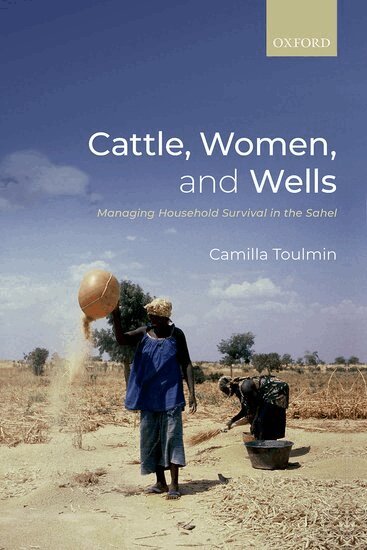
    Cattle, Women, and Wells

    Managing Household Survival in the Sahel

    AvCamilla Toulmin

    Häftad, Engelska, 2021

    548 kr

    Beställningsvara. Skickas inom 5-8 vardagar. Fri frakt över 249 kr.

    Beskrivning

    How people adapt and survive in the harsh environment of the drought-prone Sahelian region to the south of the Saharan desert forms the subject of this book. The author concentrates on the choices facing farmers in a small village in central Mali, West Africa. These farmers have had continually to adapt their farming methods in order to survive. The study shows how such changes have taken place and why some families are more successful than others in surviving and prospering. It provides an analysis of millet yields, and of returns to investment in ploughs, wells, and breeding cattle. Decisions regarding marriage, child-rearing, and household organization are discussed within an economic framework to demonstrate the strong economic rationale behind choices made in these spheres. The book concludes that larger, more diverse households found within this society (containing as many as forty to sixty people) are much better able to resist the risks of drought and illness than are small nuclear family groups. Environmental issues are shown to be crucial to the longer term viability of such a community.

    Produktinformation

    • Utgivningsdatum:2021-10-28
    • Mått:157 x 235 x 18 mm
    • Vikt:504 g
    • Format:Häftad
    • Språk:Engelska
    • Antal sidor:320
    • Förlag:OUP OXFORD
    • ISBN:9780198853046

    Utforska kategorier

    • Miljöekonomi inom Ekonomi och Ledarskap
    • Ekonomiska system inom Ekonomi och Ledarskap

    Mer om författaren

    Camilla Toulmin is a British economist, specialising on African agriculture, drylands, tenure and climate change. She became a Senior Associate at the International Institute for Environment & Development (IIED) in 2017, after 12 years as its Director. She has been appointed Professor in Practice at the University of Lancaster's Environment Centre (LEC) and is currently an Associate at the Institute for New Economic Thinking (INET). She has recently completed her term as Fellow of the Open Society Foundation (OSF). In her roles as Associate and Professor, she is engaging in a series of research, board and advisory activities, building on 40 years' work at the interface between the environment and development, and spanning local and global scales.

    Innehållsförteckning

    • 1: Introduction Part I: The Village Setting 2: Background to the Village of Kala 3: Climate, Cultivation, and Household Income Part II: Farm Production 4: The Farming System 5: Millet-production Analysis 6: Returns to Farming Part II: Farm Investment 7: Introduction 8: Well-digging 9: Oxen Plough Teams 10: Investment in Cattle-breeding Stock 11: Farm-investemnt Strategies Part IV: Managing the Family 12: Fertility and Child-rearing 13: Marriage 14: Bambara Household Organization Part V: Conclusions 15: Conclusions Appendix: Levelling Mechanisms within Bambara Society