• Fri frakt över 249 kr
  • •
  • Snabba leveranser
  • •
  • Billiga böcker
Kundservice

Du är på sajten för privatpersoner.

Företag, bibliotek eller offentlig verksamhet?

Du handlar på classic.bokus.com, där alla dina funktioner finns intakta.
Till classic.bokus.com
Bokus logotyp. Gå till startsidan.
  • Erbjudanden
  • Nyheter
  • Student
  • Topplistor
  • Barn & ungdom
  • Bokus Play
  • E-böcker
  • Pocketböcker
  • Spel & pussel

10% rabatt på allt med kod: NYSTART10 →

Sidfot

Mina sidor

    Hjälp

    • Kundservice
    • Vanliga frågor och svar
    • Frakt och leverans
    • Retur vid ångerrätt
    • Reklamera vara
    • Betalning
    • Köpvillkor
    • Allmänna villkor
    • Information om webbplatsens tillgänglighet

    Om Bokus

    • Om oss
    • Pressrum
    • För studenter
    • För företag
    • För bibliotek och offentlig verksamhet
    • För leverantörer
    • Hållbarhet

    Populärt

    • Aktuella erbjudanden
    • Presentkort
    • Studentlitteratur
    • Nya böcker
    • Topplistor
    • Signerade böcker
    • Engelska böcker

    Inspiration

    • Boktips
    • BookTok
    • Populära bokserier
    • Barnbokskaraktärer
    • Populära författare
    Logotyp för Bokus
    Följ oss på Facebook (extern länk)Följ oss på Instagram (extern länk)Följ oss på YouTube (extern länk)Följ oss på TikTok (extern länk)
    bokus @ CookiesAnpassa cookiesIntegritetspolicyKöpvillkor
    Till Citymail hemsida (extern länk)Till Budbee hemsida (extern länk)Till Postnord hemsida (extern länk)Till Schenker hemsida (extern länk)Till Early Bird hemsida (extern länk)Till Walleys hemsida (extern länk)
    1. Naturvetenskap och teknik
    2. Matematik och naturvetenskap
    3. Naturvetenskap:allmänt
    4. Naturvetenskapens filosofi

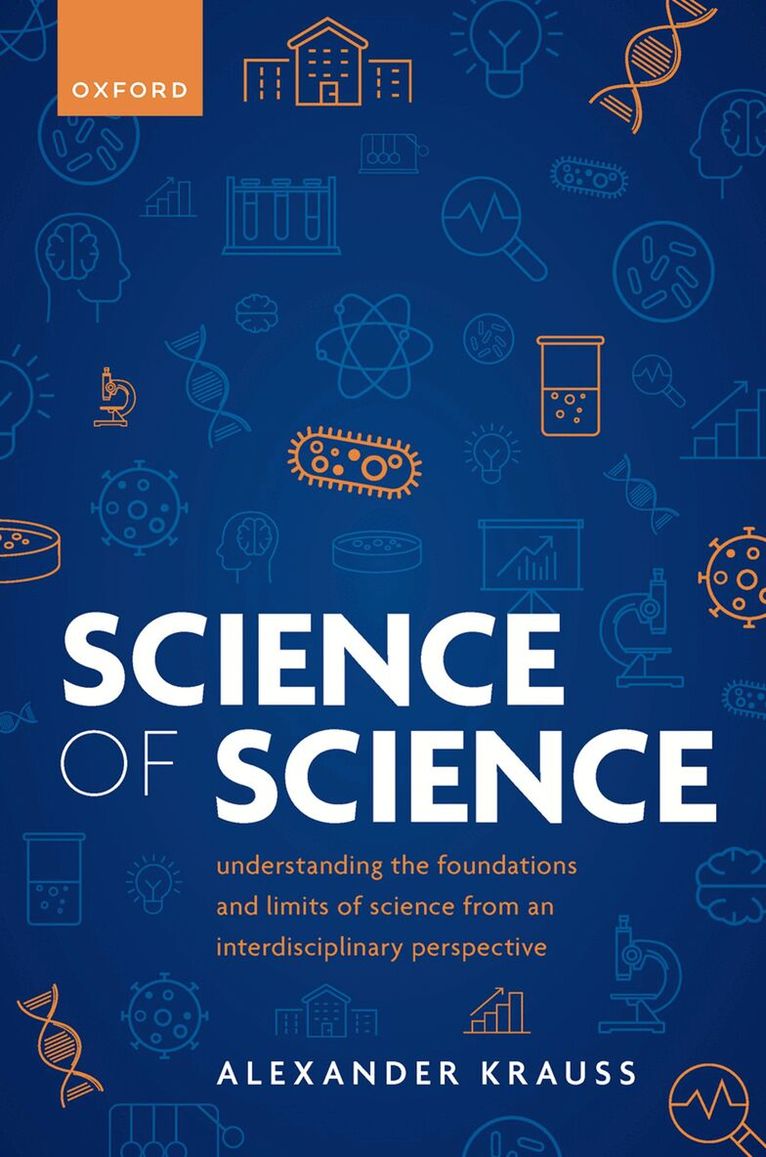
    Science of Science

    Understanding the Foundations and Limits of Science from an Interdisciplinary Perspective

    AvAlexander Krauss

    Inbunden, Engelska, 2024

    1 308 kr

    Beställningsvara. Skickas inom 7-10 vardagar. Fri frakt över 249 kr.

    Beskrivning

    This is an open access title available under the terms of a CC BY-NC-ND 4.0 International licence. It is free to read on the Oxford Academic platform and offered as a free PDF download from OUP and selected open access locations.How do we drive new knowledge and science? What are their present boundaries? And how can we improve science? We still do not understand these essential questions about science well, even though science is at the foundation of modern society.The emerging field of the science of science can provide answers. The central challenge of the field is accounting for and integrating the different empirical and theoretical knowledge across disciplines into a holistic field and uncovering the general mechanism driving science.Science of Science is the first book to provide an integrated framework for the field and thus aims to provide a comprehensive understanding of the foundations and limits of science. The book integrates 14 scientific fields and illustrates how our evolved mind (that enables us to observe, experiment and solve problems) makes doing science possible but also shapes what and how we observe. Our scientific methods and instruments (such as statistics and electron microscopes) enable us to study a much larger range of phenomena but also puts constraints on how we measure them. Institutions and funding shape what knowledge we produce and how we evaluate our evidence, among other influences. Here, taking an interdisciplinary approach, Krauss explains how the sophisticated scientific tools we develop are the main driving force of creating new knowledge and advancing science. This methodological toolbox sets the scope and limits of what we can know and what is possible in science - while economic, social, and historical influences help shape what we study within that scope and those limits. The book provides a unifying theory for the field of science of science - the new-methods-drive-science theory. By better understanding the foundations of science we will also show how we can reduce the constraints and biases that we and our scientific methods and instruments face to advance science and push its present boundaries.

    Produktinformation

    • Utgivningsdatum:2024-12-10
    • Mått:160 x 240 x 15 mm
    • Vikt:462 g
    • Format:Inbunden
    • Språk:Engelska
    • Antal sidor:192
    • Förlag:OUP OXFORD
    • ISBN:9780198937371

    Utforska kategorier

    • Naturvetenskapens filosofi inom Naturvetenskap och teknik
    • Matematikens historia inom Naturvetenskap och teknik
    • Naturvetenskapens historia inom Naturvetenskap och teknik

    Mer om författaren

    Alexander Krauss is a Research Associate at the London School of Economics and an Affiliated Professor at the Barcelona School of Economics and Spanish National Research Council. After completing his PhD, he worked for governments and the World Bank for five years before teaching at University College London.

    Recensioner i media

    Science of Science is an ambitious and thought-provoking book that explains how science works and how it can improve. Its central argument - that scientific methods drive progress - offers a fresh perspective. By integrating insights from multiple disciplines, Krauss provides a comprehensive account of science and makes a valuable contribution to furthering our understanding scientific knowledge.

    Innehållsförteckning

    • Introduction 1: Describing Science of Science 2: Biology of Science 3: Archaeology of Science 4: Cognitive Science of Science 5: Psychology of Science 6: Sociology of Science 7: Economics of Science 8: History of Science 9: Anthropology of Science 10: Methodology of Science 11: Scientometrics and Network Science 12: Computer Science of Science 13: Statistics and Mathematics of Science 14: Philosophy of Science 15: Linguistics of Science 16: Science of Science: An Integrated and Methods-Driven Understanding of Science 17: Science of Science: An Integrated Field Grounded in the New-Methods-Drive-Science Theory 18: The Limits of Science: An Overview 19: The Limits of Science: Grounded in the Boundaries of Our Methods and Mind 20: The Limits of Science: Pushing the Limits of Science by Expanding Our Powerful Methodological Toolbox Conclusion and Implications Appendix References Acknowledgements Index