• Fri frakt över 249 kr
  • •
  • Snabba leveranser
  • •
  • Billiga böcker
Kundservice

Du är på sajten för privatpersoner.

Företag, bibliotek eller offentlig verksamhet?

Du handlar på classic.bokus.com, där alla dina funktioner finns intakta.
Till classic.bokus.com
Bokus logotyp. Gå till startsidan.
  • Erbjudanden
  • Nyheter
  • Student
  • Topplistor
  • Barn & ungdom
  • Bokus Play
  • E-böcker
  • Pocketböcker
  • Spel & pussel

10% rabatt på allt med kod: NYSTART10 →

Sidfot

Mina sidor

    Hjälp

    • Kundservice
    • Vanliga frågor och svar
    • Frakt och leverans
    • Retur vid ångerrätt
    • Reklamera vara
    • Betalning
    • Köpvillkor
    • Allmänna villkor
    • Information om webbplatsens tillgänglighet

    Om Bokus

    • Om oss
    • Pressrum
    • För studenter
    • För företag
    • För bibliotek och offentlig verksamhet
    • För leverantörer
    • Hållbarhet

    Populärt

    • Aktuella erbjudanden
    • Presentkort
    • Studentlitteratur
    • Nya böcker
    • Topplistor
    • Signerade böcker
    • Engelska böcker

    Inspiration

    • Boktips
    • BookTok
    • Populära bokserier
    • Barnbokskaraktärer
    • Populära författare
    Logotyp för Bokus
    Följ oss på Facebook (extern länk)Följ oss på Instagram (extern länk)Följ oss på YouTube (extern länk)Följ oss på TikTok (extern länk)
    bokus @ CookiesAnpassa cookiesIntegritetspolicyKöpvillkor
    Till Citymail hemsida (extern länk)Till Budbee hemsida (extern länk)Till Postnord hemsida (extern länk)Till Schenker hemsida (extern länk)Till Early Bird hemsida (extern länk)Till Walleys hemsida (extern länk)
    1. Samhälle och politik
    2. Sociologi och antropologi

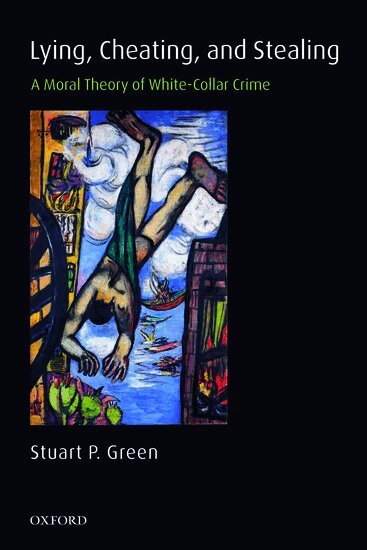
    Lying, Cheating, and Stealing

    A Moral Theory of White-Collar Crime

    AvStuart P. Green

    Häftad, Engelska, 2007

    Del i serien Oxford Monographs on Criminal Law and Justice

    725 kr

    Beställningsvara. Skickas inom 5-8 vardagar. Fri frakt över 249 kr.

    Fler format och utgåvor

    Inbunden

    1 115 kr

    Beskrivning

    The picture of crime that dominates the popular imagination is one of unambiguous wrong-doing - manifestly harmful acts that are clearly worthy of condemnation. The accompanying picture of the criminal - the thief, the murderer - is a picture of society's failures - to be cast out and re-integrated through a process of punishment and penance. Our understanding of white-collar crime, by contrast, is pervaded by moral and imaginative ambiguity. Such crimes are committed by society's success stories, by the rich and the powerful, and frequently have no visible victim at their root. The problem of marrying these disparate pictures has led to a confusion of the boundaries of white-collar crime. How is it possible to distinguish criminal fraud from mere lawful "puffing", tax evasion from "tax avoidance", insider trading from "savvy investing", obstruction of justice from "zealous advocacy", bribery from "log rolling", and extortion from "hard bargaining"? How should we, as scholars and students, lawyers and judges, law enforcement officials and the general public, distinguish the lawful from the unlawful, the civil from the criminal?In the first in-depth study of its kind, Stuart Green exposes the ambiguities and uncertainties that pervade the white-collar crimes, and offers an approach to their solution. Drawing on recent cases involving such figures as Martha Stewart, Bill Clinton, Tom DeLay, Scooter Libby, Jeffrey Archer, Enron's Kenneth Lay and Andrew Fastow, and the Arthur Anderson accounting firm, Green weaves together disparate threads of the criminal code to reveal a complex and fascinating web of moral insights about the nature of guilt and innocence and what, fundamentally, constitutes conduct worthy of punishment by criminal sanction.Green argues that white-collar crime is best understood through a framework of everyday moral concepts that include not only lying, cheating and stealing, but also coercion, exploitation, disloyalty, promise-breaking, disobediance, and other forms of deception. In the process, he reveals the essentially moral fabric underlying the legal category of white-collar crime.

    Produktinformation

    • Utgivningsdatum:2007-03-15
    • Mått:155 x 234 x 15 mm
    • Vikt:469 g
    • Format:Häftad
    • Språk:Engelska
    • Serie:Oxford Monographs on Criminal Law and Justice
    • Antal sidor:312
    • Förlag:OUP OXFORD
    • ISBN:9780199225804

    Utforska kategorier

    • Sociologi och antropologi inom Samhälle och politik
    • Straffrätt: lagar inom Juridik
    • Filosofiska discipliner inom Filosofi och religion

    Mer om författaren

    Stuart Green is Professor of Law and Justice Nathan L. Jacobs Scholar, Rutgers School of Law, Newark. A graduate of Yale Law School, he has served as a Fulbright Distinguished Scholar in the United Kingdom and as a Visiting Professor at the University of Michigan Law School. He is co-editor, along with R.A. Duff, of Defining Crimes: Essays on the Special Part of the Criminal Law, published by OUP in 2005.

    Recensioner i media

    'This book marks a real advance in normative theorising about the moral foundations of the criminal law: it should provoke theorists to think not just about murder, but about insider trading; not just about rape, but about tax evasion - and about the wide range of regulatory offences' whose moral content has been so under-explored. This is an important book, which opens up the vast field of 'white-collar crime' to deep normative theorising - theorising that is informed by an acute grasp of the legal issues and by a thorough philosophical grounding.'

    Innehållsförteckning

    • Preface ; Introduction ; I GETTING STARTED ; The Meaning of 'White Collar Crime' ; Some Generalizations About the Moral Content of White Collar Crime ; A Three-Part Framework for Analysis ; II DEFINING MORAL WRONGFULNESS ; Cheating ; Deception ; Stealing ; Coercion and Expoitation ; Disloyalty ; Promise-Breaking ; Disobediance ; A Concluding Thought on Moral Wrongfulness ; III FINDING THE MORAL CONTENT OF WHITE COLLAR OFFENSES ; Perjury ; Fraud ; False Statements ; Obstruction of Justice ; Bribery ; Extortion and Blackmail ; Insider Trading ; Tax Evasion ; Regulatory Offenses ; Conclusions