Häftad, Engelska, 2007
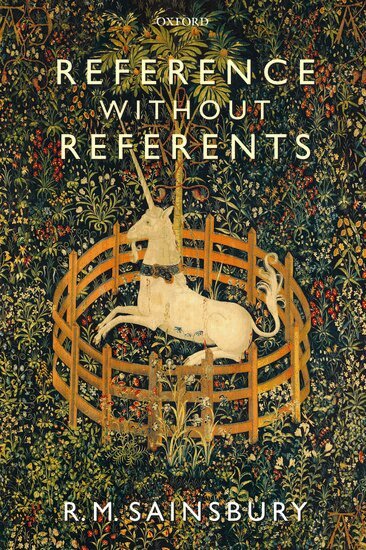
Reference without Referents
976 kr
Beställningsvara. Skickas inom 5-8 vardagar. Fri frakt över 249 kr.
Beskrivning
Reference is a central topic in philosophy of language, and has been the main focus of discussion about how language relates to the world. R. M. Sainsbury sets out a new approach to the concept, which promises to bring to an end some long-standing debates in semantic theory. There is a single category of referring expressions, all of which deserve essentially the same kind of semantic treatment. Included in this category are both singular and plural referring expressions ('Aristotle', 'The Pleiades'), complex and non-complex referring expressions ('The President of the USA in 1970', 'Nixon'), and empty and non-empty referring expressions ('Vulcan', 'Neptune'). Referring expressions are to be described semantically by a reference condition, rather than by being associated with a referent. In arguing for these theses, Sainsbury's book promises to end the fruitless oscillation between Millian and descriptivist views. Millian views insist that every name has a referent, and find it hard to give a good account of names which appear not to have referents, or at least are not known to do so, like ones introduced through error ('Vulcan'), ones where it is disputed whether they have a bearer ('Patanjali') and ones used in fiction. Descriptivist theories require that each name be associated with some body of information. These theories fly in the face of the fact names are useful precisely because there is often no overlap of information among speakers and hearers. The alternative position for which the book argues is firmly non-descriptivist, though it also does not require a referent. A much broader view can be taken of which expressions are referring expressions: not just names and pronouns used demonstratively, but also some complex expressions and some anaphoric uses of pronouns. Sainsbury's approach brings reference into line with truth: no one would think that a semantic theory should associate a sentence with a truth value, but it is commonly held that a semantic theory should associate a sentence with a truth condition, a condition which an arbitrary state of the world would have to satisfy in order to make the sentence true. The right analogy is that a semantic theory should associate a referring expression with a reference condition, a condition which an arbitrary object would have to satisfy in order to be the expression's referent. Lucid and accessible, and written with a minimum of technicality, Sainsbury's book also includes a useful historical survey. It will be of interest to those working in logic, mind, and metaphysics as well as essential reading for philosophers of language.
Produktinformation
- Utgivningsdatum: 2007-10-04
- Mått: 155 x 234 x 16 mm
- Vikt: 443 g
- Format: Häftad
- Språk: Engelska
- Antal sidor: 280
- Förlag: OUP OXFORD
- ISBN: 9780199230402
Utforska kategorier
Betyg & recensioner
0 recensioner
Inga recensioner tillgängliga.