
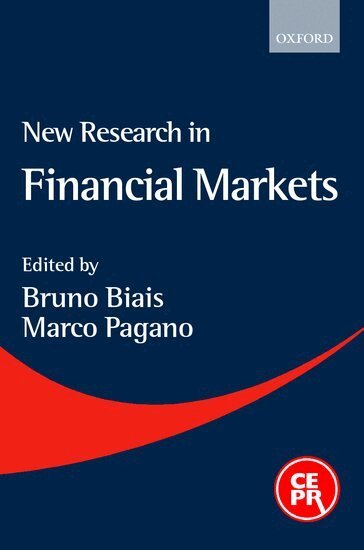
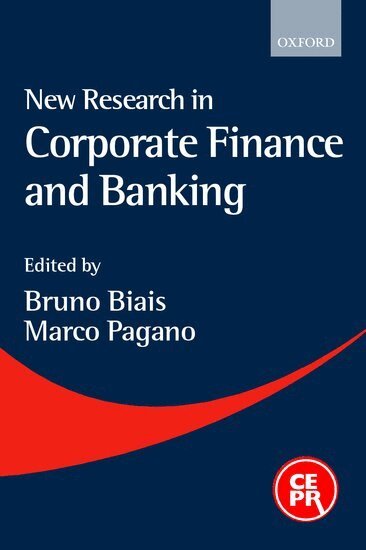
New Research in Corporate Finance and Banking
Häftad, Engelska, 2002
295 kr
Beställningsvara. Skickas inom 7-10 vardagar. Fri frakt över 249 kr.
Fler format och utgåvor
Beskrivning
In recent years, European financial economists have been brought together, via research projects and bubble01ces, by the Centre for Economic Policy Research (CEPR). These fruitful interactions have contributed to the development of financial economics in Europe, and have generated a strong flow of interesting writing---both theoretical and empirical---in the fields of financial markets and corporate finance.One of the common questions posed by researchers in this field is why security markets have such different roles and importance relative to banks in different countries. A related issue is whether these different financial arrangements matter for the functioning of the real economy. The first section of this volume approaches these issues by focusing on the functioning of the primary equity market, or the process by which companies 'go public', which marks the transition from complete reliance on bank financing to partial reliance on security markets. The second section approaches these issues at a 'systemic' level, attempting to identify the comparative advantages of banks and security markets in solving the information problems involved in financing companies. The third section explores the variety in the design of credit contracts and institutions, asking questions like: Why do some companies borrow from a single bank and others from several banks? Why do some banks share information about their customers? The final section illustrates that the same informational frictions that explain the design of credit contracts and institutions can also affect real economic activity.
Produktinformation
Utforska kategorier
Mer om författaren
Recensioner i media
Innehållsförteckning
Hoppa över listan
Mer från samma författare
Del 1656
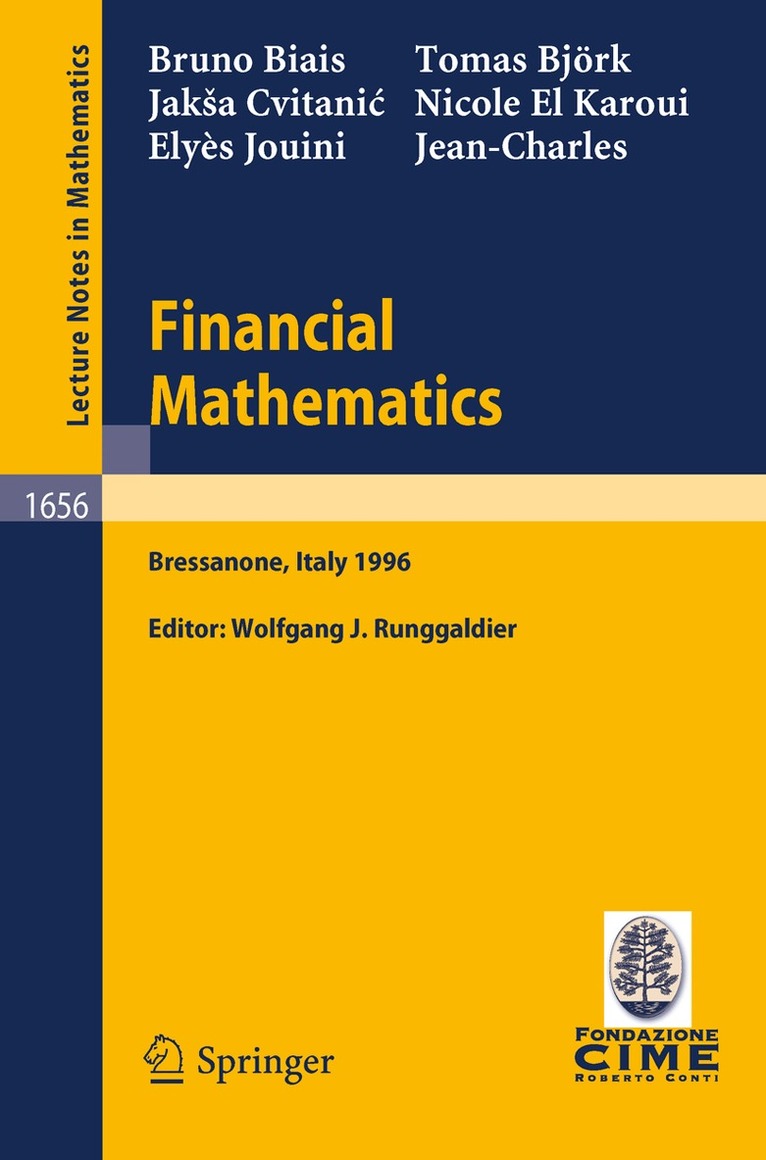
Financial Mathematics
Bruno Biais, Thomas Björk, Jakša Cvitanic, Nicole El Karoui, Elyes Jouini, J.C. Rochet, Wolfgang J. Runggaldier
Häftad, 1997
554 kr
Financial Mathematics
J.C. Rochet, Elyes Jouini, Nicole El Karoui, Jaksa Cvitanic, Thomas Bjork, Bruno Biais, Wolfgang J. Runggaldier
E-bok
2006638 kr
Hoppa över listan




Du kanske också är intresserad av
- 10% rabatt på allt
Del 1656
Financial Mathematics
Bruno Biais, Thomas Björk, Jakša Cvitanic, Nicole El Karoui, Elyes Jouini, J.C. Rochet, Wolfgang J. Runggaldier
Häftad, 1997
554 kr
Financial Mathematics
J.C. Rochet, Elyes Jouini, Nicole El Karoui, Jaksa Cvitanic, Thomas Bjork, Bruno Biais, Wolfgang J. Runggaldier
E-bok
2006638 kr
Finance and Investment: The European Case
Colin Mayer, Stefano Micossi, Marco Onado, Marco Pagano, Andrea Polo
Häftad, 2018
582 kr
EMU efter tio år. Ska Danmark, Sverige och Storbritannien ansluta sig?
Harry Flam, Antonio Fatás, Steinar Holden, Tullio Jappeli, Ilian Minov, Marco Pagano, Charles Wyplosz
Häftad, 2009
335 kr
Del 1
EMU at Ten : should Denmark, Sweden and the UK join?
Harry Flam, Antonio Fatás, Steinar Holden, Tullio Jappeli, Ilian Minov, Marco Pagano, Charles Wyplosz
Häftad, 2009
325 kr
Finance and Investment: The European Case
Andrea Polo, Marco Pagano, Marco Onado, Stefano Micossi, Colin Mayer
E-bok
2017517 kr