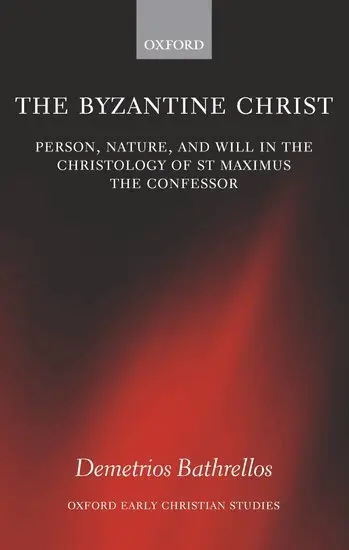
Inbunden, Engelska, 2004
The Byzantine Christ
Person, Nature, and Will in the Christology of Saint Maximus the Confessor
Del i serien Oxford Early Christian Studies
3742 kr
Beställningsvara. Skickas inom 7-10 vardagar. Fri frakt över 249 kr.
Beskrivning
St Maximus the Confessor is one of the giants of Christian theology. His doctrine of two wills gave the final shape to ancient Christology and was ratified by the Sixth Ecumenical Council in AD 681. This study throws new light upon one of the most interesting periods of historical and systematic theology. Its focus is the seventh century, the century that saw the rapid expansion of Islam, and the Empire's failed attempt to retain many of its south-eastern provinces by inventing and promoting the heresy of Monothelitism (only one will in Christ) as a bridge between the Byzantine Church and the anti-Chalcedonian Churches which prevailed in some of these areas.From the point of view of systematic theology, the book examines the meaning of the terms person/hypostasis, nature/essence, and will in the context of Christology after the Council of Chalcedon (AD 451), with special reference to Maximus. It also explores the complex question of the human will of Jesus Christ and its relation to his person and natures. The Byzantine Christ enhances our understanding of Eastern Orthodox theology and of some of the reasons that still separate it both from Western Christianity and from the so-called Oriental Orthodox Churches.
Produktinformation
- Utgivningsdatum: 2004-11-04
- Mått: 146 x 224 x 18 mm
- Vikt: 465 g
- Format: Inbunden
- Språk: Engelska
- Serie: Oxford Early Christian Studies
- Antal sidor: 240
- Förlag: OUP OXFORD
- ISBN: 9780199258642
Utforska kategorier
Mer om författaren
Demetrios Bathrellos is Priest in the Greek Cathedral of the Holy Wisdom, London.
Recensioner i media
In this excellent book, Demetrios Bathrellos provides an admirably clear and precise guide through an intensely complex subject area.
Betyg & recensioner
0 recensioner
Inga recensioner tillgängliga.