Inbunden, Engelska, 2007
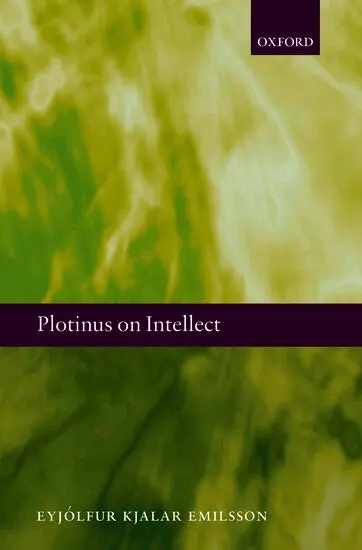
Plotinus on Intellect
2031 kr
Beställningsvara. Skickas inom 5-8 vardagar. Fri frakt över 249 kr.
Beskrivning
Plotinus (205-269 AD) is considered the founder of Neoplatonism, the dominant philosophical movement of late antiquity, and a rich seam of current scholarly interest. Whilst Plotinus' influence on the subsequent philosophical tradition was enormous, his ideas can also be seen as the culmination of some implicit trends in the Greek tradition from Parmenides, Plato, Aristotle, and the Stoics. Emilsson's in-depth study focuses on Plotinus' notion of Intellect, which comes second in his hierarchical model of reality, after the One, unknowable first cause of everything. As opposed to ordinary human discursive thinking, Intellect's thought is all-at-once, timeless, truthful and a direct intuition into 'things themselves'; it is presumably not even propositional. Emilsson discusses and explains this strong notion of non-discursive thought and explores Plotinus' insistence that this must be the primary form of thought.Plotinus' doctrine of Intellect raises a host of questions that Emilsson addresses. First, Intellect's thought is described as an attempt to grasp the One and at the same time as self-thought. How are these two claims related? How are they compatible? What lies in Plotinus' insistence that Intellect's thought is a thought of itself? Second, Plotinus gives two minimum requirements of thought: that it must involve a distinction between thinker and object of thought, and that the object itself must be varied. How are these two pluralist claims related? Third, what is the relation between Intellect as a thinker and Intellect as an object of thought? Plotinus' position here seems to amount to a form of idealism, and this is explored.
Produktinformation
- Utgivningsdatum: 2007-02-15
- Mått: 160 x 240 x 20 mm
- Vikt: 510 g
- Format: Inbunden
- Språk: Engelska
- Antal sidor: 242
- Förlag: OUP OXFORD
- ISBN: 9780199281701
Utforska kategorier
Recensioner i media
A few years ago it would have been neccessary to begin this review by explaining, even to an erudite philosophical audience, who Plotinus was and why he had any important contribution to make to modern philosophy. Times are changing: recent discursive histories of the subject... all acknowledge Plotinus' historical significance and his charm. Emilsson's study will be of interest both to those already acquainted with his work and to those attracted to the topic by such recommendations... this is a welcome addition to the literature, much of which will be intelligible even to undergraduate student.
Betyg & recensioner
0 recensioner
Inga recensioner tillgängliga.