• Fri frakt över 249 kr
  • •
  • Snabba leveranser
  • •
  • Billiga böcker
Kundservice

Du är på sajten för privatpersoner.

Företag, bibliotek eller offentlig verksamhet?

Du handlar på classic.bokus.com, där alla dina funktioner finns intakta.
Till classic.bokus.com
Bokus logotyp. Gå till startsidan.
  • Erbjudanden
  • Nyheter
  • Student
  • Topplistor
  • Barn & ungdom
  • Bokus Play
  • E-böcker
  • Pocketböcker
  • Spel & pussel

10% rabatt på allt med kod: NYSTART10 →

Sidfot

Mina sidor

    Hjälp

    • Kundservice
    • Vanliga frågor och svar
    • Frakt och leverans
    • Retur vid ångerrätt
    • Reklamera vara
    • Betalning
    • Köpvillkor
    • Allmänna villkor
    • Information om webbplatsens tillgänglighet

    Om Bokus

    • Om oss
    • Pressrum
    • För studenter
    • För företag
    • För bibliotek och offentlig verksamhet
    • För leverantörer
    • Hållbarhet

    Populärt

    • Aktuella erbjudanden
    • Presentkort
    • Studentlitteratur
    • Nya böcker
    • Topplistor
    • Signerade böcker
    • Engelska böcker

    Inspiration

    • Boktips
    • BookTok
    • Populära bokserier
    • Barnbokskaraktärer
    • Populära författare
    Logotyp för Bokus
    Följ oss på Facebook (extern länk)Följ oss på Instagram (extern länk)Följ oss på YouTube (extern länk)Följ oss på TikTok (extern länk)
    bokus @ CookiesAnpassa cookiesIntegritetspolicyKöpvillkor
    Till Citymail hemsida (extern länk)Till Budbee hemsida (extern länk)Till Postnord hemsida (extern länk)Till Schenker hemsida (extern länk)Till Early Bird hemsida (extern länk)Till Walleys hemsida (extern länk)
    1. Språk och ordböcker
    2. Språkvetenskap och lingvistik

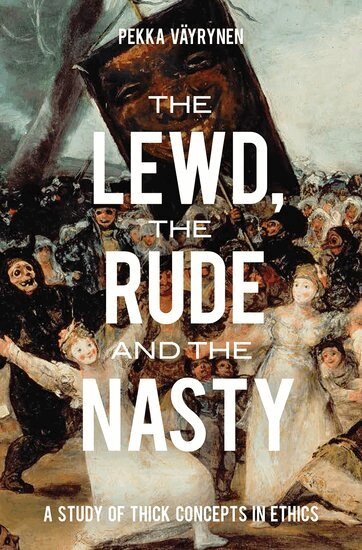
    The Lewd, the Rude and the Nasty

    A Study of Thick Concepts in Ethics

    AvPekka Vayrynen

    Inbunden, Engelska, 2013

    Del i serien Oxford Moral Theory

    1 364 kr

    Beställningsvara. Skickas inom 5-8 vardagar. Fri frakt över 249 kr.

    Fler format och utgåvor

    Häftad

    938 kr

    Beskrivning

    In addition to thin concepts like the good, the bad and the ugly, our evaluative thought and talk appeals to thick concepts like the lewd and the rude, the selfish and the cruel, the courageous and the kind -- concepts that somehow combine evaluation and non-evaluative description. Thick concepts are almost universally assumed to be inherently evaluative in content, and many philosophers claimed them to have deep and distinctive significance in ethics and metaethics. In this first book-length treatment of thick concepts, Pekka Väyrynen argues that all this is mistaken. Through detailed attention to the language of thick concepts, he defends a novel theory on which the relationship between thick words and evaluation is best explained by general conversational and pragmatic norms. Drawing on general principles in philosophy of language, he argues that many prominent features of thick words and concepts can be explained by general factors that have nothing in particular to do with being evaluative. If evaluation is not essential to the sort of thinking we do with thick concepts, claims for the deep and distinctive significance of the thick are undermined. The Lewd, the Rude and the Nasty is a fresh and innovative treatment of an important topic in moral philosophy and sets a new agenda for future work. It will be essential reading to anyone interested in the analysis and the broader philosophical significance of evaluative and normative language."Väyrynen presents an extremely well researched, highly innovative, and yet very careful and highly polished treatment of an extremely hot area in philosophy. The book is tightly argued but engagingly written. I would hold it up as a model philosophy monograph. There is no doubt in my mind whatsoever that this book will be widely influential and admired. Indeed, it could easily become a classic." - Brad Hooker, University of Reading"For the past few decades thick concepts have received much attention in metaethical discussions, but Väyrynen's book is the first comprehensive treatment of the subject. Väyrynen skillfully uses tools from philosophy of language in order to sharpen and advance the discussion of thick concepts. The book will be essential reading not only to anyone interested in the specific topic of thick concepts but also to anyone who is concerned with the analysis of normative language generally. It is a very good paradigm of linguistically informed metaethics." - Matti Eklund, Cornell University

    Produktinformation

    • Utgivningsdatum:2013-11-07
    • Mått:236 x 163 x 33 mm
    • Vikt:516 g
    • Format:Inbunden
    • Språk:Engelska
    • Serie:Oxford Moral Theory
    • Antal sidor:288
    • Förlag:OUP USA
    • ISBN:9780199314751

    Utforska kategorier

    • Språkvetenskap och lingvistik inom Språk och ordböcker
    • Filosofiska discipliner inom Filosofi och religion

    Mer om författaren

    Pekka Väyrynen is Senior Lecturer in Philosophy at University of Leeds.

    Recensioner i media

    Väyrynen's book incorporates fascinating discussions on numerous meta-ethical issues that have gone unexamined in this review. Such topics include evaluation, variability, shapelessness, irreducibility, disentanglement, parochiality, and underdetermination. In step with the three arguments I have discussed, Väyrynen approaches these major topics with equal precision and attention to linguistic detail. As such, his book deserves careful study by ethicists and linguists alike.

    Innehållsförteckning

    • Contents ; 1 Why Thick Concepts Matter ; 1.1 A Brief Preview ; 1.2 The Intuitive Distinction ; 1.3 Two Questions about the Thick ; 1.4 Thick Matters ; 1.5 Looking Ahead ; 2 Thick Concepts, Meaning and Evaluation ; 2.1 What is Evaluation? ; 2.2 What is Meaning? ; 2.3 What Count as Thick Terms and Concepts? ; 2.4 Global vs. Embedded Evaluations ; 3 Against the Semantic View I: The Data ; 3.1 Methodology: A Quick Overview ; 3.2 Objectionable Thick Terms and Concepts ; 3.3 Evaluations and Projection ; 3.4 Evaluations and Deniability ; 3.5 Conclusion ; 4 Against the Semantic View II: Against Rival Explanations ; 4.1 Three False Starts ; 4.2 Unwanted Implicatures? ; 4.3 Empty Thick Concepts? ; 4.4 Inverted-Commas Uses of Thick Terms? ; 4.5 Deniability and Metalinguistic Negation ; 4.6 Conclusion ; 5 In Defense of the Pragmatic View ; 5.1 T-Evaluations and Implicature ; 5.2 T-Evaluations and Conventions of Use ; 5.3 T-Evaluations and Presupposition ; 5.4 T-Evaluations and Pragmatic Not-At-Issue Content ; 5.5 Conclusion ; 6 Thick Pragmatics ; 6.1 T-Evaluations and Parochiality ; 6.2 T-Evaluations and Communicative Interests ; 6.3 Three Objections ; 6.4 More on Parochiality ; 6.5 The Scope of the Pragmatic View ; 6.6 Conclusion ; 7 Thick Concepts and Underdetermination ; 7.1 Disagreement and Extension ; 7.2 Underdetermination and Evaluation ; 7.3 Underdetermination and Gradability ; 7.4 Explaining Underdetermination+ ; 7.5 Conclusion ; 8 Shapelessness, Disentanglement and Irreducible Thickness ; 8.1 The Shapelessness Thesis ; 8.2 Shapelessness and Outrunning ; 8.3 The Inseparability Thesis ; 8.4 Irreducibly Thick Evaluation? ; 8.5 Conclusion ; 9 Thick Concepts and Variability ; 9.1 The Variability Argument ; 9.2 Variability and Comparative Constructions ; 9.3 Variability in the Positive Form? ; 9.4 Variability and the Semantic View ; 9.5 Variability and Specificity ; 9.6 Conclusion ; 10 Thick Concepts: Deflating Significance ; 10.1 Fact-Value Distinctions ; 10.2 Normative Reasons ; 10.3 Reflection and Objectivity ; 10.4 Beyond the Thick/Thin Distinction ; 10.5 A Final Summary ; Appendix: A List of Named Theses ; Bibliography