• Fri frakt över 249 kr
  • •
  • Snabba leveranser
  • •
  • Billiga böcker
Kundservice

Du är på sajten för privatpersoner.

Företag, bibliotek eller offentlig verksamhet?

Du handlar på classic.bokus.com, där alla dina funktioner finns intakta.
Till classic.bokus.com
Bokus logotyp. Gå till startsidan.
  • Erbjudanden
  • Nyheter
  • Student
  • Topplistor
  • Barn & ungdom
  • Bokus Play
  • E-böcker
  • Pocketböcker
  • Spel & pussel

10% rabatt på allt med kod: NYSTART10 →

Sidfot

Mina sidor

    Hjälp

    • Kundservice
    • Vanliga frågor och svar
    • Frakt och leverans
    • Retur vid ångerrätt
    • Reklamera vara
    • Betalning
    • Köpvillkor
    • Allmänna villkor
    • Information om webbplatsens tillgänglighet

    Om Bokus

    • Om oss
    • Pressrum
    • För studenter
    • För företag
    • För bibliotek och offentlig verksamhet
    • För leverantörer
    • Hållbarhet

    Populärt

    • Aktuella erbjudanden
    • Presentkort
    • Studentlitteratur
    • Nya böcker
    • Topplistor
    • Signerade böcker
    • Engelska böcker

    Inspiration

    • Boktips
    • BookTok
    • Populära bokserier
    • Barnbokskaraktärer
    • Populära författare
    Logotyp för Bokus
    Följ oss på Facebook (extern länk)Följ oss på Instagram (extern länk)Följ oss på YouTube (extern länk)Följ oss på TikTok (extern länk)
    bokus @ CookiesAnpassa cookiesIntegritetspolicyKöpvillkor
    Till Citymail hemsida (extern länk)Till Budbee hemsida (extern länk)Till Postnord hemsida (extern länk)Till Schenker hemsida (extern länk)Till Early Bird hemsida (extern länk)Till Walleys hemsida (extern länk)
    1. Samhälle och politik
    2. Samhälle och kultur
    3. Kultur och medier
    4. Referensverk och tvärvetenskap

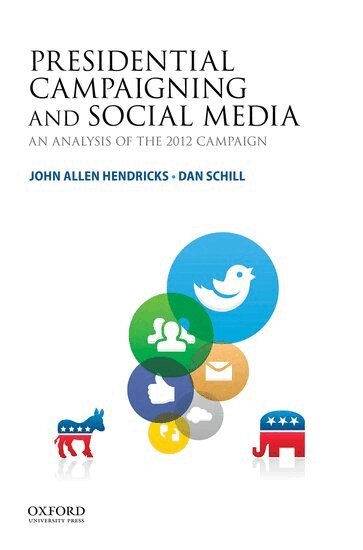
    Presidential Campaigning and Social Media

    An Analysis of the 2012 Campaign

    AvJohn Allen Hendricks,Dan Schill

    Häftad, Engelska, 2026

    1 643 kr

    Beställningsvara. Skickas inom 3-6 vardagar. Fri frakt över 249 kr.

    Beskrivning

    Social media are revolutionizing the American electoral process. Their integral role in facilitating campaign communication and networking has rapidly evolved into a standard element of candidate strategy, voter engagement, and media reporting.Featuring work by an esteemed line-up of contributors, Presidential Campaigning and Social Media: An Analysis of the 2012 Campaign is the first book to provide a detailed analysis of the role that social media and social networking sites (SNS)--including Facebook, Twitter, YouTube, Tumblr, Google+, Instagram, Pinterest, and others--played in the 2012 Republican presidential primaries and the general election campaign. Using both quantitative and qualitative methodological approaches, the book thoroughly examines the 2012 campaign's use of each form of social media technology and social networking sites and considers which strategies were effective in connecting with and motivating the electorate to vote. Presidential Campaigning and Social Media is ideal for courses in campaigns and elections.

    Produktinformation

    • Utgivningsdatum:2026-06-12
    • Mått:231 x 152 x 20 mm
    • Vikt:499 g
    • Format:Häftad
    • Språk:Engelska
    • Antal sidor:352
    • Förlag:OUP USA
    • ISBN:9780199355846

    Utforska kategorier

    • Referensverk och tvärvetenskap inom Samhälle och politik
    • Digital livsstil och datorspel inom Data och IT

    Mer om författaren

    John Allen Hendricks is Chair and Professor of Mass Communication at Stephen F. Austin State University. He is the author of six books including Communicator-in-Chief: How Barack Obama Used New Media Technology to Win the White House (2010), which was the recipient of the National Communication Association's Applied Research Division's 2011 Distinguished Scholarly Book Award.Dan Schill is an Associate Professor of Communication Studies at James Madison University. He is the author of Stagecraft and Statecraft: Advance and Media Events in Political Communication (2009) and has published work in numerous journals including Review of Communication,, PS: Political Science & Politics, and Presidential Studies Quarterly.

    Recensioner i media

    Hendricks and Schill provide the most comprehensive collection on the use of social media in the 2012 presidential campaign. This impressive volume provides insight into the growing importance, role, and scope of social media in contemporary political campaigns.

    Innehållsförteckning

    • I: SOCIAL MEDIA AND POLITICAL COMMUNICATION ; Chapter 1. "The Presidential Campaign of 2012: New Media Technologies Used to Interact and Engage with the Electorate," John Allen Hendricks and Dan Schill ; The 2012 Republican Primary and Social Media ; Social Media Platforms ; General Election ; Presidential Campaigning and Social Media ; Social Media and Changing American Demographics ; Overview of the Book ; Chapter 2: "The Evolution of Digital Media Use in Election Campaigns: New Functions and Cumulative Impact," Daniela V. Dimitrova ; Social Media Growth, Age and Partisanship ; Characteristics of Digital Media ; Multiple Opportunities for Political Engagement ; Lower Cost of Citizen Participation ; Interactivity ; Data Tracking and Data Mining ; Differential Impacts ; Method ; Results ; Discussion ; Chapter 3: "Creating a Win-Win Situation?: Relationship Cultivation and the Use of Social Media in the 2012 Campaign," Emma Svensson, Spiro Kiousis, and Jesper Stromback ; The Promise of Digital and Social Media ; The Philosophy-Mutual Beneficial Value ; Input-The Willingness to Adopt ; Outcomes-Long-term Commitment, Trust and Loyalty ; Maintenance-Strategies for Sustaining and Strengthening the Relationship ; Method ; Relationship Cultivation Strategy Measurements ; Results ; Different Strategies in Different Channels ; Helping the Candidate-Different Types of Collaboration ; Discussion ; II: SOCIAL MEDIA AND POLITICAL KNOWLEDGE ; Chapter 4: "Of Networks and Knowledge: Young Adults and the Early 2012 Republican Presidential Primaries and Caucuses," Jody C. Baumgartner, David S. Morris, and Jonathan S. Morris ; Social Networks & Knowledge ; Age and Social Network Usage Patterns ; Social Media Use and Campaign Knowledge: Expectations ; Method ; Analysis: Political Use of Social Networking Sites and Political Knowledge ; Discussion ; Chapter 5: "Technology Takeover?: Campaign Learning during the 2012 Presidential Election," Terri L. Towner and David A. Dulio ; Political Knowledge ; Type of Information Source ; Research Questions and Hypotheses ; Method ; Dependent Variables ; Control Variables ; Media Use Variables ; Testing Procedures ; Results ; Discussion ; Chapter 6: "Don't Push Your Opinions on Me: Young Citizens and Political Etiquette on Facebook," Kjerstin Thorson, Emily K. Vraga, and Neta Kligler-Vilenchik ; Facebook as a Context for Doing Politics ; The Research Context ; Context Collapse and the Networked Audience ; One Golden Rule ; Keep Your Opinions to Yourself (Unless they're Funny) ; Discussion ; III: SOCIAL MEDIA AND THE PRESIDENTIAL PRIMARY ELECTIONS ; Chapter 7: "Uses and Gratifications of Following Candidates' Twitter Campaigns during the 2012 U.S. Primaries," Raluca Cozma ; Political Uses and Gratifications of Social Media ; The Relationship between Political Attitudes and Uses of Social Media ; The Effects of Uses and Gratifications ; Method ; Measures ; Results ; Discussion ; Chapter 8: "Fitting Social Media into the Media Landscape during a 2012 Republican Primary," Paul Haridakis, Gary Hanson, Mei-Chen Lin, and Jennifer McCullough ; Media Choice ; Motives for Using Media for Political Information ; Perceptions of Media Bias ; Method ; Sample ; Measures ; Statistical Analysis ; Results ; Amount of Media Use ; Age Differences and Similarities in Motives for Using Media for Political Information ; Media-Selection Differences among Members of the Major Political Parties ; Discussion ; Chapter 9: "Whose States are Winning?: The Adoption and Consequences of Social Media in Political Communication in the American States," Hyun Jung Yun, Cynthia Opheim, and Emily Kay Balanoff ; Theoretical Underpinnings ; The Growth of Social Media in Political Campaigns ; Social Media's Effect on Political Attitudes and Behavior ; Political Cynicism ; Political Information Efficacy ; Social Media, Geography, and Political Ideology ; Method ; Sample ; Variables and Measures ; Results ; Political Utilization and Legitimacy of SNSs ; Political Interests, Information Efficacy, & Cynicism of Political SNS ; Users ; Perception and Expression of Political Opinions via SNSs ; Purpose and Gratification of Political SNS Users ; Discussion ; Chapter 10: "YouTube/OurTube/TheirTube: Official and Unofficial Online Campaign Advertising, Negativity, and Popularity,"Jacob Groshek and Stephanie Brookes ; Social Media, Election Campaigns, and Political Advertising ; YouTube and the Online Campaign ; YouTube and Campaign Advertising ; Methods ; Official Advertising on YouTube ; Searching Advertising on YouTube ; Variable Categories ; Findings ; Discussion ; IV: SOCIAL MEDIA AND THE PRESIDENTIAL GENERAL ELECTION ; Chapter 11: "The Spirals of Newly Transcending Political Voices: Social Media Purify the Atmosphere of Political Dialogues in Cyberspace," Hyun Jung Yun ; Theoretical Underpinnings ; Political Mavericks in Social Media ; Crosscutting Spirals of Expression in the Political Grounds of Social Media ; In-Group Identities Embedded in the Spirals of Political Discourse in Cyberspace ; Method ; Data and Sample ; Variables ; Results ; Dynamics of Demographics ; Main Source of Political Information ; Political Interests and Information Efficacy ; Political Cynicism: Internal Powerlessness and External Alienation ; Political Expression ; Discussion ; Chapter 12: "Evaluating Textual and Technical Interactivity in Candidate E-mail Messages during the 2012 U.S. Presidential Campaign," Andrew Paul Williams and Roxana Maiorescu ; Candidate Use of E-mail ; Interactivity ; Research Questions ; Method ; Sample ; Categories ; Coding Process and Reliability ; Results ; Discussion ; Chapter 13:"Social Network Sites and Interactivity: Differential Expression Effects in Campaign 2012," David Lynn Painter, Juliana Fernandes, Jessica Mahone, and Eisa Al Nashmi ; Theoretical Framework ; Political Information Efficacy ; Agenda Building: Salience of the Election ; Online Information Sources ; Interactivity ; Expression Effects ; Method ; Participants and Procedure ; Manipulation ; Dependent Variables ; Results ; Participants and Manipulation Check ; Main Effects of Information Source ; Main Effects of Interactivity ; Interaction Between Online Information Source and Interactivity ; Discussion ; V: SOCIAL MEDIA AND VOTER/MEDIA ENGAGEMENT ; Chapter 14: "Issue Debates in 140 Characters: Online Talk Surrounding the 2012 Debates," Dan Schill and Rita Kirk ; Twitter Use in the 2012 Election ; Twitter, Second Screens, and Presidential Debates ; Method ; Campaign Twitter Use ; Source Frame ; Media Validation Frame ; Framing Frame ; Journalist Twitter Use ; Interpretation Frame ; Evaluation Frame ; Citizen Twitter Use ; Discussion ; Second Screen ; Media Convergence ; Agenda Setting ; Chapter 15: "Social Media and Voter Behavior during Presidential Campaigns," Monica Ancu ; What We Know So Far About SNS Users ; Who Are The Politically Active SNS Users? ; Do SNS Have Influence On Offline Behavior and Attitudes? ; What Motivates SNS Users To Engage Politically? ; Method ; Sample ; Measures ; Results ; Demographics of Political SNS Users ; Connection between SNS Behavior and Offline ; What Brings People to Political SNS ; Discussion ; Chapter 16: "Maligned Youth or Political Activists?: Young Citizen Political Engagement using Social Media," Benjamin R. Warner, Joshua Hawthorne, and Sarah Turner McGowen ; Social Media as a Digital Place for Political Engagement ; Profiling the Politically Engaged ; Political Cynicism ; Political Information Efficacy ; Political Polarization ; Method ; Sample ; Procedure and Variables ; Analytic Procedures ; Results ; Discussion ; References ; Chapter 17: "YouTube and the 2012 Presidential Election: An Examination of how Obama and Romney's Official YouTube Channels were used in Campaign Communication," LaChrystal D. Ricke ; Politics and Online Video ; YouTube and Politics ; Method ; Findings ; Obama for America ; Believe in America ; Discussion ; Index