Inbunden, Engelska, 2016
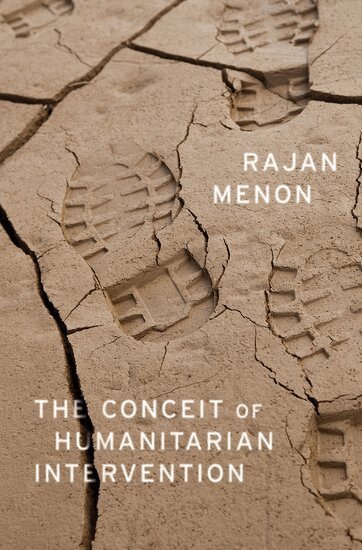
The Conceit of Humanitarian Intervention
Av Rajan Menon
489 kr
Beställningsvara. Skickas inom 3-6 vardagar. Fri frakt över 249 kr.
Beskrivning
The post-Cold War period has witnessed a substantial increase in armed humanitarian interventions-the use of military force by one or more states, acting with or without the imprimatur of the United Nations, to stop mass atrocities in another state, generally without its consent and thus without regard to its sovereignty. The increase has three sources: the emergence of the United States as a peerless power; Western states' embrace and propagation of universal human rights norms; and the international human rights movement's dogged and effective lobbying, using national and international forums, in support of the project. The campaigns in Bosnia, Kosovo, and Libya demonstrate the salience humanitarian intervention has now acquired in world politics. In this new era, states' sovereign immunity is being reevaluated and intervention based on universal human rights principles has become common.Rajan Menon's The Conceit of Humanitarian Intervention presents a trenchant challenge to the conventional wisdom on this policy. He contends that universalistic principles invoked in support of it tend to be fig leaves and that armed interventions to stop mass killing occur on a highly selective basis. The rationales offered to justify them more often than not derive from national interest and power politics. States, no matter how powerful, are unwilling to intervene (or resort to lesser measures) when the costs are prohibitive, even when killing unfolds on a massive scale, or when the perpetrators happen to be friends or allies. This short work will range broadly, moving from the Balkan intervention of the 1990s to the 2011 intervention in Libya. It also assesses the failed US intervention in Iraq and the post-9/11 war in Afghanistan to highlight the problems-ones relevant to humanitarian wars-that interventions encounter, and create, in the post-war phase. Menon is not advocating that we turn a blind eye to mass killing. Rather, he is asking us to look at the world as it rather than as we wish it to be, to recognize the extent to which power and national interest underpin humanitarian intervention, and to face up to the problems and unintended consequences humanitarian intervention creates rather than resorting to idealistic clichés that evade reality or that cloak states' self-interest and cynicism. As the slaughter in Syria demonstrates, power politics, not human rights norms, determine whether or not humanitarian intervention takes place. Despite the magnitude of mass killing in Syria, the United States and its allies decided to eschew intervention, judging it far too hazardous. Menon's searching critique of the theory and practice of armed humanitarian intervention will force us to see this grand project in a new light.
Produktinformation
- Utgivningsdatum: 2016-04-28
- Mått: 145 x 218 x 27 mm
- Vikt: 431 g
- Format: Inbunden
- Språk: Engelska
- Antal sidor: 250
- Förlag: OUP USA
- ISBN: 9780199384877
Utforska kategorier
Betyg & recensioner
0 recensioner
Inga recensioner tillgängliga.