• Fri frakt över 249 kr
  • •
  • Snabba leveranser
  • •
  • Billiga böcker
Kundservice

Du är på sajten för privatpersoner.

Företag, bibliotek eller offentlig verksamhet?

Du handlar på classic.bokus.com, där alla dina funktioner finns intakta.
Till classic.bokus.com
Bokus logotyp. Gå till startsidan.
  • Erbjudanden
  • Nyheter
  • Student
  • Topplistor
  • Barn & ungdom
  • Bokus Play
  • E-böcker
  • Pocketböcker
  • Spel & pussel

Må bättre, för mindre! Upp till 50% rabatt på hälsoböcker

Sidfot

Mina sidor

    Hjälp

    • Kundservice
    • Vanliga frågor och svar
    • Frakt och leverans
    • Retur vid ångerrätt
    • Reklamera vara
    • Betalning
    • Köpvillkor
    • Allmänna villkor
    • Information om webbplatsens tillgänglighet

    Om Bokus

    • Om oss
    • Pressrum
    • För studenter
    • För företag
    • För bibliotek och offentlig verksamhet
    • För leverantörer
    • Hållbarhet

    Populärt

    • Aktuella erbjudanden
    • Presentkort
    • Studentlitteratur
    • Nya böcker
    • Topplistor
    • Signerade böcker
    • Engelska böcker

    Inspiration

    • Boktips
    • BookTok
    • Populära bokserier
    • Barnbokskaraktärer
    • Populära författare
    Logotyp för Bokus
    Följ oss på Facebook (extern länk)Följ oss på Instagram (extern länk)Följ oss på YouTube (extern länk)Följ oss på TikTok (extern länk)
    bokus @ CookiesAnpassa cookiesIntegritetspolicyKöpvillkor
    Till Citymail hemsida (extern länk)Till Budbee hemsida (extern länk)Till Postnord hemsida (extern länk)Till Schenker hemsida (extern länk)Till Early Bird hemsida (extern länk)Till Walleys hemsida (extern länk)
    1. Ekonomi och Ledarskap
    2. Nationalekonomi
    3. Mikroekonomi

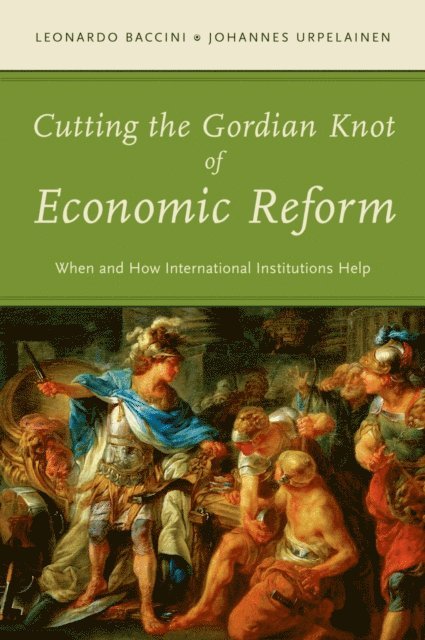
    Cutting the Gordian Knot of Economic Reform

    When and How International Institutions Help

    AvLeonardo Baccini,Johannes Urpelainen

    Inbunden, Engelska, 2015

    1 889 kr

    Beställningsvara. Skickas inom 5-8 vardagar. Fri frakt över 249 kr.

    Beskrivning

    Why do leaders of countries opt to sign on to international institutions that constrain their freedom to enact domestic policy? In this book, Leonardo Baccini and Johannes Urpelainen address this enduring question of international relations by looking at liberal economic reforms. During the past two decades, governments across the developing world have implemented many liberal economic reforms that reduce direct state intervention in different industries, for example with regard to intellectual property rights and privatization. While failure to implement them can have disastrous economic and political consequences, liberal economic reforms have also provoked intense political controversy domestically. Baccini and Urpelainen argue that international institutions help to cut this Gordian knot by allowing leaders to credibly commit to liberal policies while also creating domestic political support for reform. The book takes a comparative look at developing countries that have engaged in treaties with the United States and European Union to develop a full theory of when and how leaders enter into international institutions to effect economic reform. Cutting the Gordian Knot of Economic Reform is the first work to provide a theory on the design of international institutions, the circumstances that cause leaders to form international institutions, and the effects of international institutions on economic reform.

    Produktinformation

    • Utgivningsdatum:2015-01-15
    • Mått:236 x 155 x 25 mm
    • Vikt:499 g
    • Format:Inbunden
    • Språk:Engelska
    • Antal sidor:280
    • Förlag:OUP USA
    • ISBN:9780199388998

    Utforska kategorier

    • Mikroekonomi inom Ekonomi och Ledarskap
    • Internationell ekonomi inom Ekonomi och Ledarskap

    Mer om författaren

    Leonardo Baccini is Assistant Professor of International Political Economy at the London School of Economics and Political Science Johannes Urpelainen is Associate Professor of Political Science at Columbia University.

    Recensioner i media

    Every once in a long while a major puzzle in the study of politics and economics is solved. Baccini and Urpelainen have done just that in this important book. Through careful political-economy theorizing, clear quantitative analysis and penetrating, theoretically-sophisticated case analysis, they explain when international institutions effectively combine with domestic political conditions to promote economic reform and when they do not. They make a powerful and thoroughly convincing case for the advantages that preferential trade agreements with the United States or the European Union can have over multilateral arrangements or bilateral agreements with states such as China. They show clearly how international institutions can serve as credible commitment devices for leaders facing stiff domestic opposition to reform. Anyone interested in development must read this wonderful book.

    Innehållsförteckning

    • List of Figures ; List of Tables ; Chapter 1. Introduction ; Chapter 2. When and How International Institutions Promote Economic Reform ; Chapter 3. Preferential Trading Agreements as Helpful International Institutions ; Chapter 4. Design of Preferential Trading Agreements ; Chapter 5. Formation of Preferential Trading Agreements ; Chapter 6. Economic Reform and Preferential Trading Agreements ; Chapter 7. Explaining Economic Reform in Croatia and South Africa ; Chapter 8. Agreements and Reforms without Democratization: Chile and Columbia ; Chapter 9. Conclusion ; Notes ; Bibliography ; Index