• Fri frakt över 249 kr
  • •
  • Snabba leveranser
  • •
  • Billiga böcker
Kundservice

Du är på sajten för privatpersoner.

Företag, bibliotek eller offentlig verksamhet?

Du handlar på classic.bokus.com, där alla dina funktioner finns intakta.
Till classic.bokus.com
Bokus logotyp. Gå till startsidan.
  • Erbjudanden
  • Nyheter
  • Student
  • Topplistor
  • Barn & ungdom
  • Bokus Play
  • E-böcker
  • Pocketböcker
  • Spel & pussel

10% rabatt på allt med kod: NYSTART10 →

Sidfot

Mina sidor

    Hjälp

    • Kundservice
    • Vanliga frågor och svar
    • Frakt och leverans
    • Retur vid ångerrätt
    • Reklamera vara
    • Betalning
    • Köpvillkor
    • Allmänna villkor
    • Information om webbplatsens tillgänglighet

    Om Bokus

    • Om oss
    • Pressrum
    • För studenter
    • För företag
    • För bibliotek och offentlig verksamhet
    • För leverantörer
    • Hållbarhet

    Populärt

    • Aktuella erbjudanden
    • Presentkort
    • Studentlitteratur
    • Nya böcker
    • Topplistor
    • Signerade böcker
    • Engelska böcker

    Inspiration

    • Boktips
    • BookTok
    • Populära bokserier
    • Barnbokskaraktärer
    • Populära författare
    Logotyp för Bokus
    Följ oss på Facebook (extern länk)Följ oss på Instagram (extern länk)Följ oss på YouTube (extern länk)Följ oss på TikTok (extern länk)
    bokus @ CookiesAnpassa cookiesIntegritetspolicyKöpvillkor
    Till Citymail hemsida (extern länk)Till Budbee hemsida (extern länk)Till Postnord hemsida (extern länk)Till Schenker hemsida (extern länk)Till Early Bird hemsida (extern länk)Till Walleys hemsida (extern länk)
    1. Kultur
    2. Musikböcker
    3. Musikvetenskap

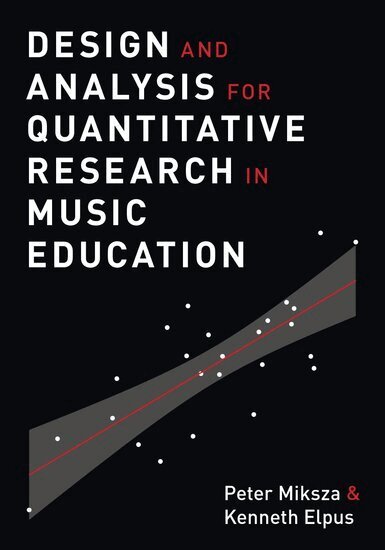
    Design and Analysis for Quantitative Research in Music Education

    AvPeter Miksza,Kenneth Elpus

    Inbunden, Engelska, 2018

    2 346 kr

    Beställningsvara. Skickas inom 5-8 vardagar. Fri frakt över 249 kr.

    Fler format och utgåvor

    Häftad

    460 kr

    Beskrivning

    In recent years, academics and professionals in the social sciences have forged significant advances in quantitative research methodologies specific to their respective disciplines. Although new and sophisticated techniques for large-scale data analyses have become commonplace in general educational, psychological, sociological, and econometric fields, many researchers in music education have yet to be exposed to such techniques. Design and Analysis of Quantitative Research in Music Education is a comprehensive reference for those involved with research in music education and related fields, providing a foundational understanding of quantitative inquiry methods. Authors Peter Miksza and Kenneth Elpus update and expand the set of resources that music researchers have at their disposal for conceptualizing and analyzing data pertaining to music-related phenomena. This text is designed to familiarize readers with foundational issues of quantitative inquiry as a point of view, introduce and elaborate upon issues of fundamental quantitative research design and analysis, and expose researchers to new, innovative, and exciting methods for dealing with complex research questions and analyzing large samples of data in a rigorous and thorough manner. With this resource, researchers will be better equipped for dealing with the challenges of the increasingly information-rich and data-driven environment surrounding music education. An accompanying companion website provides valuable supplementary exercises and videos.

    Produktinformation

    • Utgivningsdatum:2018-03-29
    • Mått:257 x 180 x 22 mm
    • Vikt:703 g
    • Format:Inbunden
    • Språk:Engelska
    • Antal sidor:302
    • Förlag:OUP USA
    • ISBN:9780199391905

    Utforska kategorier

    • Musikvetenskap inom Kultur

    Mer om författaren

    Peter Miksza is Associate Professor of Music (Music Education) at the Indiana University Jacobs School of Music and an affiliate member of the Indiana University Cognitive Science Program. He teaches courses in instrumental music education, the pyschology of music, learning processes in music, measurement and assessment in music, and research methods. He earned his PhD and Master of Music degrees from the Indiana University Jacobs School of Music and his Bachelor of Music degree and K-12 teaching credential from The College of New Jersey. Dr. Miksza's scholarship is focused on self-regulated music learning, musical skill acquisition, music teacher preparation, and music education policy.Kenneth Elpus is Associate Professor of Music Education at the University of Maryland, where he teachers courses in choral music education, research methods, and conducts the university Treble Choir. Dr. Elpus earned his PhD and Master of Music degrees from Northwestern University where he held a fellowship in the Center for the Study of Education and the Musical Experience. He earned his Bachelor of Music degree and K-12 teaching credential from The College of New Jersey. Dr. Elpus's scholarship is focused on issues related to music education and public policy, the demographics of music students, the process of selection into music education, and music education as a context for adolescent development.

    Recensioner i media

    There is a sense that the text written by Miksza and Elpus is a model of research thinking ... unique in its thoroughness ... Miksza and Elpus have been successful in publishing a document that can be a continuing resource and reference throughout a student's education and career.

    Innehållsförteckning

    • Table of ContentsList of IllustrationsAcknowledgementsAbout the Companion Website 1. Prelude 2. Characteristics of Scientific Inquiry Part I. Foundational Concepts for Quantitative Inquiry in Music Education3. Descriptive Research Design 4. Descriptive Analysis 5. Inferential Analysis 6. Correlational Design and Analysis 7. Causation and Causal Claims 8. Design and Analysis of Experimental Research I 9. Design and Analysis of Experimental Research II 10. Regression Part II. Advanced Concepts for Quantitative Inquiry in Music Education11. Analyses of Complex Survey Data 12. Multilevel Models 13. Exploratory and Confirmatory Factor Analysis 14. Structural Equation Modeling 15. Advances in Quasi-Experimental Methods 16. Postlude Appendix: Inferential Analysis with Non-parametric TestsIndex