Inbunden, Engelska, 2013
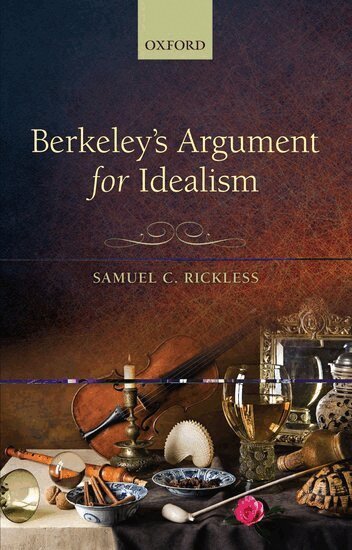
Berkeley's Argument for Idealism
1758 kr
Beställningsvara. Skickas inom 5-8 vardagar. Fri frakt över 249 kr.
Beskrivning
Samuel C. Rickless presents a novel interpretation of the thought of George Berkeley. In A Treatise Concerning the Principles of Human Knowledge (1710) and Three Dialogues Between Hylas and Philonous (1713), Berkeley argues for the astonishing view that physical objects (such as tables and chairs) are nothing but collections of ideas (idealism); that there is no such thing as material substance (immaterialism); that abstract ideas are impossible (anti-abstractionism); and that an idea can be like nothing but an idea (the likeness principle). It is a matter of great controversy what Berkeley's argument for idealism is and whether it succeeds. Most scholars believe that the argument is based on immaterialism, anti-abstractionism, or the likeness principle. In Berkeley's Argument for Idealism, Rickless argues that Berkeley distinguishes between two kinds of abstraction, 'singling' abstraction and 'generalizing' abstraction; that his argument for idealism depends on the impossibility of singling abstraction but not on the impossibility of generalizing abstraction; and that the argument depends neither on immaterialism nor the likeness principle. According to Rickless, the heart of the argument for idealism rests on the distinction between mediate and immediate perception, and in particular on the thesis that everything that is perceived by means of the senses is immediately perceived. After analyzing the argument, Rickless concludes that it is valid and may well be sound. This is Berkeley's most enduring philosophical legacy.
Produktinformation
- Utgivningsdatum: 2013-01-10
- Mått: 157 x 220 x 17 mm
- Vikt: 406 g
- Format: Inbunden
- Språk: Engelska
- Antal sidor: 222
- Förlag: OUP OXFORD
- ISBN: 9780199669424
Utforska kategorier
Betyg & recensioner
0 recensioner
Inga recensioner tillgängliga.