• Fri frakt över 249 kr
  • •
  • Snabba leveranser
  • •
  • Billiga böcker
Kundservice

Du är på sajten för privatpersoner.

Företag, bibliotek eller offentlig verksamhet?

Du handlar på classic.bokus.com, där alla dina funktioner finns intakta.
Till classic.bokus.com
Bokus logotyp. Gå till startsidan.
  • Erbjudanden
  • Student
  • Topplistor
  • Barn & ungdom
  • Bokus Play
  • E-böcker
  • Ljudböcker
  • Pocketböcker
  • Spel och pussel

Pocketfynda! Hundratals böcker för 49 kr/st →

Sidfot

Mina sidor

    Hjälp

    • Kundservice
    • Vanliga frågor och svar
    • Frakt och leverans
    • Retur vid ångerrätt
    • Reklamera vara
    • Betalning
    • Köpvillkor
    • Allmänna villkor
    • Information om webbplatsens tillgänglighet

    Om Bokus

    • Om oss
    • Pressrum
    • För studenter
    • För företag
    • För bibliotek och offentlig verksamhet
    • För leverantörer
    • Hållbarhet

    Populärt

    • Aktuella erbjudanden
    • Presentkort
    • Studentlitteratur
    • Nya böcker
    • Topplistor
    • Signerade böcker
    • Engelska böcker

    Inspiration

    • Boktips
    • BookTok
    • Barnbokskaraktärer
    • Populära författare
    Logotyp för Bokus
    Följ oss på Facebook (extern länk)Följ oss på Instagram (extern länk)Följ oss på YouTube (extern länk)Följ oss på TikTok (extern länk)
    bokus @ CookiesAnpassa cookiesIntegritetspolicyKöpvillkor
    Till Citymail hemsida (extern länk)Till Budbee hemsida (extern länk)Till Postnord hemsida (extern länk)Till Schenker hemsida (extern länk)Till Early Bird hemsida (extern länk)Till Walleys hemsida (extern länk)
    1. Juridik
    2. Särskilda rättsområden
    3. Rättsordning

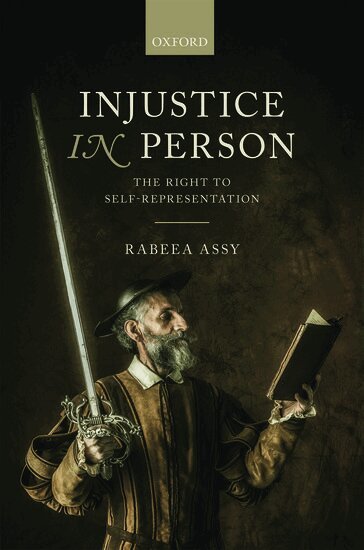
    Injustice in Person

    The Right to Self-Representation

    AvRabeea Assy

    Inbunden, Engelska, 2015

    2 514 kr

    Beställningsvara. Skickas inom 3-6 vardagar. Fri frakt över 249 kr.

    Fler format och utgåvor

    E-bok

    1 601 kr

    E-bok

    1 601 kr

    Beskrivning

    In common law jurisdictions, litigants are free to choose whether to procure legal representation or litigate in person. There is no formal requirement that civil litigants obtain legal representation, and the court has no power to impose it on them, regardless of whether the litigant has the financial means to hire a lawyer or is capable of conducting litigation effectively. Self-representation is considered indispensable even in circumstances of extreme abuse of process, such as in 'vexatious litigation'. Intriguingly, although self-representation is regarded as sacrosanct in common law jurisdictions, most civil law systems take a diametrically opposite view and impose obligations of legal representation as a condition for conducting civil litigation, except in low-value claims courts or specific tribunals. This disparity presents a conundrum in comparative law: an unfettered freedom to proceed in person is afforded in those legal systems that are more reliant on the litigants' professional skills and whose rules of procedure and evidence are more formal, complex, and adversarial, whereas legal representation tends to be made obligatory in systems that are judge-based and offer more flexible and informal procedures, which would seem, intuitively, to be more conducive to self-representation.In Injustice in Person: The Right to Self Representation, Rabeea Assy assesses the theoretical value of self-representation, and challenges the conventional wisdom that this should be a fundamental right. With a fresh perspective, Assy develops a novel justification for mandatory legal representation, exploring a number of issues such as the requirements placed by the liberal commitment to personal autonomy on the civil justice system; the utility of plain English projects and the extent to which they render the law accessible to lay people; and the idea that a high degree of litigant control over the proceedings enhances litigants' subjective perceptions of procedural fairness. On a practical level, the book discusses the question of mandatory representation against the case law of English and American courts and also that of the European Court of Human Rights, the International Criminal Tribunal for the former Yugoslavia, and the Human Rights Committee.

    Produktinformation

    • Utgivningsdatum:2015-06-04
    • Mått:163 x 237 x 21 mm
    • Vikt:576 g
    • Format:Inbunden
    • Språk:Engelska
    • Antal sidor:252
    • Förlag:OUP OXFORD
    • ISBN:9780199687442
    • Utmärkelser:Winner of the Mauro Cappelletti Prize for the best book in procedural law published in the last five years.

    Utforska kategorier

    • Rättsordning inom Juridik
    • Mänskliga och medborgerliga rättigheter inom Juridik

    Mer om författaren

    Dr Rabeea Assy is an Assistant Professor at the University of Haifa Law Faculty and a regular speaker at the University of Oxford. In 2011 Dr Assy obtained his DPhil from the University of Oxford, where he was a Clarendon Scholar and a Modern Law Review grantee. His LLB and LLM (ranked 1st in class, summa cum laude) were completed at the University of Haifa. In 2010-2011 Dr Assy was the Editor and subsequently the Editor-in-Chief of the Oxford University Commonwealth Law Journal, and in 2009 a Visiting Researcher at the Hauser Global Scholars Programme at New York University Law School. Dr Assy is an expert in comparative civil procedure. His work on litigation in person has earned him a number of prestigious awards and grants, including very generous research grants from the EU Marie Curie Actions Programme and the German-Israeli Fund. His work in this area has also been published in a number of leading journals across the Commonwealth.

    Recensioner i media

    Rabeea Assys book is a refreshing and controversial challenge to the current orthodoxy. . . He has written a stimulating book from a new perspective. I warmly commend it to anyone who has a serious interest in access to justice issues.

    Innehållsförteckning

    • Introduction ; 1. The Unasked Question ; 2. English and American Jurisdictions ; 3. The ICTY's Jurisprudence ; 4. Simplifying Legal Language ; 5. The Judge's Mantle and the Advocate's Robe ; 6. Lay Representation and McKenzie Friends ; 7. Losers-But Choosers ; 8. Litigant Satisfaction ; 9. Reconsidering the Right to Self-Representation ; Conclusion