• Fri frakt över 249 kr
  • •
  • Snabba leveranser
  • •
  • Billiga böcker
Kundservice

Du är på sajten för privatpersoner.

Företag, bibliotek eller offentlig verksamhet?

Du handlar på classic.bokus.com, där alla dina funktioner finns intakta.
Till classic.bokus.com
Bokus logotyp. Gå till startsidan.
  • Erbjudanden
  • Student
  • Topplistor
  • Barn & ungdom
  • Bokus Play
  • E-böcker
  • Ljudböcker
  • Pocketböcker
  • Spel och pussel

Pocketfynda! Hundratals böcker för 49 kr/st →

Sidfot

Mina sidor

    Hjälp

    • Kundservice
    • Vanliga frågor och svar
    • Frakt och leverans
    • Retur vid ångerrätt
    • Reklamera vara
    • Betalning
    • Köpvillkor
    • Allmänna villkor
    • Information om webbplatsens tillgänglighet

    Om Bokus

    • Om oss
    • Pressrum
    • För studenter
    • För företag
    • För bibliotek och offentlig verksamhet
    • För leverantörer
    • Hållbarhet

    Populärt

    • Aktuella erbjudanden
    • Presentkort
    • Studentlitteratur
    • Nya böcker
    • Topplistor
    • Signerade böcker
    • Engelska böcker

    Inspiration

    • Boktips
    • BookTok
    • Barnbokskaraktärer
    • Populära författare
    Logotyp för Bokus
    Följ oss på Facebook (extern länk)Följ oss på Instagram (extern länk)Följ oss på YouTube (extern länk)Följ oss på TikTok (extern länk)
    bokus @ CookiesAnpassa cookiesIntegritetspolicyKöpvillkor
    Till Citymail hemsida (extern länk)Till Budbee hemsida (extern länk)Till Postnord hemsida (extern länk)Till Schenker hemsida (extern länk)Till Early Bird hemsida (extern länk)Till Walleys hemsida (extern länk)
    1. Juridik
    2. Rättsvetenskap
    3. Rättshistoria

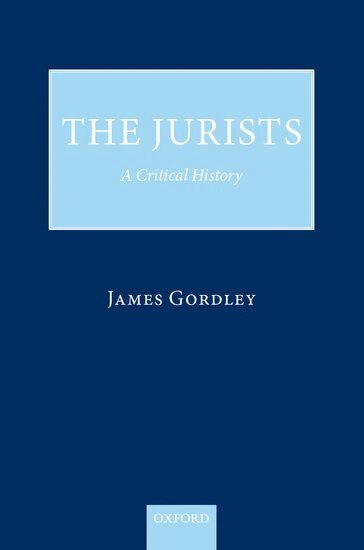
    The Jurists

    A Critical History

    AvJames Gordley

    Inbunden, Engelska, 2013

    2 177 kr

    Beställningsvara. Skickas inom 5-8 vardagar. Fri frakt över 249 kr.

    Beskrivning

    The book is an intellectual history of the work of Western jurists from ancient Rome to the present. It discusses the Roman jurists, the medieval civilians and canon lawyers, the late scholastics, the natural law schools of the 17th and 18th centuries, the positivism and conceptualism of the 19th century and its influence on common law, and the reaction against conceptualism since the late 19th century. Rarely have jurists worked alone. Rather, they have worked in schools, each of which pursued a different project. The projects of the jurists had one element in common: they were attempts to understand and explain the law. Commitment to that project defines the work of a jurist and distinguishes it from the work of others who take part in fashioning and applying the law. Yet the project of each school of jurists had goals and methods of its own. By identifying them, this study shows how the jurists themselves understood their work and how these goals and methods shaped and limited what each school could achieve.

    Produktinformation

    • Utgivningsdatum:2013-10-03
    • Mått:162 x 237 x 26 mm
    • Vikt:652 g
    • Format:Inbunden
    • Språk:Engelska
    • Antal sidor:336
    • Förlag:OUP OXFORD
    • ISBN:9780199689392

    Utforska kategorier

    • Rättshistoria inom Juridik
    • Juridik: metod och teori inom Juridik

    Mer om författaren

    Professor James Gordley is W.R. Irby Professor of Law at Tulane Law School since 2007. He has been the author of many titles including; The Development of Liability between Neighbours, ed. (Cambridge University Press, 2010). Foundations of Private Law (Oxford University Press, 2006) and An Introduction to the Comparative Study of Private Law Readings, Cases, Materials (with Arthur von Mehren)(Cambridge University Press, 2006).

    Innehållsförteckning

    • 1. Ius civile: The Roman jurists ; 2. Ius commune: The medieval jurists ; 3. Ius et iustitia: The late scholastics ; 4. De iure civile in artem redigendo: The humanist ideal ; 5. Ius naturae et gentium: The jusnaturalists ; 6. Droit civil francais: The French altenative ; 7. Usus modernus pandectarum: The German-Dutch alternative ; 8. Mos geometricus: The coming of rationalism ; 9. Novus ordo: Positivism and conceptualism ; 10. Ubinam gentium sumus: After positivism and conceptualism