• Fri frakt över 249 kr
  • •
  • Snabba leveranser
  • •
  • Billiga böcker
Kundservice

Du är på sajten för privatpersoner.

Företag, bibliotek eller offentlig verksamhet?

Du handlar på classic.bokus.com, där alla dina funktioner finns intakta.
Till classic.bokus.com
Bokus logotyp. Gå till startsidan.
  • Erbjudanden
  • Nyheter
  • Student
  • Topplistor
  • Barn & ungdom
  • Bokus Play
  • E-böcker
  • Pocketböcker
  • Spel & pussel

10% rabatt på allt med kod NYSTART10 →

Sidfot

Mina sidor

    Hjälp

    • Kundservice
    • Vanliga frågor och svar
    • Frakt och leverans
    • Retur vid ångerrätt
    • Reklamera vara
    • Betalning
    • Köpvillkor
    • Allmänna villkor
    • Information om webbplatsens tillgänglighet

    Om Bokus

    • Om oss
    • Pressrum
    • För studenter
    • För företag
    • För bibliotek och offentlig verksamhet
    • För leverantörer
    • Hållbarhet

    Populärt

    • Aktuella erbjudanden
    • Presentkort
    • Studentlitteratur
    • Nya böcker
    • Topplistor
    • Signerade böcker
    • Engelska böcker

    Inspiration

    • Boktips
    • BookTok
    • Populära bokserier
    • Barnbokskaraktärer
    • Populära författare
    Logotyp för Bokus
    Följ oss på Facebook (extern länk)Följ oss på Instagram (extern länk)Följ oss på YouTube (extern länk)Följ oss på TikTok (extern länk)
    bokus @ CookiesAnpassa cookiesIntegritetspolicyKöpvillkor
    Till Citymail hemsida (extern länk)Till Budbee hemsida (extern länk)Till Postnord hemsida (extern länk)Till Schenker hemsida (extern länk)Till Early Bird hemsida (extern länk)Till Walleys hemsida (extern länk)
    1. Språk och ordböcker
    2. Språkvetenskap och lingvistik

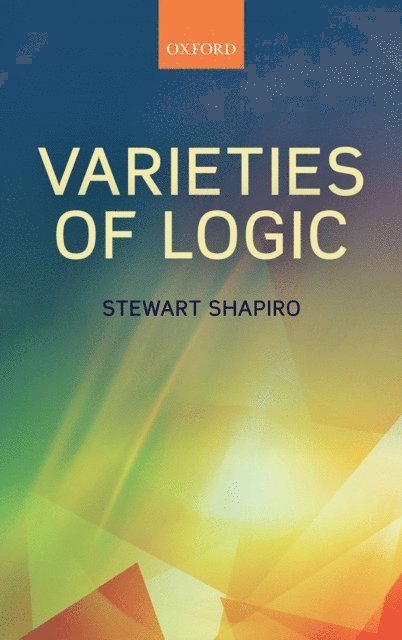
    Varieties of Logic

    AvStewart Shapiro

    Inbunden, Engelska, 2014

    1 541 kr

    Beställningsvara. Skickas inom 5-8 vardagar. Fri frakt över 249 kr.

    Fler format och utgåvor

    E-bok

    369 kr

    E-bok

    369 kr

    Häftad

    583 kr

    Beskrivning

    Logical pluralism is the view that different logics are equally appropriate, or equally correct. Logical relativism is a pluralism according to which validity and logical consequence are relative to something. In Varieties of Logic, Stewart Shapiro develops several ways in which one can be a pluralist or relativist about logic. One of these is an extended argument that words and phrases like 'valid' and 'logical consequence' are polysemous or, perhaps better, are cluster concepts. The notions can be sharpened in various ways. This explains away the 'debates' in the literature between inferentialists and advocates of a truth-conditional, model-theoretic approach, and between those who advocate higher-order logic and those who insist that logic is first-order. A significant kind of pluralism flows from an orientation toward mathematics that emerged toward the end of the nineteenth century, and continues to dominate the field today. The theme is that consistency is the only legitimate criterion for a theory. Logical pluralism arises when one considers a number of interesting and important mathematical theories that invoke a non-classical logic, and are rendered inconsistent, and trivial, if classical logic is imposed. So validity is relative to a theory or structure.The perspective raises a host of important questions about meaning. The most significant of these concern the semantic content of logical terminology, words like 'or', 'not', and 'for all', as they occur in rigorous mathematical deduction. Does the intuitionistic 'not', for example, have the same meaning as its classical counterpart? Shapiro examines the major arguments on the issue, on both sides, and finds them all wanting. He then articulates and defends a thesis that the question of meaning-shift is itself context-sensitive and, indeed, interest-relative. He relates the issue to some prominent considerations concerning open texture, vagueness, and verbal disputes.Logic is ubiquitous. Whenever there is deductive reasoning, there is logic. So there are questions about logical pluralism that are analogous to standard questions about global relativism. The most pressing of these concerns foundational studies, wherein one compares theories, sometimes with different logics, and where one figures out what follows from what in a given logic. Shapiro shows that the issues are not problematic, and that is usually easy to keep track of the logic being used and the one mentioned.

    Produktinformation

    • Utgivningsdatum:2014-09-04
    • Mått:148 x 222 x 19 mm
    • Vikt:412 g
    • Format:Inbunden
    • Språk:Engelska
    • Antal sidor:236
    • Förlag:OUP OXFORD
    • ISBN:9780199696529

    Utforska kategorier

    • Språkvetenskap och lingvistik inom Språk och ordböcker
    • Filosofiska discipliner inom Filosofi och religion

    Mer om författaren

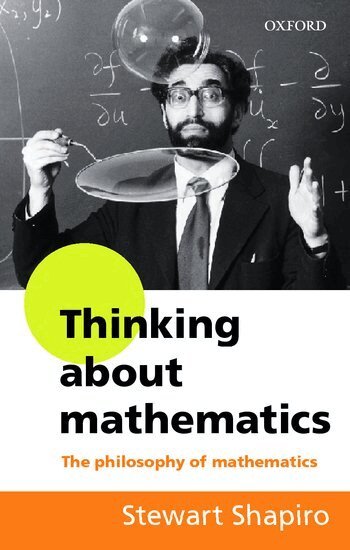
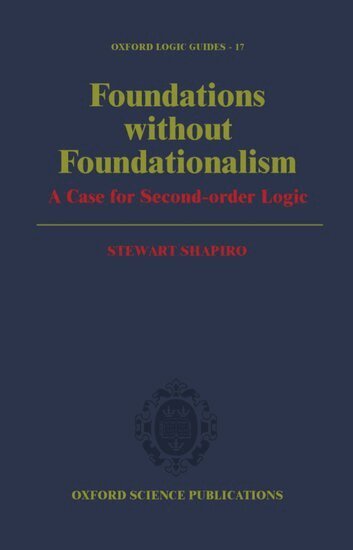
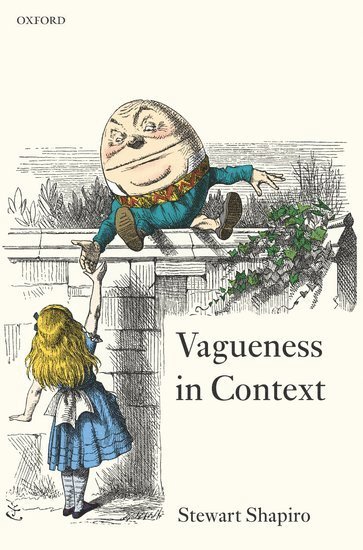
    Stewart Shapiro received an MA in mathematics in 1975, and a PhD in philosophy in 1978, both from the State University of New York at Buffalo. He is currently the O'Donnell Professor of Philosophy at the Ohio State University. He specializes in philosophy of mathematics, logic, philosophy of logic, and philosophy of language, with a recent interest in semantics, and is the author of Foundations without foundationalism: a case for second-order logic (OUP, 1991), Philosophy of mathematics: structure and ontology (OUP, 1997), Vagueness in context (OUP, 2006), and a textbook in the philosophy of mathematics, Thinking about mathematics: the philosophy of mathematics (OUP, 2000).

    Recensioner i media

    Shapiro's wide-ranging and thought-provoking book marks a major milestone in the recent debate initiated by JC Beall and Greg Restall's influentialLogical Pluralism (Beall and Restall 2006)

    Innehållsförteckning

    • Acknowledgements ; 1. Relativism, pluralism, tolerance ; 2. Varieties of pluralism and relativism for logic ; 3. Structure: an eclectic perspective ; 4. We mean what we say: but what do we mean? ; 5. Meaning and context ; 6. Theory and meta-theory; logic and meta-logic I: philosophical and foundational studies ; 7. Theory and meta-theory; logic and meta-logic II: meta-theoretic perspective ; Recap and conclusion ; References ; Index