• Fri frakt över 249 kr
  • •
  • Snabba leveranser
  • •
  • Billiga böcker
Kundservice

Du är på sajten för privatpersoner.

Företag, bibliotek eller offentlig verksamhet?

Du handlar på classic.bokus.com, där alla dina funktioner finns intakta.
Till classic.bokus.com
Bokus logotyp. Gå till startsidan.
  • Erbjudanden
  • Nyheter
  • Student
  • Topplistor
  • Barn & ungdom
  • Bokus Play
  • E-böcker
  • Pocketböcker
  • Spel & pussel

10% rabatt på allt med kod NYSTART10 →

Sidfot

Mina sidor

    Hjälp

    • Kundservice
    • Vanliga frågor och svar
    • Frakt och leverans
    • Retur vid ångerrätt
    • Reklamera vara
    • Betalning
    • Köpvillkor
    • Allmänna villkor
    • Information om webbplatsens tillgänglighet

    Om Bokus

    • Om oss
    • Pressrum
    • För studenter
    • För företag
    • För bibliotek och offentlig verksamhet
    • För leverantörer
    • Hållbarhet

    Populärt

    • Aktuella erbjudanden
    • Presentkort
    • Studentlitteratur
    • Nya böcker
    • Topplistor
    • Signerade böcker
    • Engelska böcker

    Inspiration

    • Boktips
    • BookTok
    • Populära bokserier
    • Barnbokskaraktärer
    • Populära författare
    Logotyp för Bokus
    Följ oss på Facebook (extern länk)Följ oss på Instagram (extern länk)Följ oss på YouTube (extern länk)Följ oss på TikTok (extern länk)
    bokus @ CookiesAnpassa cookiesIntegritetspolicyKöpvillkor
    Till Citymail hemsida (extern länk)Till Budbee hemsida (extern länk)Till Postnord hemsida (extern länk)Till Schenker hemsida (extern länk)Till Early Bird hemsida (extern länk)Till Walleys hemsida (extern länk)
    1. Medicin
    2. Andra medicinska specialiteter
    3. Klinisk psykologi

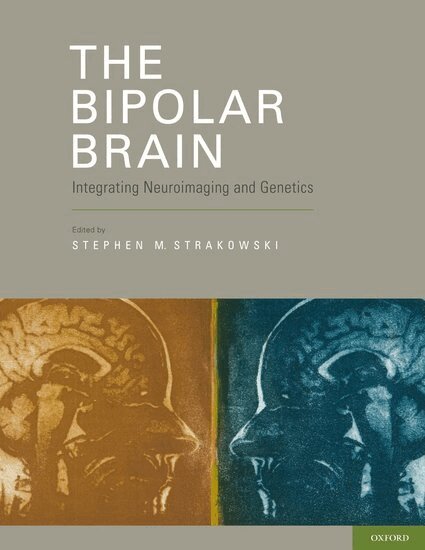
    The Bipolar Brain

    Integrating Neuroimaging and Genetics

    AvStephen Strakowski

    Inbunden, Engelska, 2012

    2 282 kr

    Beställningsvara. Skickas inom 5-8 vardagar. Fri frakt över 249 kr.

    Beskrivning

    Bipolar disorder is one of the most common, and disabling, conditions affecting human kind. Each year, millions of individuals struggle with the effects of this illness. Although clinically well recognized for decades, if not centuries, the causes of this condition remain incompletely understood. However, in the past decade, significant technological advances in both neuroimaging and genetic research have revealed clues about the neurophysiological basis of bipolar illness. In this book, leading experts in neuroimaging and genetics discuss recent discoveries in bipolar disorder that identify both the structural, functional and chemical brain changes that seem to underlie this condition, as well as the possible genetic causes of these brain events. Based upon these discussions, the book then integrates these diverse considerations to develop a specific neurophysiological model of bipolar disorder. This model provides a resource to guide clinicians and patients as they struggle to understand this illness, as well as a guide for future investigations into the causes of bipolar disorder. With this guide in hand, this book will lead to a new framework for understanding bipolar disorder in order to, ultimately, develop improved therapies for affected individuals and novel strategies to prevent the onset in children at risk for this condition.

    Produktinformation

    • Utgivningsdatum:2012-07-26
    • Mått:221 x 279 x 23 mm
    • Vikt:1 180 g
    • Format:Inbunden
    • Språk:Engelska
    • Antal sidor:296
    • Förlag:OUP USA
    • ISBN:9780199797608
    • Utmärkelser:Commended for PROSE (Biomedicine/Neuroscience) 2012

    Utforska kategorier

    • Klinisk psykologi inom Medicin
    • Psykiatri inom Medicin
    • Neurologi och klinisk neurofysiologi inom Medicin

    Mer om författaren

    Dr. Strakowski was raised in a small town in northern Indiana. He developed an interest in neuroscience as an undergraduate at the University of Notre Dame, and this interest expanded to psychiatric conditions at Vanderbilt University School of Medicine. He refined his interests into bipolar disorder while training in psychiatry at McLean Hospital and Harvard University School of Medicine. He has developed his professional career at the University of Cincinnati College of Medicine, where he serves as Senior Associate Dean for Research.

    Recensioner i media

    "The Bipolar Brain is an excellent, comprehensive, thoughtful, and cutting edge overview of what we know about the intersecting worlds of genetic and neuroimaging research in bipolar illness. It is also a first-rate gateway into the future." -- Kay Redfield Jamison, PhD, The Dalio Family Professor in Mood Disorders and Professor of Psychiatry, Johns Hopkins School of Medicine"The Bipolar Brain is an outstanding compendium and synthesis summarizing the substantial advances to date in understanding the genetics, brain structures and function involved in the clinical manifestations of bipolar disorder. Highly readable and clinically relevant, with contributors who have led the fields of clinical neuroscience in bipolar disorder, this volume in itself advances the field." -- Paul E. Keck, Jr., MD, President-CEO, Lindner Centerof Hope"Strakowski and a stellar group of colleagues have produced a volume much awaited by the field. They provide us with an integrated neurophysiological model of bipolar disorder by focusing on neuroimaging and genetic findings- no doubt the most robust biomarkers on the pathophysiology of this devastating condition. This volume achieves its goal of providing us with a neurophysiological paradigm of bipolar disorder - A volume that will be of great value not onlyto investigators in the field but also to clinicians treating patients with bipolar disorder who wish to better understand its pathophysiology. This book gives me hope that with a better understandingof the condition, our patients will benefit from better treatments. The goal of developing treatments tailored to neuroimaging and genetic finding may not be that far away after all." -- Mauricio Tohen MD, DrPH, MBA, President, International Society for Bipolar Disorders"The Bipolar Brain provides an abundance of readily accessible information on ways that brain imaging methods can aid in understanding the psychopathology, illness course, and interrelationships between brain structure and functions and other fundamental areas of investigation about bipolar disorders. For persons interested in incorporating brain imaging methodologies, an excellent overview addresses the principles, particular strengths and limitationsof the several primary techniques available in the field of imaging methodologies. Much of the book focuses on multi-system studies. In particular a section on interrelationships between mitochondrialfunctions and impact on brain structure and function, as well as the unique genetic underpinnings of mitochondrial systems, is worth reading even by scientists working solely outside the field of brain imaging studies." --Charles L. Bowden, MD, Professor of Clinical Psychiatry, The University of Texas Health Science Center at San Antonio"This excellent book covers the fast growing research into the genetics and neuroimaging of bipolar disorder and presents a new neurophysiological model of the disorder. Any informed psychiatrist would want to read this outstanding book." -- Michael Joel Schrift, D.O., M.A., University of Illinois at Chicago College of Medicine, Doody's"This is an extremely up-to-date and well-written compilation of chapters by leaders in the field of the interface between neuroimaging and genetics in bipolar disorder...This book is a fine expression of the momentum spearheaded by the National Institute of Mental Health toward a "circuits" approach to psychiatric disorder and in that sense is a good introduction for anyone interested in psychiatric research..." -- R. H. Belmaker, American Journal ofPsychiatry"Understanding the structural and functional abnormalities within bipolar disease is an evolving process. This superb review will allow the reader to ascertain what is known up to 2012 and better integrate new findings that will be published. It is reasonably priced, beautifully produced, and should be in all medical libraries, but also in libraries of any psychiatrist who works with many bipolar patients." --Thomas N. WIse, M.D., Johns Hopkins UniversitySchool of Medicine"Understanding the structural and functional abnormalities within bipolar disease is an evolving process. This superb review will allow the reader to ascertain what is known up to 2012 and better integrate new findings that will be published. It is reasonably priced and beautifully produced and should be in all medical libraries, but also in the library of any psychiatrist who works with many bipolar patients. It is quite a bargain and is certainly worthy offuture editions." --Journal of Clinical Psychiatry

    Innehållsförteckning

    • Section I: How neuroimaging informs models of bipolar disorder. ; Chapter 1. Brain imaging techniques and their application to bipolar disorder. ; by Caleb M. Adler and Michael Cerullo ; Chapter 2. Structural brain abnormalities in bipolar disorder. ; by Koji Matsuo, Marsal Sanches, Paolo Brambilla, and Jair C. Soares ; Chapter 3. Functional brain imaging in bipolar disorder ; by Lori L. Altshuler and Jennifer Townsend ; Chapter 4. Neurochemical and metabolic imaging in bipolar disorder ; by Jieun E Kim, In Kyoon Lyoo, and Perry F Renshaw, ; Chapter 5. Neuroimaging studies of bipolar disorder in youth. ; by Manpreet K. Singh, Melissa P. DelBello, and Kiki D. Chang ; Chapter 6. Neuroimaging difference between bipolar and unipolar depression. ; by Amelia Versace, Jorge R.C. Almeida, and Mary L. Phillips ; Chapter 7. Neuroimaging in bipolar disorder and schizophrenia. ; by Heather Whalley, Jessika Sussman, and Andrew M. McIntosh ; Section II: How genetic research informs models of bipolar disorder. ; Chapter 8. Genetic techniques and their application to bipolar disorder. ; by Aaron C. Vederman and Melvin G. McInnis ; Chapter 9. General genetic findings in bipolar disorder. ; by John I. Nurnberger, Jr. ; Chapter 10. Genetics of bipolar disorder and schizophrenia. ; by Michael E. Talkowski, Kodavali V Chowdari, Hader Mansour, K M Prasad, Joel Wood, and Vishwajit L Nimgaonkar ; Chapter 11. Mitochondrial genetics and bipolar disorder. ; by Hayley B. Clay, Satoshi Fuke, Tadafumi Kato, and Christine Konradi ; Section III: Integration and future directions. ; Chapter 12. Personalized medicine - can genetics and imaging inform treatment ; by Roy H. Perlis and Hilary P. Blumberg ; Chapter 13. Integration and consolidation - a neurophysiological model of bipolar disorder. ; by Stephen M. Strakowski