• Fri frakt över 249 kr
  • •
  • Snabba leveranser
  • •
  • Billiga böcker
Kundservice

Du är på sajten för privatpersoner.

Företag, bibliotek eller offentlig verksamhet?

Du handlar på classic.bokus.com, där alla dina funktioner finns intakta.
Till classic.bokus.com
Bokus logotyp. Gå till startsidan.
  • Erbjudanden
  • Nyheter
  • Student
  • Topplistor
  • Barn & ungdom
  • Bokus Play
  • E-böcker
  • Pocketböcker
  • Spel & pussel

10% studentrabatt med kod TERM26

Sidfot

Mina sidor

    Hjälp

    • Kundservice
    • Vanliga frågor och svar
    • Frakt och leverans
    • Retur vid ångerrätt
    • Reklamera vara
    • Betalning
    • Köpvillkor
    • Allmänna villkor
    • Information om webbplatsens tillgänglighet

    Om Bokus

    • Om oss
    • Pressrum
    • För studenter
    • För företag
    • För bibliotek och offentlig verksamhet
    • För leverantörer
    • Hållbarhet

    Populärt

    • Aktuella erbjudanden
    • Presentkort
    • Studentlitteratur
    • Nya böcker
    • Topplistor
    • Signerade böcker
    • Engelska böcker

    Inspiration

    • Boktips
    • BookTok
    • Populära bokserier
    • Barnbokskaraktärer
    • Populära författare
    Logotyp för Bokus
    Följ oss på Facebook (extern länk)Följ oss på Instagram (extern länk)Följ oss på YouTube (extern länk)Följ oss på TikTok (extern länk)
    bokus @ CookiesAnpassa cookiesIntegritetspolicyKöpvillkor
    Till Citymail hemsida (extern länk)Till Budbee hemsida (extern länk)Till Postnord hemsida (extern länk)Till Schenker hemsida (extern länk)Till Early Bird hemsida (extern länk)Till Walleys hemsida (extern länk)
    1. Historia och arkeologi
    2. Arkeologi
    3. Arkeologiska perioder och områden
    • -10% student

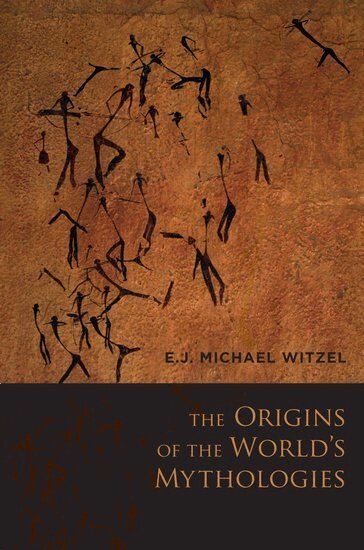
    The Origins of the World's Mythologies

    AvE.J. Michael Witzel

    Häftad, Engelska, 2013

    1 072 kr

    Beställningsvara. Skickas inom 5-8 vardagar. Fri frakt över 249 kr.

    Beskrivning

    In this comprehensive book Michael Witzel persuasively demonstrates the prehistoric origins of most of the mythologies of Eurasia and the Americas ('Laurasia'). By comparing these myths with others indigenous to sub-Saharan Africa, Melanesia, and Australia ('Gondwana Land') Witzel is able to access some of the earliest myths told by humans. The Laurasian mythologies share a common story line that dates the world's creation to a mythic time and recounts the fortunes of generations of deities across four or five ages and human beings' creation and fall, culminating in the end of the universe and, occasionally, hope for a new world. These stories are contrasted with the 'southern' mythologies, which lack most of these features. Witzel's investigations are buttressed by archaeological data, as well as by comparative linguistics, and human population genetics. All suggest the African origins of anatomically modern humans and their subsequent journey along Indian Ocean shores, up to Australia and southern China, around 60,000 BCE. These itinerants' early mythology survives partly in sub-Saharan Africa and points along the path - the Andaman Islands, Melansia, and Australia. Laurasian mythology, Witzel shows, developed along this vast trail, probably in southwest Asia, around 40,000 BCE. Identifying features shared by virtually all mythologies of the globe, Witzel suggests that these features probably informed myths recounted by the communities of the 'African Eve.' As such, they are the earliest substantiation of our ultimate ancestors' spirituality. Moreover the Laurasian myths' key features, Witzel shows, survive today in all major religions and their multiple ideological offshoots.

    Produktinformation

    • Utgivningsdatum:2013-03-14
    • Mått:156 x 234 x 38 mm
    • Vikt:1 040 g
    • Format:Häftad
    • Språk:Engelska
    • Antal sidor:688
    • Förlag:OUP USA
    • ISBN:9780199812851

    Ingår i kampanjer

    -10% student

    Utforska kategorier

    • Arkeologiska perioder och områden inom Historia och arkeologi
    • Forntida egyptisk religion och mytologi inom Filosofi och religion

    Mer om författaren

    Wales Professor of Sanskrit, Harvard University

    Recensioner i media

    A radical idea.

    Innehållsförteckning

    • Contents ; 1 Introduction ; 1.1 What is myth, how do we study and compare it? ; 1.2 Definition; study of myth in the past ; 1.3 Comparative mythology ; 1.4 Laurasian mythology: establishing the common origin of the mythologies of Eurasia and the Americas ; 1.5 Earlier explanations of myth ; 1.6 Ur-forms, history, and archaeology ; 1.7 Summary ; 2 Comparison and Theory ; 2.1 Theory and practice of comparisons ; 2.2 Reconstructing Laurasian mythology ; 2.2.1 Similarities ; 2.2.2 Regular correspondences and establishment of a unified narrative scheme ; 2.2.3 Oldest texts to be used ; 2.2.4 Geographically dispersed items ; 2.2.5 Reconstruction of the Laurasian common story line and individual myths ; 2.3 Enhancing the reconstruction: local, regional, macro-regional, and subcontinental variations ; 2.4 Reconstructing the Laurasian mythological system and inherent problems ; 2.5 Structure and content in some macro-areas of Laurasian myth. ; 2.5.1 Macro-areas ; 2.5.2 The Four ages in the Eurasian and Meso-American macro-areas ; 2.5.3 Later centers of innovations ; 2.5.4 Late borrowings (diffusion) ; 2.6 Some objections to the approach of historical comparative mythology ; 2.7 Conclusion ; 3 Creation Myths: The Laurasian Story Line, Our First Novel ; 3.1 Primordial Creation ; 1. Chaos and darkness 2. Water 3. Earth diver and floating earth 4. Giant 5. Bull 6. Egg 7. Combined versions ; 3.2 Father Heaven, Mother Earth ; 3.3 Separation of heaven and earth, the prop ; 3.4. Creation of land ; 3.5 The demiurge or trickster ; 3.5.1 Creation of light ; 3.5.2. The slaying of the dragon ; 3.5.3 The theft of fire and of the heavenly drink ; 3.6 Generations, Four Ages and five suns ; 3.7 The creation of humans ; 3.8 Descent of 'noble' lineages ; 3.9 The flood ; 3.10 Heroes ; 3.11 The final destruction ; 3.12 Summary ; 4 The Contributions of Other Sciences: comparison of language, physical anthropology, genetics, archaeology ; 4.1. Linguistics ; 4.2 Physical anthropology ; 4.3. Genetics ; 4.3.1 Recent advances in human population genetics ; 4.3.2 Overview of recent developments ; 4.3.3 Out of Africa ; 4.3.4 Movement northward after the last two Ice Ages ; 4.3.5 Genetics, language and mythology ; 4.3.6 Summary and outlook ; 4.4. Archaeology ; 4.4.1 Cave paintings and plastic art ; 4.4.2 Sacrifice in Late Palaeolithic art ; 4.4.3 Food production ; 4.4.4 Domestic animals and pastoralism ; 4.5 Other items of comparison: children's songs and games; ancient music and regional styles; use of colors; gestures and their regional variations. ; 4.6. Conclusions resulting from the comparison of the sciences involved ; 5 The Countercheck: Australia, Melanesia, sub-Saharan Africa ; 5.1 Possible ways to countercheck ; 5.1.1 Method ; 5.1.2 Criteria for testing the theory ; 5.1.3 Diffusion vs genetic relationship ; 5.1.4 Later additions ; 5.2 Beyond Laurasia: Gondwana mythology ; 5.3. Gondwana mythologies ; 5.3.1 Sub-Saharan Africa, the Andamans, New Guinea, Australia and Tasmania - an overview ; 5.3.2 Australia ; 5.3.2.1 Tasmania ; 5.3.3. Melanesia ; 5.3.3.1 Negritos and other southern remnant populations ; 5.3.4 Andaman Islands ; 5.3.5 Africa ; 5.3.5.1 Remnant populations: San and Pygmies ; 5.3.5.2 Sub-Saharan Africa ; 5.3.5.3 Northern influences: the western North-South highway ; 5.3.5.4 The eastern North-South Highway ; 5.3.6 Summary ; 5.4. Individual Gondwana myth types and their common characteristics ; 5.5 Secondary influences on Gondwana mythology ; 5.6. Conflicting myths in Gondwanaland ; 5.6.1 Gondwana element in Laurasian myth ; 5.6.2 Laurasian elements in Gondwana myth ; 5.7 Countercheck of Laurasian mythology based on Gondwana mythology ; 5.7.1 Essential features of Gondwana and Laurasian mythology ; 5.7.2 The flood myth in world wide perspective ; 6 First Tales: Pan-Gaean Mythology ; 6.1 Beyond Laurasia and Gondwana: common myths ; 6.2 Our first tales ; 7 Laurasian Mythology in Historical Development ; 7.1 Late Palaeolithic religion ; 7.1.1 Late Palaeolithic shamanism ; 7.1.2 Sacrifice ; 7.2. Changes from Palaeolithic to state societies ; 7.3. Dating Gondwana and Laurasian mythology ; 8 Outlook ; 8.1 The meaning of Laurasian Mythology ; 8.2 Beyond Laurasia, Gondwana and Pan-Gaia ; 8.2.1 Persistence of myth ; 8.2.2 Some reasons ; 8.3 Epilogue