E-bok, Engelska, 2013
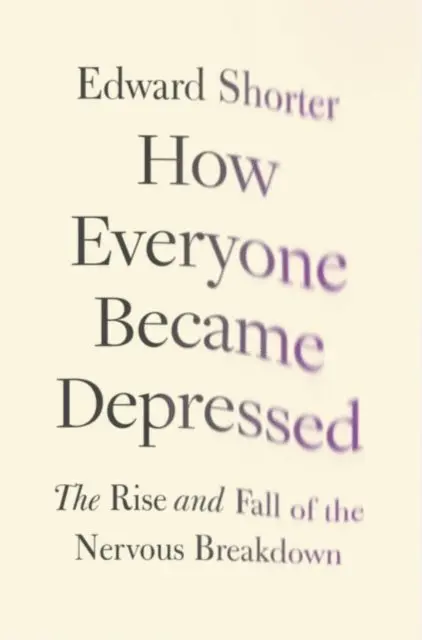
How Everyone Became Depressed
491 kr
Läs direkt i Bokus Reader – eller ladda ned till din enhet (PDF kräver ofta zoom och scroll på små skärmar).
Beskrivning
About one American in five receives a diagnosis of major depression over the course of a lifetime. That''s despite the fact that many such patients have no mood disorder; they''re not sad, but suffer from anxiety, fatigue, insomnia, or a tendency to obsess about the whole business. "There is a term for what they have," writes Edward Shorter, "and it''s a good old-fashioned term that has gone out of use. They have nerves."In How Everyone Became Depressed, Edward Shorter, a distinguished professor of psychiatry and the history of medicine argues for a return to the old fashioned concept of nervous illness. These are, he writes, diseases of the entire body, not the mind, and as was recognized as early as the 1600s. Shorter traces the evolution of the concept of "nerves" and the "nervous breakdown" in western medical thought. He points to a great paradigm shift in the first third of the twentieth century, driven especially by Freud, that transferred behavioral disorders from neurology to psychiatry, spotlighting the mind, not the body. The catch-all term "depression" now applies to virtually everything, "a jumble of non-disease entities, created by political infighting within psychiatry, by competitive struggles in the pharmaceutical industry, and by the whimsy of the regulators." Depression is a real and very serious illness, he argues; it should not be diagnosed so promiscuously, and certainly not without regard to the rest of the body. Meloncholia, he writes, "the quintessence of the nervous breakdown, reaches deep into the endocrine system, which governs the thyroid and adrenal glands among other organs."In a learned yet provocative challenge to psychiatry, Shorter argues that the continuing misuse of "depression" represents nothing less than "the failure of the scientific imagination."
Produktinformation
- Utgivningsdatum: 2013-02-01
- Språk: Engelska
- Filformat: PDF
- Kopieringsskydd: LCP
- ISBN: 9780199948093
- Förlag: Oxford University Press
Utforska kategorier
Betyg & recensioner
0 recensioner
Inga recensioner tillgängliga.