• Fri frakt över 249 kr
  • •
  • Snabba leveranser
  • •
  • Billiga böcker
Kundservice

Du är på sajten för privatpersoner.

Företag, bibliotek eller offentlig verksamhet?

Du handlar på classic.bokus.com, där alla dina funktioner finns intakta.
Till classic.bokus.com
Bokus logotyp. Gå till startsidan.
  • Erbjudanden
  • Student
  • Topplistor
  • Barn & ungdom
  • Bokus Play
  • E-böcker
  • Ljudböcker
  • Pocketböcker
  • Spel & pussel

10% rabatt på allt med kod NYSTART10 →

Sidfot

Mina sidor

    Hjälp

    • Kundservice
    • Vanliga frågor och svar
    • Frakt och leverans
    • Retur vid ångerrätt
    • Reklamera vara
    • Betalning
    • Köpvillkor
    • Allmänna villkor
    • Information om webbplatsens tillgänglighet

    Om Bokus

    • Om oss
    • Pressrum
    • För studenter
    • För företag
    • För bibliotek och offentlig verksamhet
    • För leverantörer
    • Hållbarhet

    Populärt

    • Aktuella erbjudanden
    • Presentkort
    • Studentlitteratur
    • Nya böcker
    • Topplistor
    • Signerade böcker
    • Engelska böcker

    Inspiration

    • Boktips
    • BookTok
    • Populära bokserier
    • Barnbokskaraktärer
    • Populära författare
    Logotyp för Bokus
    Följ oss på Facebook (extern länk)Följ oss på Instagram (extern länk)Följ oss på YouTube (extern länk)Följ oss på TikTok (extern länk)
    bokus @ CookiesAnpassa cookiesIntegritetspolicyKöpvillkor
    Till Citymail hemsida (extern länk)Till Budbee hemsida (extern länk)Till Postnord hemsida (extern länk)Till Schenker hemsida (extern länk)Till Early Bird hemsida (extern länk)Till Walleys hemsida (extern länk)
    1. Medicin
    2. Medicin: allmänt
    3. Medicinhistoria

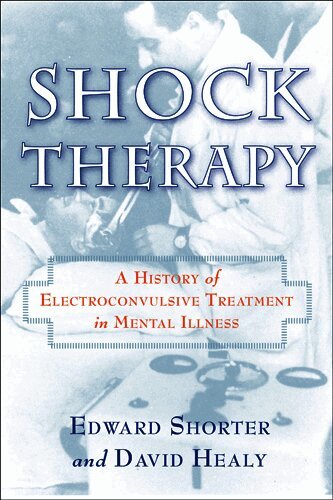
    Shock Therapy

    A History of Electroconvulsive Treatment in Mental Illness

    AvEdward Shorter,David Healy

    Häftad, Engelska, 2013

    477 kr

    Beställningsvara. Skickas inom 5-8 vardagar. Fri frakt över 249 kr.

    Beskrivning

    Shock therapy is making a comeback today in the treatment of serious mental illness. Despite its reemergence as a safe and effective psychiatric tool, however, it continues to be shrouded by a longstanding negative public image, not least due to films such as the classic One Flew over the Cuckoo's Nest, where the inmate of a psychiatric clinic (played by Jack Nicholson) is subjected to electro-shock to curb his rebellious behavior. Beyond its vilification in popular culture, the stereotype of convulsive therapy as a dangerous and inhumane practice is fuelled by professional posturing and public misinformation. Electroconvulsive therapy, or ECT, has in the last thirty years been considered a method of last resort in the treatment of debilitating depression, suicidal ideation, and other forms of mental illness. Yet, ironically, its effectiveness in treating these patients would suggest it as a frontline therapy, bringing relief from acute symptoms and saving lives. In this book, Edward Shorter and David Healy trace the controversial history of ECT and other "shock" therapies. Drawing on case studies, public debates, extensive interviews, and archival research, the authors expose the myths about ECT that have proliferated over the years. By showing ECT's often life-saving results, Shorter and Healy endorse a point of view that is hotly contested in professional circles and in public debates, but for the nearly half of all clinically depressed patients who do not respond to drugs, this book brings much needed hope.

    Produktinformation

    • Utgivningsdatum:2013-01-18
    • Mått:152 x 229 x 23 mm
    • Vikt:540 g
    • Format:Häftad
    • Språk:Engelska
    • Antal sidor:398
    • Förlag:Rutgers University Press
    • ISBN:9780813554259

    Utforska kategorier

    • Medicinhistoria inom Medicin
    • Psykiatri inom Medicin

    Mer om författaren

    EDWARD SHORTER is the Jason A. Hannah Chair of the History of Medicine at the University of Toronto. He is the author of numerous books, including A History of Psychiatry and Before Prozac. DAVID HEALY is a professor of psychiatry in the department of psychological medicine at Cardiff University and the author of numerous books, including Let Them Eat Prozac. He was secretary of the British Association for Psychopharmacology.

    Recensioner i media

    "Shock Therapy is based on contemporary research that includes both manuscript and printed sources as well as interviews with individuals who have played key roles in the history of ECT. It is a controversial work, if only because its authors combine both historical analysis and advocacy. Nevertheless, the book-which includes discussions of such contemporary therapeutic innovations as VNS, DBS, and TMS-is a must-read and has relevance for those concerned with the treatment of mental disorders." - Gerald N. Grob (coauthor of The Dilemma of Federal Mental Health Policy: Radical Reform or Incr) "This book has groundbreaking potential, and its readability is strengthened by the use of many primary documents, including detailed journal entries and transcripts of interviews with the original scientists involved." (Library Journal) "Riveting. Apart from describing the origins and continuing evolution of convulsive therapy, the text provides an intimate 'behind the scenes' glimpse into the personalities, careers, and factors motivating the major players in the treatment's history. Shock Therapy is a highly readable...book that may pique the interest of child and adolescent psychiatrists in this and related treatment modalities." (Child and Adolescent Psychiatry)

    Innehållsförteckning

    • The penicillin of psychiatry?"Some experiments on the biological influencing of the course of schizophrenia""Madness cured with electricity"From the university clinic to the psychiatric institute: shock therapy goes globalThe couch or the treatment table?"ECT does not create zombies""They're going to fry your brains!"The end of "Bedlam" and the age of psychopharmacologyThe swinging pendulum: the effects of politics, law, and changes in medical culture on ECTElectrogirl and the new ECTMagnets and implants: new therapies for a new century?Epilogue: irrational science