• Fri frakt över 249 kr
  • •
  • Snabba leveranser
  • •
  • Billiga böcker
Kundservice

Du är på sajten för privatpersoner.

Företag, bibliotek eller offentlig verksamhet?

Du handlar på classic.bokus.com, där alla dina funktioner finns intakta.
Till classic.bokus.com
Bokus logotyp. Gå till startsidan.
  • Erbjudanden
  • Nyheter
  • Student
  • Topplistor
  • Barn & ungdom
  • Bokus Play
  • E-böcker
  • Pocketböcker
  • Spel & pussel

10% rabatt på allt med kod: NYSTART10 →

Sidfot

Mina sidor

    Hjälp

    • Kundservice
    • Vanliga frågor och svar
    • Frakt och leverans
    • Retur vid ångerrätt
    • Reklamera vara
    • Betalning
    • Köpvillkor
    • Allmänna villkor
    • Information om webbplatsens tillgänglighet

    Om Bokus

    • Om oss
    • Pressrum
    • För studenter
    • För företag
    • För bibliotek och offentlig verksamhet
    • För leverantörer
    • Hållbarhet

    Populärt

    • Aktuella erbjudanden
    • Presentkort
    • Studentlitteratur
    • Nya böcker
    • Topplistor
    • Signerade böcker
    • Engelska böcker

    Inspiration

    • Boktips
    • BookTok
    • Populära bokserier
    • Barnbokskaraktärer
    • Populära författare
    Logotyp för Bokus
    Följ oss på Facebook (extern länk)Följ oss på Instagram (extern länk)Följ oss på YouTube (extern länk)Följ oss på TikTok (extern länk)
    bokus @ CookiesAnpassa cookiesIntegritetspolicyKöpvillkor
    Till Citymail hemsida (extern länk)Till Budbee hemsida (extern länk)Till Postnord hemsida (extern länk)Till Schenker hemsida (extern länk)Till Early Bird hemsida (extern länk)Till Walleys hemsida (extern länk)
    1. Psykologi och pedagogik
    2. Pedagogik
    3. Specialundervisning

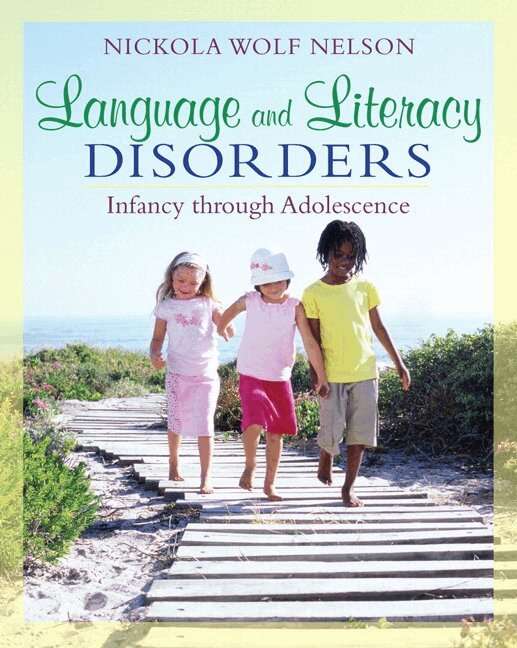
    Language and Literacy Disorders

    Infancy through Adolescence

    AvNickola Nelson

    Häftad, Engelska, 2009

    2 166 kr

    Skickas . Fri frakt över 249 kr.

    Beskrivning

    Organized with a clear framework and student-friendly learning supports, this textbook helps graduate and undergraduate students gain essential knowledge that can inform, and transform, their work with children who need special assistance to acquire language and literacy abilities to meet multiple communication and learning needs.

    Featuring content and questions that encourage deeper thinking about the nature of disordered and normal development, this text makes assessment and intervention practices relevant to contexts of home, classroom, and peer interactions. In particular, readers will learn to draw on multiple sources of input to develop an assessment picture for a child at any age and stage of development as a person with unique strengths and needs, coming from a particular cultural-linguistic background, and with concerns that may be attributed to a particular known or unknown but suspected set of etiological factors. Additionally, readers will learn to plan interventions that target developmentally appropriate outcomes in spoken and written language and to apply techniques that are informed by varied theoretical perspectives and a growing evidence base.

    This text is organized into three sections that are designed to promote understanding of: (1) basic concepts, taxonomies, policies, and procedures that can inform other decisions; (2) implications of common etiologies (e.g., primary language impairment/learning disability, hearing impairment, autism spectrum disorders, mental retardation/cognitive impairment; acquired neurological impairment) for modifying assessment and intervention practices; and (3) appropriate assessment and intervention procedures across developmental language and literacy ages, stages, and targets. Instructors can guide students through the sections and chapters, review and practice material, and extended exercises, so students can gain confidence they will know what to do when facing diverse populations of real children in a variety of settings.

    Although the book is written primarily for students in speech-language pathology, it draws on the author’s experience working in schools and classrooms with general and special education teachers and other interdisciplinary team members and can be used with (or by) members of other disciplines and by practitioners as well as students. The ultimate beneficiaries of this book should be children and adolescents who grow up with improved abilities to communicate, read, write, listen, and speak because they received services from professionals who knew what they were doing and why.

    Produktinformation

    • Utgivningsdatum:2009-08-14
    • Mått:100 x 100 x 100 mm
    • Vikt:100 g
    • Format:Häftad
    • Språk:Engelska
    • Antal sidor:608
    • Upplaga:1
    • Förlag:Pearson Education
    • ISBN:9780205501786

    Utforska kategorier

    • Specialundervisning inom Psykologi och pedagogik

    Mer om författaren

    Nickola Wolf Nelson, Ph.D., CCC-SLP conducts research and has authored numerous research articles, books, and chapters on contextualized, interdisciplinary approaches to language and literacy assessment and intervention, including two prior editions of Childhood Language Disorders in Context: Infancy through Adolescence (Allyn & Bacon, 1994, 1998). Nelson is co-author of The Writing Lab Approach to Language Instruction and Intervention (Paul H. Brookes, 2004) and the forthcoming Test of Integrated Language and Literacy Skills.

    Innehållsförteckning

    • TABLE OF CONTENTSFrontmatter Dedication pagePrefaceTable of contents PART I. FRAMEWORKS FOR CLINICAL PRACTICE Chapter 1. A Framework for Guiding Evidence Based Practice Importance of asking good questionsContextualized assessment and interventionWorld Health Organization definitionsChapter 2. Speech, Language/Literacy, and CommunicationSpeech, language (including literacy), and communicationFive language parametersContent, form, and useLanguage levels and modalitiesCultural-linguistic variationChapter 3. Language/Literacy and Related SystemsTheoretical accountsSystem theorySystems supporting language developmentPART II. POLICIES, PRACTICES, AND POPULATIONSChapter 4. Policies and PracticesPoliciesClinical practicesCategorization, diagnosis, and causationTesting and exclusionary factors in diagnosisPrevalence, prevention, and prognosisChapter 5. Primary Disorders of Speech, Language, and Literacy Speech-sound disordersLanguage impairmentLearning disabilitySpoken and written language associations and dissociationsChapter 6. Special Populations with Motor and Sensory Disorders Motor system impairmentAuditory system impairmentVisual system impairmentOther sensory problemsChapter 7. Special Populations with Cognitive-Communicative DisordersDevelopmental disabilityIntellectual disabilityAutism spectrum disordersAcquired brain injury (including traumatic brain injury)Child abuse and neglectInteractive disorders of attention, emotion, and behaviorPART III. ASSESSMENT AND INTERVENTION Chapter 8. Infant/Toddler Policies and Practices Policies and practices for infants and toddlersComprehensive assessment for infants and toddlersChapter 9. Infant/Toddler InterventionPrelinguistic organization to intentional communicationJoint action routines and early playFirst words to two-word utterancesEmergent narratives and literacyChapter 10. Preschool Policies and PracticesPolicies and practices in the preschool yearsComprehensive assessment in the preschool yearsChapter 11. Preschool InterventionSounds, words, and vocabulary conceptsSentence- and discourse level developmentSocial interaction and playEmergent and early literacyChapter 12. School-age Policies and PracticesPolicies and practices in the school-age yearsComprehensive assessment in the school-age yearsChapter 13. School-age InterventionIntervention scaffolding in the school-age yearsDiscourse-level knowledge and skillsSentence-level knowledge and skillsWord-level knowledge and skillsChapter 14. Interventions for Special PopulationsComprehensive planning for comprehensive needsPreverbal to intentional communicationEcholalia, challenging behaviors, and non-symbolic communicationIntervention for children and adolescents with severe speech-production disordersAAC for children and adolescents with complex communication needsIntervention for sensory loss and central processing disordersIntervention for cognitive-communicative disordersIntervention for autism spectrum disordersBackmatter: Appendices for Part III.ReferencesAuthor Index (to be completed by Allyn & Bacon)Subject Index (to be completed by Allyn & Bacon)On line supports: GlossaryReview and practice questions and keyObservation tables