• Fri frakt över 249 kr
  • •
  • Snabba leveranser
  • •
  • Billiga böcker
Kundservice

Du är på sajten för privatpersoner.

Företag, bibliotek eller offentlig verksamhet?

Du handlar på classic.bokus.com, där alla dina funktioner finns intakta.
Till classic.bokus.com
Bokus logotyp. Gå till startsidan.
  • Erbjudanden
  • Nyheter
  • Student
  • Topplistor
  • Barn & ungdom
  • Bokus Play
  • E-böcker
  • Pocketböcker
  • Spel & pussel

10% rabatt på allt med kod: NYSTART10 →

Sidfot

Mina sidor

    Hjälp

    • Kundservice
    • Vanliga frågor och svar
    • Frakt och leverans
    • Retur vid ångerrätt
    • Reklamera vara
    • Betalning
    • Köpvillkor
    • Allmänna villkor
    • Information om webbplatsens tillgänglighet

    Om Bokus

    • Om oss
    • Pressrum
    • För studenter
    • För företag
    • För bibliotek och offentlig verksamhet
    • För leverantörer
    • Hållbarhet

    Populärt

    • Aktuella erbjudanden
    • Presentkort
    • Studentlitteratur
    • Nya böcker
    • Topplistor
    • Signerade böcker
    • Engelska böcker

    Inspiration

    • Boktips
    • BookTok
    • Populära bokserier
    • Barnbokskaraktärer
    • Populära författare
    Logotyp för Bokus
    Följ oss på Facebook (extern länk)Följ oss på Instagram (extern länk)Följ oss på YouTube (extern länk)Följ oss på TikTok (extern länk)
    bokus @ CookiesAnpassa cookiesIntegritetspolicyKöpvillkor
    Till Citymail hemsida (extern länk)Till Budbee hemsida (extern länk)Till Postnord hemsida (extern länk)Till Schenker hemsida (extern länk)Till Early Bird hemsida (extern länk)Till Walleys hemsida (extern länk)
    1. Djur och Natur
    2. Naturböcker
    3. Växtböcker

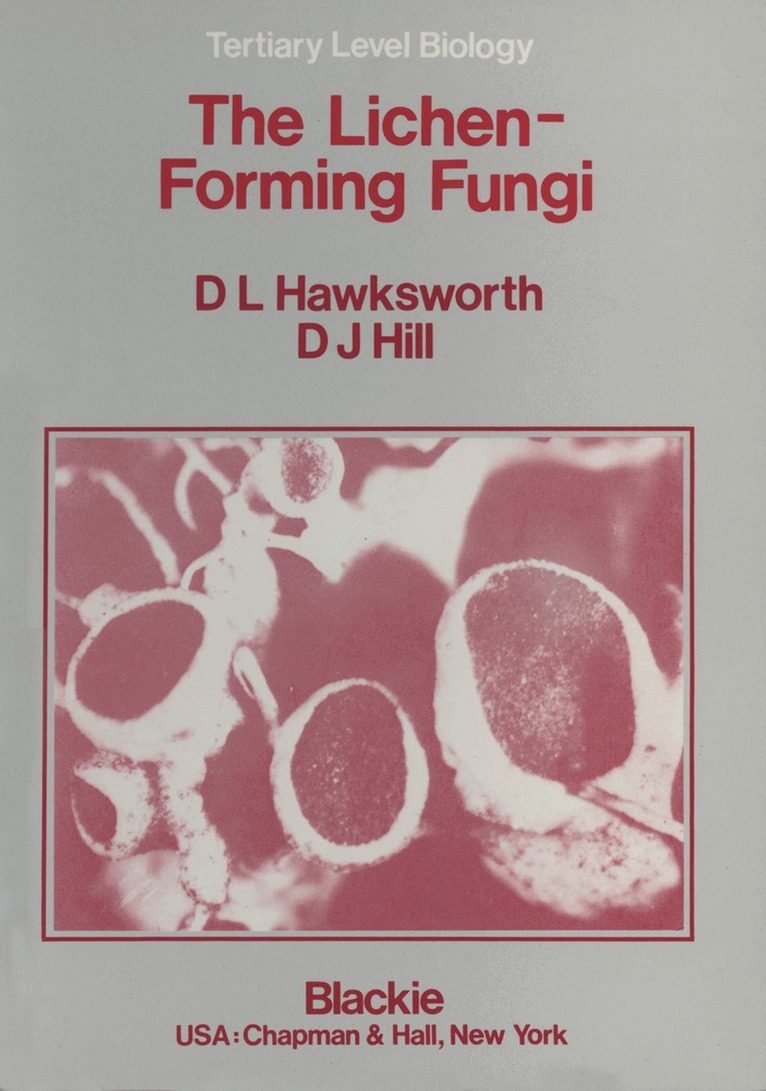
    Lichen-Forming Fungi

    AvD. L. Hawksworth

    Häftad, Engelska, 1984

    546 kr

    Beställningsvara. Skickas inom 10-15 vardagar. Fri frakt över 249 kr.

    Beskrivning

    Lichen assocIations include some of the oldest living organisms and represent a major nutritional method adopted by one in five fungi. Major advances in our knowledge of these biologically fascinating organisms have been made in recent years and they now have a great deal to offer to teaching in colleges and universities. In addition to being examples of biotrophic systems, they merit discussion in courses on fungal phylogeny, fungal nutrition, ecology, ecophysiology, biogeography, evolution, chemo­ taxonomy, environmental monitoring, and algology. As all aspects of lichenology cannot be treated adequately in a book of this length, we have emphasized topics which we have found to be of particular interest to a advanced undergraduate and postgraduate biologists (or biogeographers) or those contemplating more detailed studies in particular areas. Consequently we have endeavoured to place lichen associations in the broader context of biological and biogeographical teaching. Examples are drawn from many areas of the world, including North America, but it is inevitable that European ones predominate, as lichens there are better known than in other regions. Technical terms are defined when first used, and definitions can therefore be located with the aid of the index. Lichens are not a systematic group and so are not appropriately treated in a groups-orientated programme, but are a major biological phenomenon all too commonly accorded scant attention in university courses.

    Produktinformation

    • Utgivningsdatum:1984-09-01
    • Mått:152 x 229 x 10 mm
    • Vikt:254 g
    • Format:Häftad
    • Språk:Engelska
    • Antal sidor:158
    • Upplaga:1984
    • Förlag:Kluwer Academic Publishers Group
    • ISBN:9780216916340

    Utforska kategorier

    • Växtböcker inom Djur och Natur
    • Botanik inom Naturvetenskap och teknik

    Innehållsförteckning

    • 1. The Lichen Habit.- 1.1 History.- 1.2 Defining ‘lichen’.- 1.3 Fungus-alga associations.- 1.4 Three- and four-membered symbioses.- 1.5 Mycobionts in lichens.- 1.6 Photobionts in lichens.- 1.7 Taxonomic concepts.- 2. Thallus Structure.- 2.1 Morphology.- 2.2 Environmental modifications.- 2.3 Tissue types.- 2.4 Attachment organs.- 2.5 Cyphellae and pseudocyphellae.- 2.6 Cephalodia and the role of the bionts in morphogenesis.- 2.7 Culture and synthesis.- 3. Reproduction.- 3.1 Ascomata.- 3.2 Ontogeny.- 3.3 Hamathecia.- 3.4 Asci.- 3.5 Ascospores.- 3.6 Conidiomata.- 3.7 Vegetative propagules.- 3.8 Evolutionary trends in reproductive strategies.- 4. Dispersal, and Establisment Growth.- 4.1 Ascospore discharge and dispersal.- 4.2 Ascospore germination.- 4.3 Photobiont reproduction and dispersal.- 4.4 Photobiont recognition and selection.- 4.5 Asexual propagule dispersal and establishment.- 4.6 Thallus growth.- 5. Metabolism and Physiology.- 5.1 Introduction 5.- 5.2 Water relations.- 5.3 Light and photosynthesis.- 5.4 Factors affecting photosynthetic rate.- 5.5 Carbon transfer.- 5.6 Nitrogen fixation.- 5.7 Mineral nutrition.- 5.8 Heavy metals.- 5.9 Ecophysiology.- 5.10 Seasonal variation.- 5.11 Tolerance of temperature extremes.- 6. Ecology and Sociology.- 6.1 Limiting substratum factors.- 6.2 Limiting environmental factors.- 6.3 Lichen-substratum interfaces.- 6.4 Weathering and pedogenesis.- 6.5 Competition and succession.- 6.6 The sociological approach.- 6.7 Corticolous communities.- 6.8 Lignicolous communities.- 6.9 Saxicolous communities.- 6.10 Marine and maritime communities.- 6.11 Aquatic communities.- 6.12 Terricolous communities.- 6.13 Man-made substrata.- 6.14 Biodeterioration.- 6.15 Substratum amplitude.- 6.16 Ecology and speciation.- 6.17 Interactions with otherorganisms.- 7. Biogeography.- 7.1 World.- 7.2 Plate tectonics.- 7.3 Centres of diversity.- 7.4 Factors limiting distribution.- 7.5 European patterns.- 7.6 British patterns.- 7.7 Effect of man on patterns.- 8. Secondary Metabolites.- 8.1 Biosynthesis.- 8.2 Microchemical determination.- 8.3 Location and concentration.- 8.4 Systematic value.- 8.5 Chemical hybrids.- 8.6 Role of lichen products.- 8.7 Antibiotic properties and medicinal effects.- 8.8 Dyeing.- 8.9 Perfumes.- 9. Environmental Monitoring.- 9.1 Air pollution.- 9.2 Heavy metals.- 9.3 Radionuclides.- 9.4 Ecological continuity.- 9.5 Lichenometry.- 9.6 Potential uses.- FURTHER READING.