• Fri frakt över 249 kr
  • •
  • Snabba leveranser
  • •
  • Billiga böcker
Kundservice

Du är på sajten för privatpersoner.

Företag, bibliotek eller offentlig verksamhet?

Du handlar på classic.bokus.com, där alla dina funktioner finns intakta.
Till classic.bokus.com
Bokus logotyp. Gå till startsidan.
  • Erbjudanden
  • Nyheter
  • Student
  • Topplistor
  • Barn & ungdom
  • Bokus Play
  • E-böcker
  • Pocketböcker
  • Spel & pussel

10% studentrabatt med kod TERM26

Sidfot

Mina sidor

    Hjälp

    • Kundservice
    • Vanliga frågor och svar
    • Frakt och leverans
    • Retur vid ångerrätt
    • Reklamera vara
    • Betalning
    • Köpvillkor
    • Allmänna villkor
    • Information om webbplatsens tillgänglighet

    Om Bokus

    • Om oss
    • Pressrum
    • För studenter
    • För företag
    • För bibliotek och offentlig verksamhet
    • För leverantörer
    • Hållbarhet

    Populärt

    • Aktuella erbjudanden
    • Presentkort
    • Studentlitteratur
    • Nya böcker
    • Topplistor
    • Signerade böcker
    • Engelska böcker

    Inspiration

    • Boktips
    • BookTok
    • Populära bokserier
    • Barnbokskaraktärer
    • Populära författare
    Logotyp för Bokus
    Följ oss på Facebook (extern länk)Följ oss på Instagram (extern länk)Följ oss på YouTube (extern länk)Följ oss på TikTok (extern länk)
    bokus @ CookiesAnpassa cookiesIntegritetspolicyKöpvillkor
    Till Citymail hemsida (extern länk)Till Budbee hemsida (extern länk)Till Postnord hemsida (extern länk)Till Schenker hemsida (extern länk)Till Early Bird hemsida (extern länk)Till Walleys hemsida (extern länk)
    1. Filosofi och religion
    2. Filosofi
    3. Filosofiska discipliner

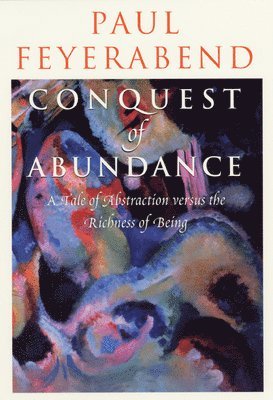
    Conquest of Abundance – A Tale of Abstraction Versus the Richness of Richness

    AvPaul Feyerabend

    Häftad, Engelska, 2001

    362 kr

    Skickas . Fri frakt över 249 kr.

    Beskrivning

    From Homeric gods to galaxies, from love affairs to perspective in painting, Paul Feyerabend revelled in the physical and cultural abundance that surrounds us. He found it equally striking that human senses and human intelligence are able to take in only a fraction of these riches. From this fraction, scientists, artists, all of us construct encompassing abstractions and stereotypes. This basic human trait is at the heart of "Conquest of Abundance", the book on which Feyerabend was at work when he died in 1994. Prepared from drafts of the manuscript left at his death, working notes, and lectures and articles Feyerabend wrote while the larger work was in progress, "Conquest of Abundance" offers up exploration and startling insights with the charm, lucidity, and sense of mischief that are his hallmarks. Feyerabend is fascinated by how we attempt to explain and predict the mysteries of the natural world, and he describes ways in which we abstract experience, explain anomalies, and reduce wonder to formulas and equations.Through his exploration of the positive and negative consequences of these efforts, Feyerabend reveals the "conquest of abundance" as an integral part of the history and character of Western civilization. Paul Feyerabend (1924-1994) was educated in Europe and held numerous teaching posts throughout his career, including at the University of California, Berkeley, from 1959 to 1990. His "Against Method" - translated into 17 languages - is a classic of modern philosophy of science. The University of Chicago Press published his autobiography, "Killing Time", in 1995.

    Produktinformation

    • Utgivningsdatum:2001-05-01
    • Mått:150 x 230 x 18 mm
    • Vikt:400 g
    • Format:Häftad
    • Språk:Engelska
    • Antal sidor:290
    • Upplaga:1002
    • Förlag:The University of Chicago Press
    • ISBN:9780226245348

    Utforska kategorier

    • Filosofiska discipliner inom Filosofi och religion

    Innehållsförteckning

    • A note on the editing; Part one: The unfinished manuscript; introduction 1 Achilles' conjecture; 2 xenophanes; 3 Parmenides and the logic of being interlude: On the ambiguity of interpretations; 4 Brunelleschi and the invention of perspective; Part Two: Essays on the manuscript's themes; 1 realism and the historicity of knowledge; 2 has the scientific view of the world a special status compared with other views?; 3 quantum theory and our view of the world; 4 realism; 5 historical comments on realism; 6 what reality? 7 Aristotle. Part contents.