• Fri frakt över 249 kr
  • •
  • Snabba leveranser
  • •
  • Billiga böcker
Kundservice

Du är på sajten för privatpersoner.

Företag, bibliotek eller offentlig verksamhet?

Du handlar på classic.bokus.com, där alla dina funktioner finns intakta.
Till classic.bokus.com
Bokus logotyp. Gå till startsidan.
  • Erbjudanden
  • Nyheter
  • Student
  • Topplistor
  • Barn & ungdom
  • Bokus Play
  • E-böcker
  • Pocketböcker
  • Spel & pussel

10% rabatt på allt med kod NYSTART10 →

Sidfot

Mina sidor

    Hjälp

    • Kundservice
    • Vanliga frågor och svar
    • Frakt och leverans
    • Retur vid ångerrätt
    • Reklamera vara
    • Betalning
    • Köpvillkor
    • Allmänna villkor
    • Information om webbplatsens tillgänglighet

    Om Bokus

    • Om oss
    • Pressrum
    • För studenter
    • För företag
    • För bibliotek och offentlig verksamhet
    • För leverantörer
    • Hållbarhet

    Populärt

    • Aktuella erbjudanden
    • Presentkort
    • Studentlitteratur
    • Nya böcker
    • Topplistor
    • Signerade böcker
    • Engelska böcker

    Inspiration

    • Boktips
    • BookTok
    • Populära bokserier
    • Barnbokskaraktärer
    • Populära författare
    Logotyp för Bokus
    Följ oss på Facebook (extern länk)Följ oss på Instagram (extern länk)Följ oss på YouTube (extern länk)Följ oss på TikTok (extern länk)
    bokus @ CookiesAnpassa cookiesIntegritetspolicyKöpvillkor
    Till Citymail hemsida (extern länk)Till Budbee hemsida (extern länk)Till Postnord hemsida (extern länk)Till Schenker hemsida (extern länk)Till Early Bird hemsida (extern länk)Till Walleys hemsida (extern länk)
    1. Djur och Natur
    2. Naturböcker
    3. Populärastronomi

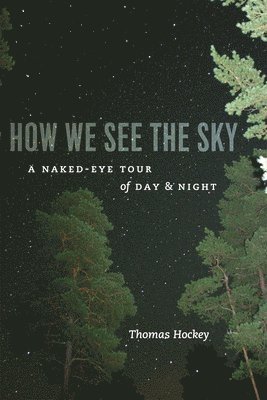
    How We See the Sky

    A Naked-Eye Tour of Day and Night

    AvThomas Hockey

    Häftad, Engelska, 2011

    194 kr

    Beställningsvara. Skickas inom 5-8 vardagar. Fri frakt över 249 kr.

    Beskrivning

    Gazing up at the heavens from our backyards or a nearby field, most of us see an undifferentiated mess of stars - if, that is, we can see anything at all through the glow of light pollution. Today's casual observer knows far less about the sky than did our ancestors, who depended on the sun and the moon to tell them the time and on the stars to guide them through the seas. Nowadays, we don't need the sky, which is good, because we've made it far less accessible, hiding it behind the skyscrapers and excessive artificial light of our cities. "How We See the Sky" gives us back our knowledge of the sky, offering a fascinating overview of what can be seen there without the aid of a telescope. Thomas Hockey begins by scanning the horizon, explaining how the visible universe rotates through this horizon as night turns to day and season to season. Subsequent chapters explore the sun's and moon's respective motions through the celestial globe, as well as the appearance of solstices, eclipses, and planets, and how these are accounted for in different kinds of calendars.In every chapter, Hockey introduces the common vocabulary of today's astronomers, uses examples past and present to explain them, and provides conceptual tools to help newcomers understand the topics he discusses. Packed with illustrations and enlivened by historical anecdotes and literary references, "How We See the Sky" reacquaints us with the wonders to be found in our own backyards.

    Produktinformation

    • Utgivningsdatum:2011-10-15
    • Mått:15 x 23 x 1 mm
    • Vikt:369 g
    • Format:Häftad
    • Språk:Engelska
    • Antal sidor:224
    • Förlag:The University of Chicago Press
    • ISBN:9780226345772

    Utforska kategorier

    • Populärastronomi inom Djur och Natur

    Mer om författaren

    Thomas Hockey is professor of astronomy at the University of Northern Iowa.

    Recensioner i media

    "Entertaining and very readable, How We See the Sky presents an up-to-date approach to what a dedicated visual observer can hope to understand by carefully monitoring the sky. In addition it provides a wealth of information that informs the reader about celestial phenomena. In this respect, it follows in a long tradition of astronomical handbooks and celestial viewing guides, many of which are now dated." -Jay Holberg, University of Arizona"