• Fri frakt över 249 kr
  • •
  • Snabba leveranser
  • •
  • Billiga böcker
Kundservice

Du är på sajten för privatpersoner.

Företag, bibliotek eller offentlig verksamhet?

Du handlar på classic.bokus.com, där alla dina funktioner finns intakta.
Till classic.bokus.com
Bokus logotyp. Gå till startsidan.
  • Erbjudanden
  • Nyheter
  • Student
  • Topplistor
  • Barn & ungdom
  • Bokus Play
  • E-böcker
  • Pocketböcker
  • Spel & pussel

10% rabatt på allt med kod NYSTART10 →

Sidfot

Mina sidor

    Hjälp

    • Kundservice
    • Vanliga frågor och svar
    • Frakt och leverans
    • Retur vid ångerrätt
    • Reklamera vara
    • Betalning
    • Köpvillkor
    • Allmänna villkor
    • Information om webbplatsens tillgänglighet

    Om Bokus

    • Om oss
    • Pressrum
    • För studenter
    • För företag
    • För bibliotek och offentlig verksamhet
    • För leverantörer
    • Hållbarhet

    Populärt

    • Aktuella erbjudanden
    • Presentkort
    • Studentlitteratur
    • Nya böcker
    • Topplistor
    • Signerade böcker
    • Engelska böcker

    Inspiration

    • Boktips
    • BookTok
    • Populära bokserier
    • Barnbokskaraktärer
    • Populära författare
    Logotyp för Bokus
    Följ oss på Facebook (extern länk)Följ oss på Instagram (extern länk)Följ oss på YouTube (extern länk)Följ oss på TikTok (extern länk)
    bokus @ CookiesAnpassa cookiesIntegritetspolicyKöpvillkor
    Till Citymail hemsida (extern länk)Till Budbee hemsida (extern länk)Till Postnord hemsida (extern länk)Till Schenker hemsida (extern länk)Till Early Bird hemsida (extern länk)Till Walleys hemsida (extern länk)
    1. Naturvetenskap och teknik
    2. Matematik och naturvetenskap
    3. Kemi

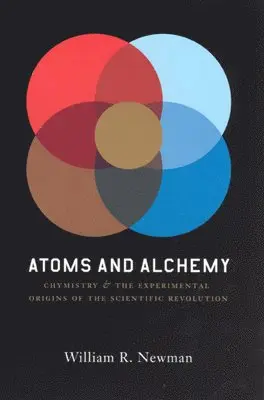
    Atoms and Alchemy

    Chymistry and the Experimental Origins of the Scientific Revolution

    AvWilliam R. Newman

    Häftad, Engelska, 2006

    406 kr

    Beställningsvara. Skickas inom 5-8 vardagar. Fri frakt över 249 kr.

    Beskrivning

    Since the Enlightenment, alchemy has been viewed as a sort of antiscience, disparaged by many historians as a form of lunacy that impeded the development of rational chemistry. But, in "Atoms and Alchemy", William R. Newman - a historian widely credited for reviving recent interest in alchemy - exposes the speciousness of these views and challenges widely held beliefs about the origins of the Scientific Revolution. Tracing the alchemical roots of Robert Boyle's famous mechanical philosophy, Newman shows that alchemy contributed to the mechanization of nature, a movement that lay at the very heart of scientific discovery. Boyle and his predecessors - figures like the mysterious medieval Geber or the Lutheran professor Daniel Sennert - provided convincing experimental proof that matter is made up of enduring particles at the microlevel. At the same time, Newman argues that alchemists created the operational criterion of an "atomic" element as the last point of analysis, thereby contributing a key feature to the development of later chemistry."Atoms and Alchemy" thus provokes a refreshing debate about the origins of modern science and will be welcomed - and deliberated - by all who are interested in the development of scientific theory and practice.

    Produktinformation

    • Utgivningsdatum:2006-05-15
    • Mått:15 x 23 x 2 mm
    • Vikt:397 g
    • Format:Häftad
    • Språk:Engelska
    • Antal sidor:235
    • Förlag:The University of Chicago Press
    • ISBN:9780226576978

    Utforska kategorier

    • Kemi inom Naturvetenskap och teknik
    • Naturvetenskapens filosofi inom Naturvetenskap och teknik

    Mer om författaren

    William R. Newman is the Ruth Halls Professor in the Department of the History and Philosophy of Science at Indiana University and the author of Gehennical Fire and Promethean Ambitions, as well as coauthor of Alchemy Tried in the Fire (which was awarded the 2005 Pfizer Prize for the best book in the history of science), all published by the University of Chicago Press.

    Recensioner i media

    "Atoms and Alchemy is the newest installment of Newman's scholarship that continues to challenge scholars to rethink some of their most cherished assumptions concerning the actuality of a clearcut demarcation during the early modern period between so-called 'rational' and 'occult' spheres in the discipline we now refer to as chemistry." - Mordechai Feingold, California Institute of Technology"