• Fri frakt över 249 kr
  • •
  • Snabba leveranser
  • •
  • Billiga böcker
Kundservice

Du är på sajten för privatpersoner.

Företag, bibliotek eller offentlig verksamhet?

Du handlar på classic.bokus.com, där alla dina funktioner finns intakta.
Till classic.bokus.com
Bokus logotyp. Gå till startsidan.
  • Erbjudanden
  • Student
  • Topplistor
  • Barn & ungdom
  • Bokus Play
  • E-böcker
  • Ljudböcker
  • Pocketböcker
  • Spel & pussel

10% rabatt på allt med kod NYSTART10 →

Sidfot

Mina sidor

    Hjälp

    • Kundservice
    • Vanliga frågor och svar
    • Frakt och leverans
    • Retur vid ångerrätt
    • Reklamera vara
    • Betalning
    • Köpvillkor
    • Allmänna villkor
    • Information om webbplatsens tillgänglighet

    Om Bokus

    • Om oss
    • Pressrum
    • För studenter
    • För företag
    • För bibliotek och offentlig verksamhet
    • För leverantörer
    • Hållbarhet

    Populärt

    • Aktuella erbjudanden
    • Presentkort
    • Studentlitteratur
    • Nya böcker
    • Topplistor
    • Signerade böcker
    • Engelska böcker

    Inspiration

    • Boktips
    • BookTok
    • Populära bokserier
    • Barnbokskaraktärer
    • Populära författare
    Logotyp för Bokus
    Följ oss på Facebook (extern länk)Följ oss på Instagram (extern länk)Följ oss på YouTube (extern länk)Följ oss på TikTok (extern länk)
    bokus @ CookiesAnpassa cookiesIntegritetspolicyKöpvillkor
    Till Citymail hemsida (extern länk)Till Budbee hemsida (extern länk)Till Postnord hemsida (extern länk)Till Schenker hemsida (extern länk)Till Early Bird hemsida (extern länk)Till Walleys hemsida (extern länk)
    1. Djur och Natur
    2. Naturböcker
    3. Växtböcker

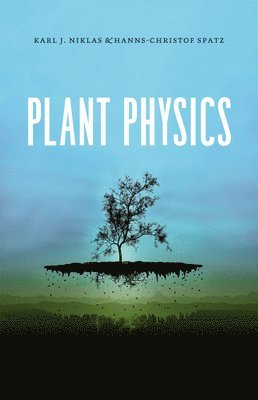
    Plant Physics

    AvKarl J. Niklas,Hanns-Christof Spatz

    Inbunden, Engelska, 2012

    1 535 kr

    Beställningsvara. Skickas inom 3-6 vardagar. Fri frakt över 249 kr.

    Fler format och utgåvor

    Häftad

    380 kr

    Beskrivning

    From Galileo, who used the hollow stalks of grass to demonstrate the idea that peripherally located construction materials provide most of grass' resistance to bending forces, to Leonardo da Vinci, whose illustrations of the parachute are alleged to be based on his study of the dandelion's pappus and the maple tree's samara, many of our greatest physicists, mathematicians, and engineers have learned much from their collaborations with botanists, and vice versa. This symbiotic relationship continues today, as is revealed in "Plant Physics". The result of a long-term collaboration between plant evolutionary biologist Karl J. Niklas and physicist Hanns-Christof Spatz, "Plant Physics" presents a detailed account of the principles of classical physics, evolutionary theory, and plant biology in order to explain the complex interrelationships among plant form, function, environment, and evolutionary history.Covering a wide range of topics - from the development and evolution of the basic plant body and the ecology of aquatic unicellular plants to mathematical treatments of light attenuation through tree canopies and the movement of water through plants' roots, stems, and leaves - "Plant Physics" is destined to inspire students and professionals alike to traverse disciplinary membranes.

    Produktinformation

    • Utgivningsdatum:2012-03-15
    • Mått:15 x 24 x 3 mm
    • Vikt:851 g
    • Format:Inbunden
    • Språk:Engelska
    • Antal sidor:448
    • Förlag:The University of Chicago Press
    • ISBN:9780226586328

    Utforska kategorier

    • Växtböcker inom Djur och Natur
    • Botanik inom Naturvetenskap och teknik

    Mer om författaren

    Karl J. Niklas is the Liberty Hyde Bailey Professor of Plant Biology in the Department of Plant Biology at Cornell University. He is the author of Plant Biomechanics, Plant Allometry, and The Evolutionary Biology of Plants, all published by the University of Chicago Press. Hanns-Christof Spatz is professor emeritus of biophysics in the Faculty of Biology at the Albert-Ludwigs-Universitat Freiburg in Germany.

    Recensioner i media

    "Here's the physical world of plants in all its splendor - and multidimensionality - brought to bear on the rich diversity of both extant and extinct forms. Karl J. Niklas and Hanns-Christof Spatz's theme, which deserves attention, is that since plants (and animals, of course) cannot change physics, physical laws and processes must bear strongly on the course of their evolution." (Steven Vogel, Duke University)"