• Fri frakt över 249 kr
  • •
  • Snabba leveranser
  • •
  • Billiga böcker
Kundservice

Du är på sajten för privatpersoner.

Företag, bibliotek eller offentlig verksamhet?

Du handlar på classic.bokus.com, där alla dina funktioner finns intakta.
Till classic.bokus.com
Bokus logotyp. Gå till startsidan.
  • Erbjudanden
  • Student
  • Topplistor
  • Barn & ungdom
  • Bokus Play
  • E-böcker
  • Ljudböcker
  • Pocketböcker
  • Spel och pussel

Pocketfynda! Hundratals böcker för 49 kr/st →

Sidfot

Mina sidor

    Hjälp

    • Kundservice
    • Vanliga frågor och svar
    • Frakt och leverans
    • Retur vid ångerrätt
    • Reklamera vara
    • Betalning
    • Köpvillkor
    • Allmänna villkor
    • Information om webbplatsens tillgänglighet

    Om Bokus

    • Om oss
    • Pressrum
    • För studenter
    • För företag
    • För bibliotek och offentlig verksamhet
    • För leverantörer
    • Hållbarhet

    Populärt

    • Aktuella erbjudanden
    • Presentkort
    • Studentlitteratur
    • Nya böcker
    • Topplistor
    • Signerade böcker
    • Engelska böcker

    Inspiration

    • Boktips
    • BookTok
    • Barnbokskaraktärer
    • Populära författare
    Logotyp för Bokus
    Följ oss på Facebook (extern länk)Följ oss på Instagram (extern länk)Följ oss på YouTube (extern länk)Följ oss på TikTok (extern länk)
    bokus @ CookiesAnpassa cookiesIntegritetspolicyKöpvillkor
    Till Citymail hemsida (extern länk)Till Budbee hemsida (extern länk)Till Postnord hemsida (extern länk)Till Schenker hemsida (extern länk)Till Early Bird hemsida (extern länk)Till Walleys hemsida (extern länk)
    1. Filosofi och religion
    2. Filosofi
    3. Filosofiska discipliner

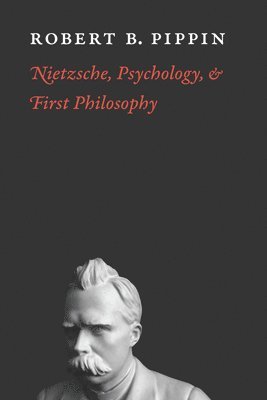
    Nietzsche, Psychology, and First Philosophy

    AvRobert B. Pippin

    Häftad, Engelska, 2011

    252 kr

    Beställningsvara. Skickas inom 5-8 vardagar. Fri frakt över 249 kr.

    Fler format och utgåvor

    Inbunden

    814 kr

    Beskrivning

    Friedrich Nietzsche is one of the most elusive thinkers in the philosophical tradition. Nonetheless, certain readings of his work have become standard and influential. In this major new interpretation of Nietzsche, Robert B. Pippin challenges various traditional views, taking the philosopher at his word when he says that his writing can best be understood as a kind of psychology. Pippin traces this idea of Nietzsche as a psychologist to his admiration for the French moralists: La Rochefoucauld, Pascal, Stendhal, and especially Montaigne. In distinction from philosophers, Pippin shows, these writers avoided grand metaphysical theories in favor of reflections on life as lived and experienced. Pippin contends that Nietzsche's singular prose was an essential part of his goal of making psychology "the queen of the sciences", and so organizes the book around four of Nietzsche's most important images and metaphors: that truth could be a woman, that a science could be gay, that God could have died, and that an agent is as much one with his act as lightning is with its flash.Expanded from a series of lectures Pippin delivered at the College de France, "Nietzsche, Psychology, and First Philosophy" offers a brilliant, novel, and accessible reading of this seminal thinker.

    Produktinformation

    • Utgivningsdatum:2011-12-15
    • Mått:16 x 23 x 1 mm
    • Vikt:312 g
    • Format:Häftad
    • Språk:Engelska
    • Antal sidor:160
    • Förlag:The University of Chicago Press
    • ISBN:9780226669762

    Utforska kategorier

    • Filosofiska discipliner inom Filosofi och religion

    Mer om författaren

    Robert B. Pippin is the Evelyn Stefansson Nef Distinguished Service Professor in the John U. Nef Committee on Social Thought, the Department of Philosophy, and the College at the University of Chicago. He is the author or editor of nearly a dozen books, including, most recently, Hegel's Practical Philosophy: Rational Agency as Ethical Life.

    Recensioner i media

    "Pippin presents a much-needed new approach and appreciation of Nietzsche.... [He] adroitly starts fresh with Nietzsche, considering his work holistically and in the context of both early psychology and 19th-century French morality. In his novel reading, Pippin exposes, the folly of underappreciating Nietzsche's irony and self-criticism." (Choice)"