• Fri frakt över 249 kr
  • •
  • Snabba leveranser
  • •
  • Billiga böcker
Kundservice

Du är på sajten för privatpersoner.

Företag, bibliotek eller offentlig verksamhet?

Du handlar på classic.bokus.com, där alla dina funktioner finns intakta.
Till classic.bokus.com
Bokus logotyp. Gå till startsidan.
  • Erbjudanden
  • Nyheter
  • Student
  • Topplistor
  • Barn & ungdom
  • Bokus Play
  • E-böcker
  • Pocketböcker
  • Spel & pussel

10% rabatt på allt med kod NYSTART10 →

Sidfot

Mina sidor

    Hjälp

    • Kundservice
    • Vanliga frågor och svar
    • Frakt och leverans
    • Retur vid ångerrätt
    • Reklamera vara
    • Betalning
    • Köpvillkor
    • Allmänna villkor
    • Information om webbplatsens tillgänglighet

    Om Bokus

    • Om oss
    • Pressrum
    • För studenter
    • För företag
    • För bibliotek och offentlig verksamhet
    • För leverantörer
    • Hållbarhet

    Populärt

    • Aktuella erbjudanden
    • Presentkort
    • Studentlitteratur
    • Nya böcker
    • Topplistor
    • Signerade böcker
    • Engelska böcker

    Inspiration

    • Boktips
    • BookTok
    • Populära bokserier
    • Barnbokskaraktärer
    • Populära författare
    Logotyp för Bokus
    Följ oss på Facebook (extern länk)Följ oss på Instagram (extern länk)Följ oss på YouTube (extern länk)Följ oss på TikTok (extern länk)
    bokus @ CookiesAnpassa cookiesIntegritetspolicyKöpvillkor
    Till Citymail hemsida (extern länk)Till Budbee hemsida (extern länk)Till Postnord hemsida (extern länk)Till Schenker hemsida (extern länk)Till Early Bird hemsida (extern länk)Till Walleys hemsida (extern länk)
    1. Ekonomi och Ledarskap
    2. Nationalekonomi
    3. Ekonomisk historia

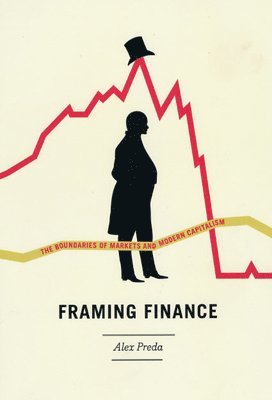
    Framing Finance

    The Boundaries of Markets and Modern Capitalism

    AvAlex Preda

    Inbunden, Engelska, 2009

    837 kr

    Beställningsvara. Skickas inom 5-8 vardagar. Fri frakt över 249 kr.

    Fler format och utgåvor

    Häftad

    301 kr

    E-bok

    642 kr

    Beskrivning

    As the banking crisis and its effects on the world economy have made plain, the stock market is of colossal importance to our livelihoods. In "Framing Finance", Alex Preda looks at the history of the market to figure out how we arrived at a point where investing is not only commonplace, but critical, as market fluctuations threaten our plans to send our children to college or retire comfortably. As Preda discovers through extensive research, the public was once much more skeptical. For investing to become accepted, a deep-seated prejudice against speculation had to be overcome, and Preda reveals that over the course of the eighteenth and nineteenth centuries groups associated with stock exchanges in New York, London, and Paris managed to redefine finance as a scientific pursuit grounded in observational technology. But Preda also notes that as the financial data in which they trafficked became ever more difficult to understand, charismatic speculators emerged whose manipulations of the market undermined the benefits of widespread investment.And so, "Framing Finance" ends with an eye on the future, proposing a system of public financial education to counter the irrational elements that still animate the appeal of finance.

    Produktinformation

    • Utgivningsdatum:2009-07-15
    • Mått:16 x 24 x 2 mm
    • Vikt:567 g
    • Format:Inbunden
    • Språk:Engelska
    • Antal sidor:328
    • Förlag:The University of Chicago Press
    • ISBN:9780226679310

    Utforska kategorier

    • Ekonomisk historia inom Ekonomi och Ledarskap
    • Finansiering inom Ekonomi och Ledarskap

    Mer om författaren

    Alex Preda is a reader in sociology at the University of Edinburgh, the author of AIDS, Rhetoric, and Medical Knowledge, and coeditor of The Sociology of Financial Markets.

    Recensioner i media

    "Framing Finance looks at the history of finance from a completely new perspective, combining sociology, history, economics, and literary and cultural studies. Drawing on his original historical data, Preda proposes several innovative theoretical ideas and concepts that may well become household notions in writings on finance." - Karen Knorr Cetina, University of Chicago"