• Fri frakt över 249 kr
  • •
  • Snabba leveranser
  • •
  • Billiga böcker
Kundservice

Du är på sajten för privatpersoner.

Företag, bibliotek eller offentlig verksamhet?

Du handlar på classic.bokus.com, där alla dina funktioner finns intakta.
Till classic.bokus.com
Bokus logotyp. Gå till startsidan.
  • Erbjudanden
  • Nyheter
  • Student
  • Topplistor
  • Barn & ungdom
  • Bokus Play
  • E-böcker
  • Pocketböcker
  • Spel & pussel

10% rabatt på allt med kod: NYSTART10 →

Sidfot

Mina sidor

    Hjälp

    • Kundservice
    • Vanliga frågor och svar
    • Frakt och leverans
    • Retur vid ångerrätt
    • Reklamera vara
    • Betalning
    • Köpvillkor
    • Allmänna villkor
    • Information om webbplatsens tillgänglighet

    Om Bokus

    • Om oss
    • Pressrum
    • För studenter
    • För företag
    • För bibliotek och offentlig verksamhet
    • För leverantörer
    • Hållbarhet

    Populärt

    • Aktuella erbjudanden
    • Presentkort
    • Studentlitteratur
    • Nya böcker
    • Topplistor
    • Signerade böcker
    • Engelska böcker

    Inspiration

    • Boktips
    • BookTok
    • Populära bokserier
    • Barnbokskaraktärer
    • Populära författare
    Logotyp för Bokus
    Följ oss på Facebook (extern länk)Följ oss på Instagram (extern länk)Följ oss på YouTube (extern länk)Följ oss på TikTok (extern länk)
    bokus @ CookiesAnpassa cookiesIntegritetspolicyKöpvillkor
    Till Citymail hemsida (extern länk)Till Budbee hemsida (extern länk)Till Postnord hemsida (extern länk)Till Schenker hemsida (extern länk)Till Early Bird hemsida (extern länk)Till Walleys hemsida (extern länk)
    1. Samhälle och politik
    2. Politik och statsskick
    3. Statsvetenskap och politisk teori

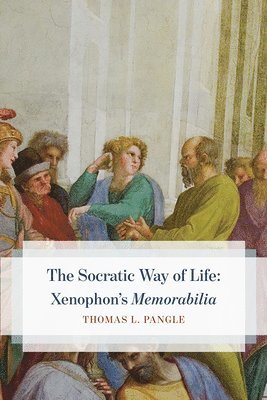
    Socratic Way of Life

    Xenophon's “Memorabilia”

    AvThomas L. Pangle

    Häftad, Engelska, 2020

    211 kr

    Beställningsvara. Skickas inom 5-8 vardagar. Fri frakt över 249 kr.

    Fler format och utgåvor

    E-bok

    475 kr

    Beskrivning

    The Socratic Way of Life is the first English-language book-length study of the philosopher Xenophon’s masterwork. In it, Thomas L. Pangle shows that Xenophon depicts more authentically than does Plato the true teachings and way of life of the citizen philosopher Socrates, founder of political philosophy.In the first part of the book, Pangle analyzes Xenophon’s defense of Socrates against the two charges of injustice upon which he was convicted by democratic Athens: impiety and corruption of the youth. In the second part, Pangle analyzes Xenophon’s account of how Socrates’s life as a whole was just, in the sense of helping through his teaching a wide range of people. Socrates taught by never ceasing to raise, and to progress in answering, the fundamental and enduring civic questions: what is pious and impious, noble and ignoble, just and unjust, genuine statesmanship and genuine citizenship. Inspired by Hegel’s and Nietzsche’s assessments of Xenophon as the true voice of Socrates, The Socratic Way of Life establishes the Memorabilia as the groundwork of all subsequent political philosophy.

    Produktinformation

    • Utgivningsdatum:2020-09-22
    • Mått:152 x 229 x 30 mm
    • Vikt:399 g
    • Format:Häftad
    • Språk:Engelska
    • Antal sidor:304
    • Förlag:The University of Chicago Press
    • ISBN:9780226754260

    Utforska kategorier

    • Statsvetenskap och politisk teori inom Samhälle och politik
    • Filosofiska discipliner inom Filosofi och religion

    Mer om författaren

    Thomas L. Pangle is the Joe R. Long Chair in Democratic Studies in the Department of Government at the University of Texas at Austin. He is the author or editor of numerous books.

    Recensioner i media

    “Pangle’s work on Xenophon’s Memorabilia is, quite simply, magisterial. His interpretation builds on scant existing scholarship, bringing Xenophon’s work into a much wider frame of scholarly reference. The Socratic Way of Life sheds new light on the long-standing dispute concerning the authentic teaching of the historical Socrates as distinct from the Socrates portrayed in Plato’s dialogues. This could have little short of revolutionary implications for the study of classical philosophy.”

    Innehållsförteckning

    • IntroductionPart One: Socrates’s Innocence of the Injustices for Which He Was Executed1.         Socrates Was Not Guilty of Impiety or Disbelief as Regards the Gods of AthensHis Piety Proven by His WorshipHis Belief Proven by His DaimonionHis Belief Proven by His Teaching on DivinationHis Belief Proven by His Attitude toward Natural ScienceHis Belief Proven by His Fidelity to His Sacred OathConcluding the Defense against the Charge of Impiety or Disbelief2.         Socrates Was Not Guilty of Corrupting the YoungAnswering a Nameless Accuser’s Charge That Socrates Promoted Contempt for the Athenian Regime and LawsStarting to Explain His Association with Critias and AlcibiadesIn What Sense Virtue Is KnowledgeThe Big Differences between Critias and AlcibiadesCritiasAlcibiadesExplaining the Teaching of Socrates That Wisdom Is the Title to RuleTransition to Part 2 of the MemorabiliaPart Two: Socrates’s Active Justice, as Benefiter of Others3.         How Socrates Benefited through His Piety and His Self-MasteryHis Teaching on Praying and SacrificingSocrates’s Self-Mastery vs. Xenophon’s Sexual IndulgenceSocrates’s Teaching on Divine ProvidenceSocratic Self-Mastery vs. Conventional Self-MasteryThe Virtue That Socratic Self-Mastery ServesSocrates’s Discouragement of BoastingHis Teaching of Self-Mastery for the Sake of a Life Dedicated to PoliticsThe Setting of the DialogueSelf-Discipline as Crucial to Education for RulingWhy One Must Seek to Be One of Those Who RuleWhy the Active Political Life Is the Good LifeHeracles’s Choice4.         How Socrates Benefited in Regard to Family and FriendsAttending to His Son and WifeAttempting to Reconcile Feuding BrothersSocrates on the Value of Extrafamilial FriendshipPromoting Reflection on One’s Own Worth as a FriendSocrates on the Power and Problem of Friendship among GentlemenHow Socrates Helped Friends in Serious Economic DifficultiesA Socratic Revolution in a Desperate Friend’s HouseholdSocrates’s Advice to a Fellow Economic MisfitA Glimpse of Socrates’s Own Economic ArtExtending His Economic Art5.         How Socrates Benefited Those Reaching for the Noble/Beautiful (Kalon)His Playful Teaching of Noble GeneralshipInterpreting Homer on the Virtue of a Good LeaderOn the Goal Aimed at by a Noble CommanderAssimilating Military-Political Rule to Household Management (“Oeconomics”)His Earnest Teaching of Noble GeneralshipOn What a Statesman Needs to KnowSocrates Exhorting to a Career as a Democratic LeaderHow Is the Beautiful/Noble Related to the Good?The Virtues as Noble/BeautifulSocrates as Arbiter of the Beautiful/Noble in ArtThe Profitable Beauty of Socrates’s Soul, Reflected in Comic AllegoryExhorting to the Cultivation of Beauty of PhysiquePromoting Everyday Self-Mastery and “Living Decorously”6.         Socrates as Beneficial TutorThe Seduction of EuthydemusThe Centrality of Justice, as a Virtue of Speech and DeedThe Refutation of Euthydemus’s Convictions Regarding JusticeThe Refutation of Euthydemus’s Convictions Regarding the GoodThe Refutation of Euthydemus’s Conception of DemocracyMaking Euthydemus Moderate as Regards DivinitySocrates Teaching JusticeTeaching His Companions Self-MasteryMaking His Companions More DialecticalTeaching His Associates Self-Sufficiency in DeedsXenophon’s ConclusionNotesWorks CitedIndex