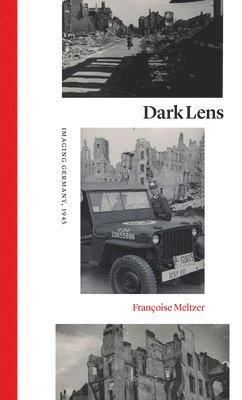
Häftad, Engelska, 2021
Dark Lens
Imaging Germany, 1945
267 kr
Beställningsvara. Skickas inom 7-10 vardagar. Fri frakt över 249 kr.
Beskrivning
Produktinformation
- Utgivningsdatum: 2021-12-05
- Mått: 152 x 229 x 18 mm
- Vikt: 313 g
- Format: Häftad
- Språk: Engelska
- Antal sidor: 256
- Förlag: The University of Chicago Press
- ISBN: 9780226816852
Utforska kategorier
Mer om författaren
Françoise Meltzer is the Edward Carson Waller Distinguished Service Professor in the Humanities, professor in the Divinity School and the College, and chair of comparative literature at the University of Chicago.
Recensioner i media
“It is the ‘righteous pleasure in retribution’ that worries Meltzer in Dark Lens, a work of scholarship organized around a collection of previously unpublished amateur photographs, taken by Jeanne Dumilieu (the author’s mother), that feature ruins in the wake of the Allied bombings of Germany. . . . Our gaze is precisely what Meltzer is interested in investigating. What and how do we see when we see these photos? Can we even see the ruin as such? This proposition suggests a provocative way of rereading the history of interest in and representation of ruins. Perhaps our enduring obsession with them—and our drive to depict and behold them—is fueled by our very inability to reckon with destruction.”
Betyg & recensioner
0 recensioner
Inga recensioner tillgängliga.