• Fri frakt över 249 kr
  • •
  • Snabba leveranser
  • •
  • Billiga böcker
Kundservice

Du är på sajten för privatpersoner.

Företag, bibliotek eller offentlig verksamhet?

Du handlar på classic.bokus.com, där alla dina funktioner finns intakta.
Till classic.bokus.com
Bokus logotyp. Gå till startsidan.
  • Erbjudanden
  • Nyheter
  • Student
  • Topplistor
  • Barn & ungdom
  • Bokus Play
  • E-böcker
  • Pocketböcker
  • Spel & pussel

10% studentrabatt med kod TERM26

Sidfot

Mina sidor

    Hjälp

    • Kundservice
    • Vanliga frågor och svar
    • Frakt och leverans
    • Retur vid ångerrätt
    • Reklamera vara
    • Betalning
    • Köpvillkor
    • Allmänna villkor
    • Information om webbplatsens tillgänglighet

    Om Bokus

    • Om oss
    • Pressrum
    • För studenter
    • För företag
    • För bibliotek och offentlig verksamhet
    • För leverantörer
    • Hållbarhet

    Populärt

    • Aktuella erbjudanden
    • Presentkort
    • Studentlitteratur
    • Nya böcker
    • Topplistor
    • Signerade böcker
    • Engelska böcker

    Inspiration

    • Boktips
    • BookTok
    • Populära bokserier
    • Barnbokskaraktärer
    • Populära författare
    Logotyp för Bokus
    Följ oss på Facebook (extern länk)Följ oss på Instagram (extern länk)Följ oss på YouTube (extern länk)Följ oss på TikTok (extern länk)
    bokus @ CookiesAnpassa cookiesIntegritetspolicyKöpvillkor
    Till Citymail hemsida (extern länk)Till Budbee hemsida (extern länk)Till Postnord hemsida (extern länk)Till Schenker hemsida (extern länk)Till Early Bird hemsida (extern länk)Till Walleys hemsida (extern länk)
    1. Data och IT
    2. Informationsteknik: allmänt

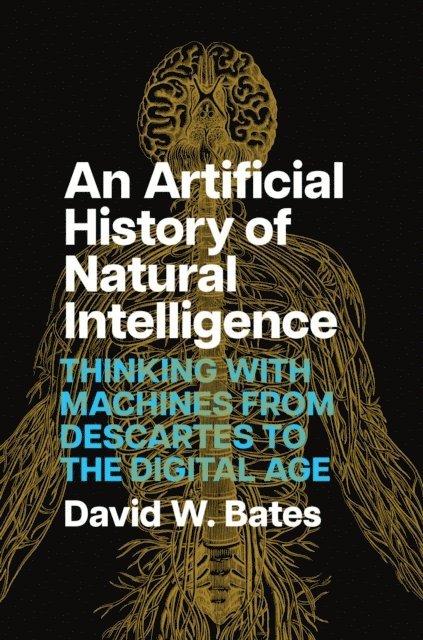
    Artificial History of Natural Intelligence

    Thinking with Machines from Descartes to the Digital Age

    AvDavid W. Bates

    Inbunden, Engelska, 2024

    504 kr

    Skickas . Fri frakt över 249 kr.

    Fler format och utgåvor

    E-bok

    540 kr

    Häftad

    273 kr

    Beskrivning

    A new history of human intelligence that argues that humans know themselves by knowing their machines.We imagine that we are both in control of and controlled by our bodies—autonomous and yet automatic. This entanglement, according to David W. Bates, emerged in the seventeenth century when humans first built and compared themselves with machines. Reading varied thinkers from Descartes to Kant to Turing, Bates reveals how time and time again technological developments offered new ways to imagine how the body’s automaticity worked alongside the mind’s autonomy. Tracing these evolving lines of thought, An Artificial History of Natural Intelligence offers a new theorization of the human as a being that is dependent on technology and produces itself as an artificial automaton without a natural, outside origin.

    Produktinformation

    • Utgivningsdatum:2024-04-02
    • Mått:152 x 229 x 30 mm
    • Vikt:708 g
    • Format:Inbunden
    • Språk:Engelska
    • Antal sidor:408
    • Förlag:The University of Chicago Press
    • ISBN:9780226832104

    Utforska kategorier

    • Informationsteknik: allmänt inom Data och IT
    • Filosofiska discipliner inom Filosofi och religion

    Mer om författaren

    David W. Bates is professor of rhetoric at the University of California, Berkeley. He is the author of three books, including Enlightenment Aberrations: Error and Revolution in France.

    Recensioner i media

    “An impressive and important book. Readers will learn much from the author’s sensitive and insightful readings of the scientific and philosophical literature . . . But that does not mean that it is only for academic readers. The topic is too important. . . . As David W. Bates shows, we cannot remove ourselves from the world of technology; it is our world. But we can try to guide its evolution to protect the things we value. This is something we all need to think about, and An Artificial History of Natural Intelligence provides essential tools for the task.”

    Innehållsförteckning

    • Frame1. Autonomy and Automaticity: On the Contemporary Question of IntelligencePart One: The Automatic Life of Reason in Early Modern Thought2. Integration and Interruption: The Cartesian Thinking Machine3. Spiritual Automata: From Hobbes to Spinoza4. Spiritual Automata Revisited: Leibniz and Automatic Harmony5. Hume’s Enlightened Nervous SystemThreshold: Kant’s Critique of Automatic Reason6. The Machinery of Cognition in the First Critique7. The Pathology of Spontaneity: The Critique of Judgment and BeyondPart Two: Embodied Logics of the Industrial Age8. Babbage, Lovelace, and the Unexpected9. Psychophysics: On the Physio-Technology of Automatic Reason10. Singularities of the Thermodynamic Mind11. The Dynamic Brain12. Prehistoric Humans and the Technical Evolution of Reason13. Creative Life and the Emergence of Technical IntelligenceProphecy: The Future of Extended Minds14. Technology Is Not the Liberation of the Human but Its Transformation . . .Part Three: Crises of Order: Thinking Biology and Technology between the Wars15. Techniques of Insight16. Brains in Crisis, Psychic Emergencies17. Bio-Technicity in Von Uexküll18. Lotka on the Evolution of Technical Humanity19. Thinking Machines20. A Typology of Machines21. Philosophical Anthropology: The Human as Technical ExteriorizationHinge: Prosthetics of Thought22. Wittgenstein on the Immateriality of ThinkingPart Four: Thinking Outside the Body23. Cybernetic Machines and Organisms24. Automatic Plasticity and Pathological Machines25. Turing and the Spirit of Error26. Epistemologies of the Exosomatic27. Leroi-Gourhan on the Technical Origin of the Exteriorized MindThe Beginning of an End28. Technogenesis in the Networked Age29. Failures of Anticipation: The Future of Intelligence in the Era of Machine LearningAcknowledgmentsNotesIndex