• Fri frakt över 249 kr
  • •
  • Snabba leveranser
  • •
  • Billiga böcker
Kundservice

Du är på sajten för privatpersoner.

Företag, bibliotek eller offentlig verksamhet?

Du handlar på classic.bokus.com, där alla dina funktioner finns intakta.
Till classic.bokus.com
Bokus logotyp. Gå till startsidan.
  • Erbjudanden
  • Nyheter
  • Student
  • Topplistor
  • Barn & ungdom
  • Bokus Play
  • E-böcker
  • Pocketböcker
  • Spel & pussel

10% rabatt på allt med kod NYSTART10 →

Sidfot

Mina sidor

    Hjälp

    • Kundservice
    • Vanliga frågor och svar
    • Frakt och leverans
    • Retur vid ångerrätt
    • Reklamera vara
    • Betalning
    • Köpvillkor
    • Allmänna villkor
    • Information om webbplatsens tillgänglighet

    Om Bokus

    • Om oss
    • Pressrum
    • För studenter
    • För företag
    • För bibliotek och offentlig verksamhet
    • För leverantörer
    • Hållbarhet

    Populärt

    • Aktuella erbjudanden
    • Presentkort
    • Studentlitteratur
    • Nya böcker
    • Topplistor
    • Signerade böcker
    • Engelska böcker

    Inspiration

    • Boktips
    • BookTok
    • Populära bokserier
    • Barnbokskaraktärer
    • Populära författare
    Logotyp för Bokus
    Följ oss på Facebook (extern länk)Följ oss på Instagram (extern länk)Följ oss på YouTube (extern länk)Följ oss på TikTok (extern länk)
    bokus @ CookiesAnpassa cookiesIntegritetspolicyKöpvillkor
    Till Citymail hemsida (extern länk)Till Budbee hemsida (extern länk)Till Postnord hemsida (extern länk)Till Schenker hemsida (extern länk)Till Early Bird hemsida (extern länk)Till Walleys hemsida (extern länk)
    1. Samhälle och politik
    2. Sociologi och antropologi
    3. Antropologi

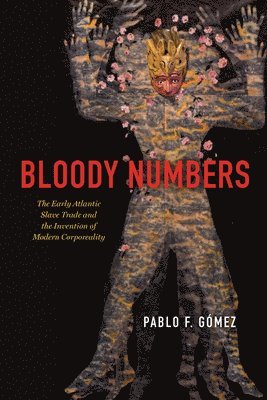
    Bloody Numbers

    The Early Atlantic Slave Trade and the Invention of Modern Corporeality

    AvPablo F. Gomez

    Häftad, Engelska, 2026

    280 kr

    Beställningsvara. Skickas inom 5-8 vardagar. Fri frakt över 249 kr.

    Fler format och utgåvor

    Inbunden

    972 kr

    Beskrivning

    Upends current thinking about how early modern people started to conceptualize human beings in terms of populations. Bloody Numbers is a provocative account of the violent world of the sixteenth- and seventeenth-century South Atlantic slave-trading societies, where traders, financiers, officials, surgeons, notaries, ship captains, and others began thinking about human bodies as aggregate populations understood through numbers: measurements, averages, and calculations of risk and value assessed through the tabulation of heights, weights, tumors, scars, and other characteristics. Pablo F. Gómez explores how figures within the world of slave trading used this model for understanding human bodies to generalize about behavior and disease in ways that foreshadowed the work of modern epidemiologists and public health officials—though they employed their calculations with the aim of protecting their financial interests rather than of caring for enslaved people. The ruthlessness inherent in these practices became ingrained in the modern corporeal mathematics that emerged from the early slave trade and diffused through its vast political, financial, logistical, and intellectual networks.A pathbreaking work, Bloody Numbers reveals the historical actions that rendered populations quantifiable. In doing so, it shows that confronting these origins is essential to understanding the violent political, legal, economic, and scientific practices that ascribe numbers to our own bodies.

    Produktinformation

    • Utgivningsdatum:2026-06-08
    • Mått:152 x 229 x 20 mm
    • Vikt:481 g
    • Format:Häftad
    • Språk:Engelska
    • Antal sidor:288
    • Förlag:The University of Chicago Press
    • ISBN:9780226845166

    Utforska kategorier

    • Antropologi inom Samhälle och politik
    • Allmän historia och världshistoria inom Historia och arkeologi
    • Slaveri inom Historia och arkeologi

    Mer om författaren

    Pablo F. Gómez is professor of history and the history of medicine at the University of Wisconsin–Madison. He is the author of The Experiential Caribbean: Creating Knowledge and Healing in the Early Modern Atlantic and a coeditor of The Gray Zones of Medicine: Healers and History in Latin America.

    Recensioner i media

    “A passionate and precisely delineated history of our world. Gómez’s remarkable excavation reveals a world from which the quantitative evaluation of human bodies emerged, a foundation for all forms of biomedicine. Forged in the mercantilist violence of the early Iberian Atlantic, the evaluations of corporeal substance performed on enslaved persons turned them into decontextualized, composite physical peças (pieces). He concludes that ‘the swarm of ciphers that arose in their wake holds the meaning of our flesh.’ Not to be missed.”

    Innehållsförteckning

    • A Note on Sources and TerminologyIntroduction1. Slave-Trading Communities2. Accounts3. Armazones and Piezas4. A World of Facts5. Procedure6. ProbabilitiesCodaAcknowledgmentsNotesBibliographyIndex